




Operation: Training
Date: 6 February 1943 (Saturday)
Unit: No. 53 Operational Training Unit (OTU)
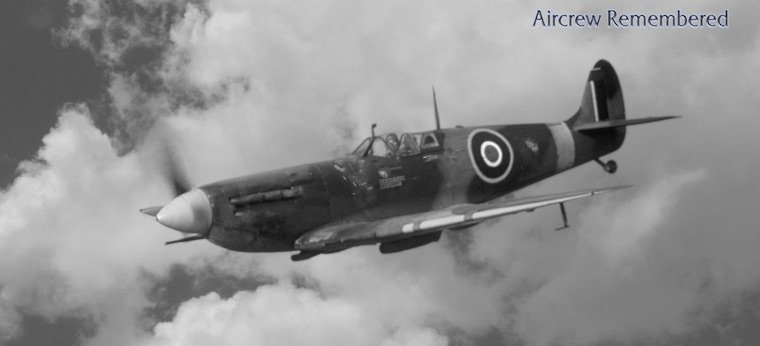
Type: Supermarine Spitfire I
Serial: N3221
Code: —
Base: RAF Llandow, Glamorgan, Wales (1)
Location: Pendoylan, Bonvilston, Vale of Glamorgan, Wales
Crew
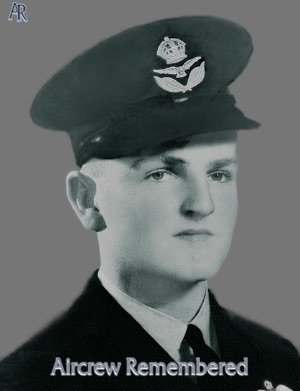
Pilot: F/O. Neville Alexander Thomas Fleming, Aus/414217, RAAF, Age 20 — Killed
Reason for Loss
F/O. Fleming was flying a Spitfire on a non-operational day training flight.
A Flying Accident Report stated that Fleming had been detailed to fly No. 3 in a formation-flying exercise led by Fl/Lt. Plagis (3). After one hour and fifteen minutes of formation flying, Fl/Lt. Plagis broke up the formation in preparation for landing.
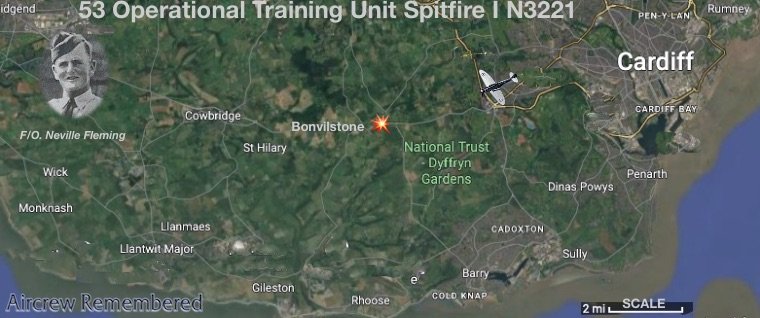 He instructed his No. 2 and No. 3 to carry out local flying and to pancake after one hour thirty minutes of flying. Fl/Lt. Plagis landed at 10:19 hours, and his No. 2 at 10:25 hours. F/O. Fleming, who was overdue after one hour thirty minutes of flying, was called up by R/T from Operations, but no reply was received.
At 10:40 hours, a report was received that a Spitfire had crashed and burned seven miles north-east of base. This proved to be F/O. Fleming's Spitfire, N3221.
 Burial Details
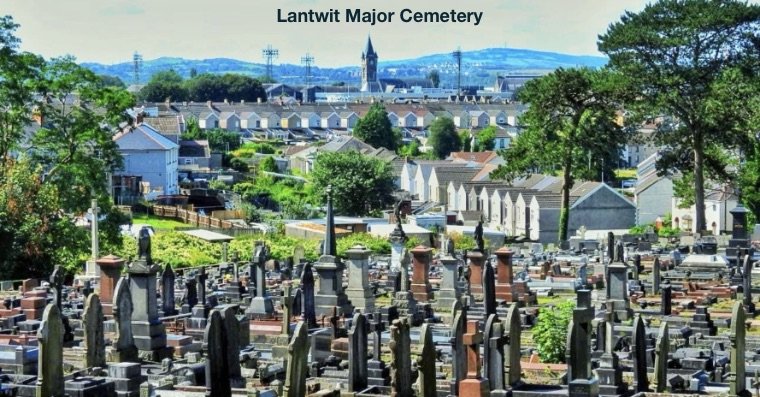
F/O. Neville Alexander Thomas Fleming is buried in Llantwit Major Cemetery (2), Section C, Grave 38. He was born on 2 April 1923 in Townsville, Queensland, Australia, and enlisted on 17 August 1941 in Brisbane. He was the son of Thomas Francis Fleming (died 1963, aged 78) and Ada Christina Fleming (née Fardon, died 1970, aged 74), of Red Hill, Queensland, Australia.
Notes
(1) RAF Llandow — Origins and Wartime Role
RAF Llandow sat in the Vale of Glamorgan, South Wales, about fifteen miles west of Cardiff. It began life in 1937 as a grass airstrip, first used by No. 614 (County of Glamorgan) Squadron, which formed there flying Hawker Hind and Hector aircraft before relocating to RAF Odiham at the outbreak of war.
The airfield reopened on 1 April 1940 under No. 38 Maintenance Unit, tasked with the reception, storage and despatch of RAF aircraft — this remained the airfield's core wartime function throughout the war. The stored aircraft types were remarkably varied, including Tiger Moths, Fairey Battles, Fox Moths, Bristol Blenheims, Spitfires, Whitleys, Lancaster bombers, Albemarles, and American Boston light bombers. Hard runways and permanent hangars, including a run of Super Robin hangars, were built in late 1941 to support this storage role.
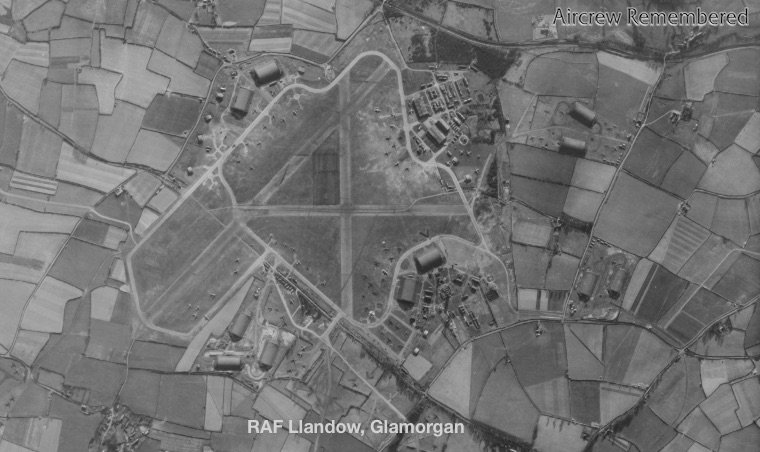 From June 1941, No. 53 Operational Training Unit's B Flight, flying Spitfires, arrived at Llandow, using a satellite station at RAF Rhoose (now Cardiff Airport). Notably, it was during training here in 1941 that John Gillespie Magee Jr. wrote his famous poem 'High Flight.' The unit moved on to Kirton in Lindsey in 1943.
No. 3 Overseas Aircraft Preparation Unit formed at Llandow in July 1942, preparing aircraft such as Beaufighters, Warwicks, Wellingtons and Venturas for shipment abroad. In April 1944, transport flights formed there too: No. 1312 Flight remained based until 21 July 1944, flying Avro Ansons to transport urgent personnel to and from the Normandy landings area. Transport Command's central night-vision training school was also formed at Llandow in April 1944.
The airfield itself was bombed twice — in a raid on 15 July 1940 and a further attack in August 1940. A separate account notes a 1941 attack that caused significant damage to buildings and injuries to personnel.
By 1946, several hundred surplus aircraft sat at Llandow awaiting disposal, and No. 614 Squadron returned in 1946–47 as a postwar fighter squadron.
 (2) Llantwit Major Cemetery
The War Graves Plot is enclosed on two sides by the stone wall marking the cemetery boundary. The Cross of Sacrifice stands on the western side of the plot, near the entrance.
Early in the 1939–1945 War, a piece of ground was set aside by the local authorities in Section C, in the south-eastern corner of the cemetery, for service war burials, which became the War Graves Plot.
Most of the airmen buried here came from the large RAF station at St. Athan, near Barry, and some from RAF Llandow, near Cowbridge. Many of them were killed in flying accidents while training.
Major Cemetery list of casualties
The non-war graves in this cemetery have been marked by headstones designed to harmonise with those on the war graves beside them.
There are 50 casualties of the 1939–1945 war commemorated at this site; one casualty is unidentified. Of the identified burials, 5 served with the RNZAF, 10 with the RCAF, and 4 with the RAAF. One officer of the Welch Regiment and one WAAF are also buried here, with all remaining casualties drawn from various Air Force units.
 (3) Flight Lieutenant John Plagis — Leader of the Formation
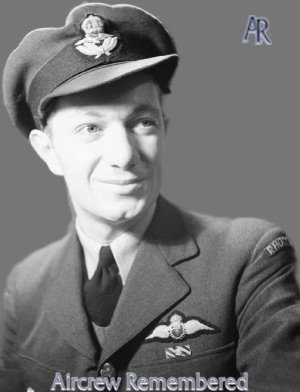
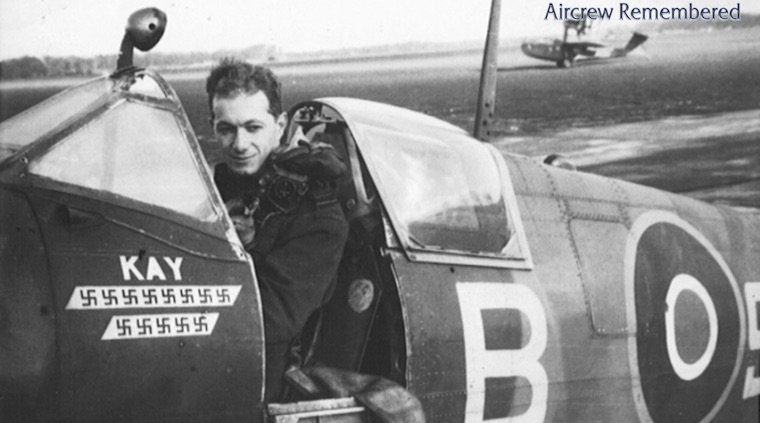
Flight Lieutenant Ioannis Agorastos 'John' Plagis, DSO, DFC and Bar (born 10 March 1919, Gadzema, Southern Rhodesia), who led the formation-flying exercise from which F/O. Fleming failed to return, was the son of Greek immigrants from Lemnos. Rejected initially by Rhodesian recruiters as a foreign national, he was accepted into the RAF once Greece joined the Allies in late 1940.
He became a Southern Rhodesian flying ace, noted especially for his part in the defence of Malta in 1942, flying Spitfires with No. 249 and No. 185 Squadrons. He was the war's top-scoring Southern Rhodesian ace and the highest-scoring ace of Greek origin, with 16 confirmed aerial victories, including 11 over Malta. He shot down four enemy aircraft in a single afternoon on 1 April 1942, becoming Malta's first Spitfire ace of the siege, and later commanded squadrons over Europe, earning the DSO and a Bar to his DFC.
By early 1943, when this accident occurred, Plagis was serving with No. 53 OTU at Llandow. After the war he retired from the RAF as a wing commander in 1948, returned to Salisbury, opened a bottle store, and became a director of several companies, including Central African Airways. He also made an unsuccessful bid for political office with the Rhodesian Front in 1962. Most sources date his death to 1974, at the age of 54 or 55, reportedly by suicide, having never fully readjusted to civilian life.
Sources and Acknowledgements
- National Archives of Australia
- Paul McGuiness, Australian Archives
- Aircrew Remembered Archives
- Wikipedia
- Imperial War Museum
- National Archives, Kew
- Commonwealth War Graves Commission
- Barry District News
- Wing Leader Publications


