




09th October 1943
No. 20 Operational Training Unit · Vickers Wellington X HE283
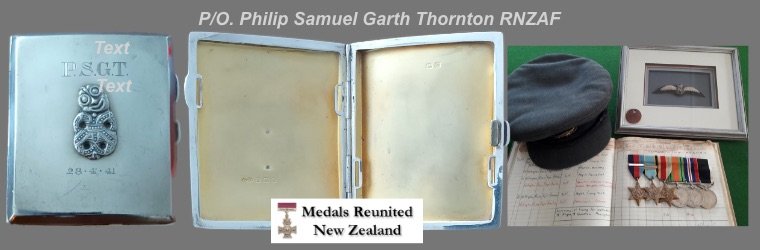
P/O. Philip Samuel Garth Thornton RNZAF
MISSION DETAILS
Operation: Cross-country exercise
Date: 09th October 1943 (Saturday)
Unit: No. 20 Operational Training Unit (OTU), 6 Group (1)
Type: Vickers Wellington X
Serial: HE283
Code: KW-L
Base: RAF Lossiemouth, Morayshire, Scotland
Location: Kirkby Hall, Kirkby Fleetham, North Yorkshire
CREW
Pilot: P/O. Philip Samuel Garth Thornton NZ403479 RNZAF Age: 28. Survived - seriously injured
Pilot 2: Fl/Lt. Raymond Charles Rawlings DFC NZ416164 RNZAF Age: 27. Killed
Pilot 3: P/O. Raymond Albert Lewis Young 142551 RAFVR Age: 30. Killed
Nav: F/O. Norman John Furlong DFC 142880 RAFVR Age: 21. Killed
W/Op/Air/Gnr: F/O. Colin Seymour 143393 RAFVR Age: 22. Killed
Medals Reunited of New Zealand is in the process of locating relatives of P/O. Phillip Thornton
19th June 2026 Update: family now in contact
REASON FOR LOSS
Wellington X HE283, captained by P/O. Philip Thornton, RNZAF, crashed onto a hillside in poor visibility after losing height as a result of an engine failure. Thornton survived with serious injuries, but four members of his crew were killed, including Fl/Lt. Rawlings (2nd pilot), whose remains were cremated at the Kettering Crematorium, Northamptonshire. The ashes were later buried at Cambridge.
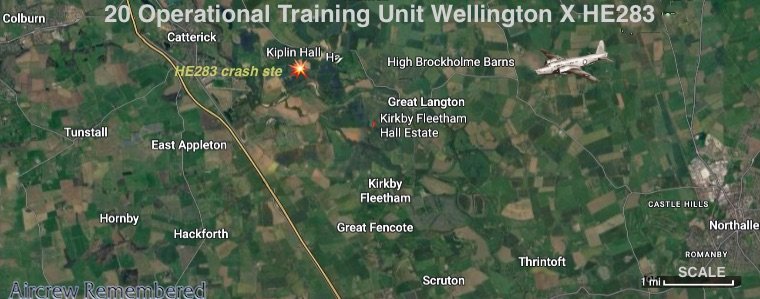 Note: Some sources give the crash site as Kirby Hall [sic - Kirkby Hall intended], just to the north of Kirby Fleetham [sic - Kirkby Fleetham]. However, it is thought more likely that the crash took place on the high ground at Kirkby Hall [note: not Kirkby Hill], 11 miles to the NW of Kirkby Fleetham.
INDIVIDUAL RECORDS
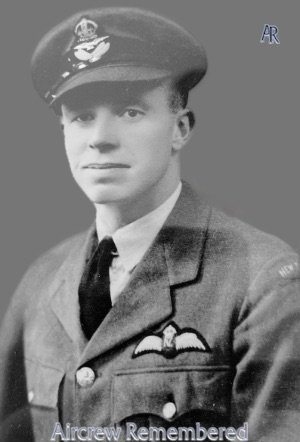
P/O. (later Fl/Lt.) Philip Samuel Garth Thornton NZ403479 RNZAF
Survived the war.
Born on 1st September 1915 in Tolaga Bay, New Zealand. He enlisted in the RNZAF in September 1940, successfully undertook wings training in New Zealand, and then proceeded to the United Kingdom, arriving in June 1941. He served on heavy bombers with 9 and 104 Squadrons. The date on his cigarette case is the date he gained his wings.
Passed away on 20th October 1993, age 83. Buried at Tolaga Bay Cemetery, RSA Ashes Berm, Plot 001.
Son of John Darcy Garth Thornton (died 1959, age 76) and Isabella Thornton (née Spence - died 1963, age 85). Brother of Joan Edna Spence and Marjorie Mary Thornton. Husband of Winifred Joyce Thornton (served as NZ WAAF 208233, Corporal - died 2015, age 92).
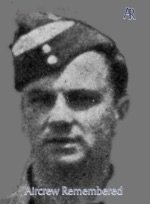
Fl/Lt. Raymond Charles Rawlings DFC NZ416164 RNZAF Age: 27
Cambridge City Cemetery, Grave 15970.
Born on 27th May 1916 in Enfield, London, England. He came to New Zealand at the age of seven and received his secondary education at Dunedin Technical College. He played tennis and took an active part in swimming and gymnastics. On leaving school he was employed as a printing machine operator by the firm of Whitcombe & Tombs, Dunedin, and in 1936 moved to their branch in Wellington. He was so employed on 23rd October 1940, when he applied for aircrew enlistment in the RNZAF.
Flight Lieutenant Rawlings enlisted at the Initial Training Wing, Levin on 9th November 1941. On completion of his Ground Training Course he was posted on 19th December to No. 1 Elementary Flying Training School for his elementary flying training. On 7th February 1942 he proceeded to No. 1 Flying Training School, Wigram, where he was awarded the Flying Badge on 4th April and promoted to Sergeant on 13th June. He embarked for the United Kingdom on 22nd June 1942.
Rawlings arrived at No. 3 Personnel Reception Centre, Bournemouth on 30th July 1942, remaining there until his posting on 18th August to No. 3 (Pilots) Advanced Flying Unit, Cirencester, Gloucestershire, for advanced training on Oxford aircraft. From 12th September to 21st October he underwent a course at No. 1519 Beam Approach Training Flight, Feltwell, Norfolk, before being posted to No. 24 Operational Training Unit, Honeybourne, Worcestershire, for crewing up and training on Whitley bomber aircraft. He then proceeded on 6th January 1943 to No. 10 Operational Training Unit, St Eval, Cornwall, from which base - as pilot of Whitley bomber aircraft - he carried out six operational flights, all being anti-submarine patrols.
Notes supplied by Medals Reunited of New Zealand;
Contrary to our initial belief/guess, the date on the cig case was not Thornton's wings qual date: 3 March 1941, completed at No 2FTS, RNZAF Blenheim, nor even his promo date to Sgt (P) / graduation parade date. The date is in fact, Thornton's last day in NZ. The tiki on the front of the case indicates it was a made-for-the-New Zealand-market product which he most probably bought at a souvenir shop, and had the last day's date engraved. The next day, 29 April, he left NZ on the TSS Awatea. The ship headed for Vancouver, except for those already qualified pilots onboard who were being attached directly to the RAF and were transhipped off the Awatea mid-voyage for England.
Additional: Thornton was known as "Sam". 3 Nov 1945 - transferred to Reserve of Officers, RNZAF . Appointed a Justice of the Peace in 1961.
On 6th March 1943 he proceeded to Linton-on-Ouse, Yorkshire, from which base he carried out a further two operational flights, the targets being Essen and Nuremberg in Germany. He then converted to Halifax aircraft on 11th March at No. 1652 Conversion Unit, Marston Moor, Yorkshire, before resuming operational flying as a member of No. 158 Squadron, Lissett, Yorkshire, on 13th April. With this Squadron, as pilot of Halifax aircraft, he carried out a further fifteen operational flights, including attacks on Stuttgart, Essen, Dortmund, Duisburg, Bochum (twice), Krefeld, Mulheim, and Gelsenkirchen in Germany; Le Creusot in France; and one minelaying operation to the Frisian Islands.
He then underwent a short course from 4th to 8th July at No. 1502 Beam Approach Training Flight, Driffield, Yorkshire, and resumed operational flying on 13th July with No. 158 Squadron, carrying out a further nine operational flights - targets being Aachen, Hamburg (three times), Essen, Nuremberg, and Berlin in Germany; Montbéliard in France; and Milan in Italy. This brought his total to 26 sorties, completing his first operational tour. On 24th September 1943 he was posted to No. 20 Operational Training Unit, Lossiemouth, Scotland, as an instructor.
He was appointed to a commission in the rank of Pilot Officer on 3rd May 1943, promoted to Flying Officer on 1st July, and to Flight Lieutenant on 1st October 1943.
On 9th October 1943, Flight Lieutenant Rawlings was the2nd pilot of Wellington X HE283, engaged on a cross-country training flight, when it crashed into a hillside near Kirkby Hall, Yorkshire. All members of the crew except one lost their lives. Flight Lieutenant Rawlings was cremated at the Kettering Crematorium, Northamptonshire, his funeral taking place on 14th October 1943.
Shortly after his death, the award of the Distinguished Flying Cross was announced.
DFC Citation
"Flight Lieutenant Rawlings has completed many sorties against some of the most heavily defended enemy targets, such as Berlin, Essen, Hamburg, and Duisburg. On one occasion he was detailed to attack Bochum. When nearing the target, his aircraft was heavily engaged by anti-aircraft fire and became badly damaged. With the utmost determination, he pressed home his attack and flew the damaged bomber back to base. Flight Lieutenant Rawlings has consistently displayed fine fighting spirit, outstanding courage and great devotion to duty."
Son of Alfred William and Flora McDonald Rawlings, of Ravensbourne, Otago, New Zealand.
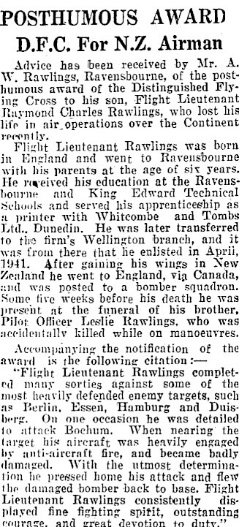
(shown above left) Contemporary Press - Dominion, Vol. 37, Issue 62, 8 December 1943, Page 8
POSTHUMOUS AWARD - DFC for N.Z. Airman
"Advice has been received by Mr. A. W. Rawlings, Ravensbourne, of the posthumous award of the Distinguished Flying Cross to his son, Flight Lieutenant Raymond Charles Rawlings, who lost his life in air operations over the Continent recently.
Flight Lieutenant Rawlings was born in England and went to Ravensbourne with his parents at the age of six years. He received his education at the Ravensbourne and King Edward Technical Schools and served his apprenticeship as a printer with Whitcombe and Tombs Ltd., Dunedin. He was later transferred to the firm's Wellington branch, and it was from there that he enlisted in April 1941. After gaining his wings in New Zealand he went to England, via Canada, and was posted to a bomber squadron. Some five weeks before his death he was present at the funeral of his brother, Pilot Officer Leslie Rawlings, who was accidentally killed while on manoeuvres."
P/O. Raymond Albert Lewis Young 142551 RAFVR Age: 30
Harrow Weald Cemetery, Section D, Grave 40.
Son of Percival Stanley and Esther Young, of Kenton, Harrow, England.
F/O. Norman John Furlong DFC 142880 RAFVR Age: 21
Greenwich Cemetery, Plot E, Grave 69 (family grave).
Son of William Arthur Furlong (died 1942) and Emily Mary Ann Furlong (died 1989), of Lee, Lewisham, London, England.
DFC Citation: Norman John Furlong (142880), RAFVR, 10 Squadron, with effect from 8th October 1943 (since deceased).
F/O. Colin Matthew Seymour 143393 RAFVR Age: 22
Newcastle-upon-Tyne Crematorium (West Road), Panel 7.
Son of George Stanley and Charlotte Seymour, of Benton, Newcastle-on-Tyne, England. His father, Mr. Stan Seymour, was the well-known director of Newcastle United Football Club.
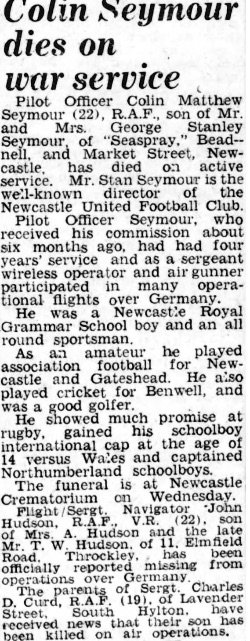
Contemporary Press - Colin Seymour dies in war service
"Pilot Officer Colin Matthew Seymour (22), R.A.F., son of Mr and Mrs. George Stanley Seymour, of "Seaspray," Beadnell, and Market Street, Newcastle, has died on active service. Mr Stan Seymour is the well-known director of the Newcastle United Football Club.
Pilot Officer Seymour, who received his commission about six months ago, had had four years' service and as a sergeant, wireless operator and air gunner, participated in many operational flights over Germany.
He was a Newcastle Royal Grammar School boy and an all-round sportsman. As an amateur, he played association football for Newcastle and Gateshead. He also played cricket for Benwell and was a good golfer. He showed much promise at rugby, gained his schoolboy international cap at the age of 14 versus Wales and captained Northumberland schoolboys.
The funeral is at Newcastle Crematorium on Wednesday."
BACKGROUND NOTES

No. 20 Operational Training Unit (20 OTU) - Overview (1)
No. 20 OTU was formed in May 1940 at RAF Lossiemouth specifically to train night bomber crews using the Vickers Wellington. On 27th April 1940, Lossiemouth transferred to No. 6 Group of RAF Bomber Command and No. 20 OTU was established, initially operating Wellingtons and Ansons.
Lossiemouth is situated on the Moray coast of northern Scotland - a remote but strategically useful location for training, away from the heavily trafficked skies of southern England. Wellingtons of 20 OTU were even involved in strategic bombing raids on German cities throughout 1942, the training aircraft being required to help reach the target number of 1,000 bombers per raid.
By late 1943 the Wellington X was the standard aircraft at 20 OTU. It was well-suited to the training role - tough, forgiving, and familiar to crews who would go on to fly similar aircraft operationally. The geodetic structure meant it could take a beating and often get crews home - but engine failure at low altitude in poor visibility, as happened to HE283, left no margin for survival.
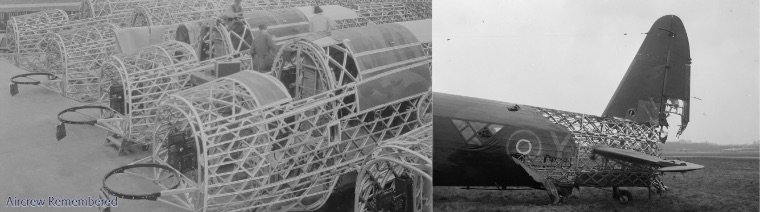 The Vickers Wellington X
The Vickers Wellington X was the most produced variant of the entire Wellington series - over 3,800 built - and became the backbone of Bomber Command's medium bomber force in the mid-war period.
Powerplant: Two Bristol Hercules VI or XVI radial engines, each producing around 1,675 hp. This represented a major upgrade over earlier Merlin-engined marks.
Performance: Maximum speed approximately 255 mph at 14,500 ft; service ceiling around 22,000 ft; range approximately 1,470 miles with bomb load; capable of carrying up to 4,500 lb of bombs.
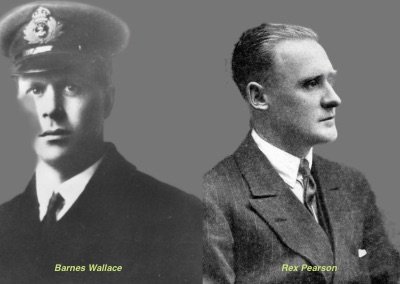
Structure: The Wellington's most famous feature was its geodetic airframe - a basket-weave lattice structure designed by Barnes Wallace - which gave it remarkable ability to absorb damage and still fly home.
Crew: Typically six: pilot, second pilot/co-pilot, navigator, bomb aimer, wireless operator/air gunner, and rear gunner.
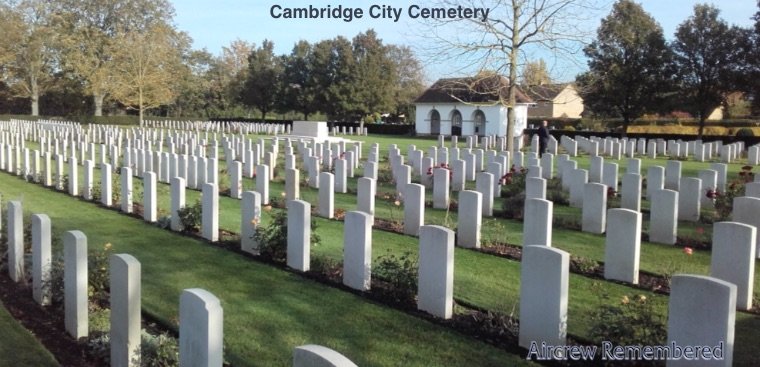 Cambridge City Cemetery
A Visitor Information Panel was installed at Cambridge City Cemetery to provide information about the war casualties buried there. The Air Force plot was established in 1942 for the burial of casualties from Air Force stations set up in the eastern counties during the war, including Bomber Command bases in Lincolnshire and fighter stations in Norfolk and Suffolk. The Stone of Remembrance, unveiled by Marshal of the Royal Air Force Lord Tedder in July 1951, stands near the centre of the Air Force plot.
Cambridge City Cemetery contains 181 Commonwealth burials of the First World War and 829 (including 3 unidentified) from the Second World War.
 SOURCES AND ACKNOWLEDGEMENTS
- Medals Reunited New Zealand
- Errol Martyn - For Your Tomorrow, Vols. 1–3
- New Zealand Cenotaph
- RNZAF Museum
- Aircrew Remembered Archives
- Wikipedia
- National Archives, Kew
- Commonwealth War Graves Commission
- Papers Past, New Zealand
At the going down of the sun, and in the morning, we will remember them. - Laurence Binyon
Report compiled from official National Archive and service sources, contemporary press reports, personal logbooks, diaries and correspondence, reference books, and other sources.
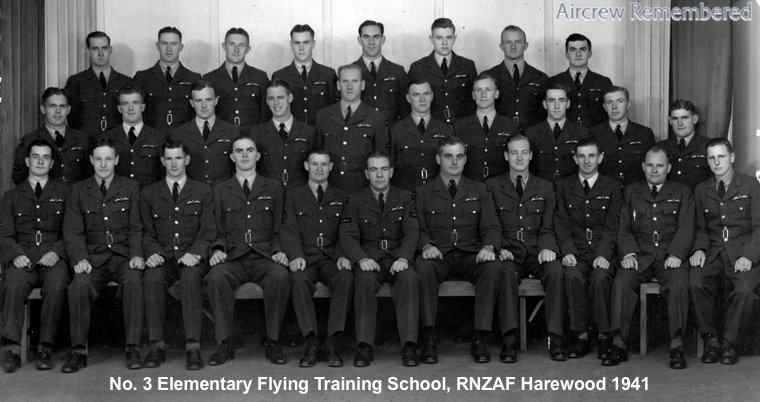
L-R: Rear; Gibson Chapman NZ403898, Clive Herbert Mulholland NZ403972 KIA, WK William Keith Wilby 404012,Morris Donald Darwin 403976 KIA , Ian Arnaud Burgess NZ59597, James Brian Munro NZ403970, Cecil Haliday Fox NZ403958 , Archibald Douglas Vincent Forsyth NZ403957 KIA
Centre; Cyril Stanley Dentt NZ403858, Ralph Holland Tye NZ404002 KIA, RS Sim, Hugh Calder McAffer NZ403975, Alexander Cairns Anderson NZ403929 KIA, Kenneth McKenzie NZ403973 Musker NZ403973r, , James Keith Ward NZ404006, Philip Samuel Garth Thornton 403479, Richard James Clarke NZ403949 KIA.
Front; Arthur Haig O'Brien NZ403472, Noel Ernest Robertson Carrel NZ403941, Stephen Delancy Watts, NZ404008 KIA AStA Murray, Arnold George Browne NZ392011 KIA Bernard Norris Murdoch NZ40421 KIA, ME Nairn, Desmond Joseph Pyman NZ403473, ]Leonard Clarence Shepherd NZ403994 KIA, Eric Edward Pedersen NZ403984 KIA, Ian Leslie Walton 404005.Above as described L-R: Rear; G. Chapman, Clive Hbert Mulholland, W.K Wilby, M.D McCarthy, Ian Arnaud Burgess, James Brian Munro, C.H Fox, Archibald Douglas Vincent Forsyth.
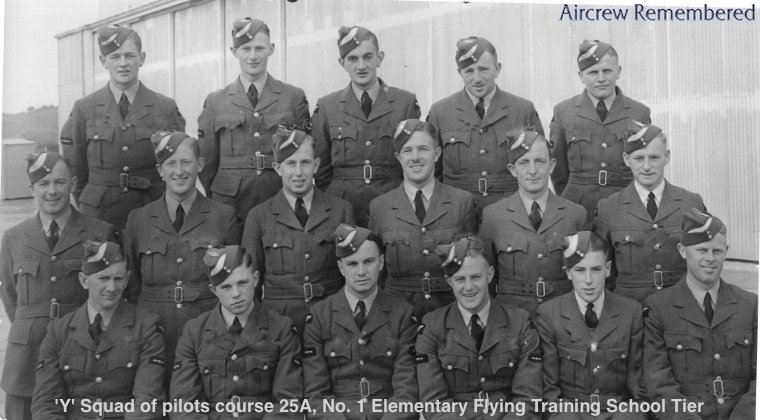
L-R: Back; NC Sutherland GR Shepherd, GRS Duthie, JM Robertson, GWL Fairhall.
Middle; WA Steel, JF Morgan, JT Priestley, RF Norman, FA Partridge, RB Lapsley.
Front; GV Helm, AA Bills, RC Rawlings, RF Townshend, AM Penman, A Carey.


