




Operation: Reconnaissance
Date: 20th October 1940 (Thursday)
Unit: No. 248 Squadron (motto: l faut en finir - 'It is necessary to make an end of it') (1)
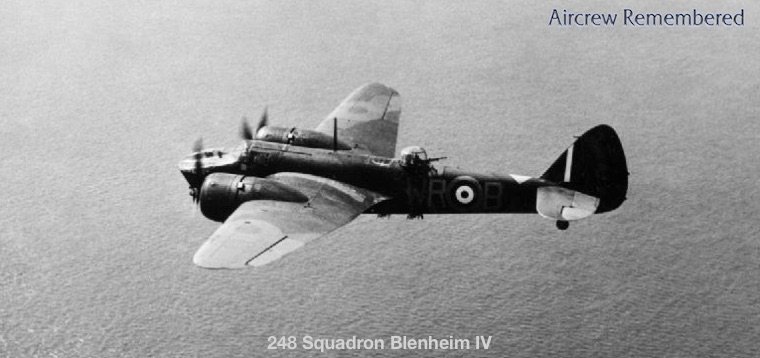
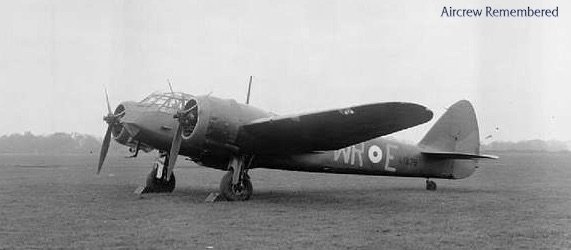
Type: Bristol Blenheim IV
Serial: P6952
Code: WR-X
Base: RAF Sumburgh, Shetland Islands (2)
Location: Off Utsira near Stavanger, Norway,
Pilot: P/O. George Maurice Baird 42094 RAF Age 26 PoW No. 61 Camp Stalag Luft Sagan
Obs: Sgt Richard Copcutt 581146 RAF Age 20. Missing - believed killed
Obs 2: Sgt. Douglas Lawrence Burton NZ/40187 RNZAF Age 24. PoW No. 55544 Camp Stalag Luft Barth/Sagan
W/Op/Air/Gnr. Sgt Stanley Victor Wood 649800 RAF PoW No: 69103 Camp Stalag Luft Sagan
REASON FOR LOSS:
Taking off at 07:25 hrs. from RAF Sumburgh, on reconnaissance off the south-west coast of Norway. After engaging and damaging a Do. 18 of 1./KuFlGr.406 the Blenheim was attacked by Me109s of JG77.
One engine was knocked out and the cockpit filled with smoke. The captain, P/O George Baird, got down to low level, flying blind and skimming over the sea at a speed of 150 mph. The aircraft struck the sea 12 miles off Utsira and the fuselage filled with water.
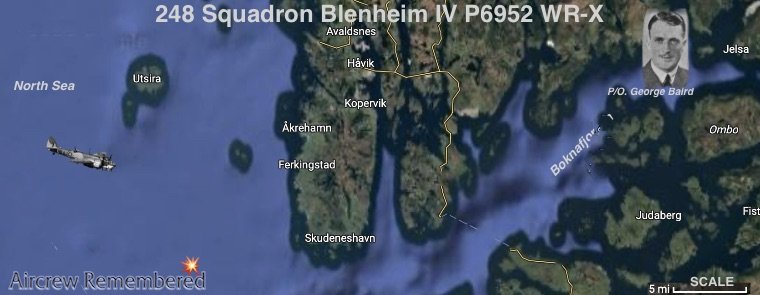 The pilot freed himself and opened the hatch. He then managed to float out the unconscious Sgt. Burton but was unable to rescue Sgt. Copcutt, also unconscious, before the aircraft sank.
Sgt. Wood had freed himself and released the dinghy, the three survivors climbed aboard and were later picked up by He59 BV+HH of Seenotflugkdo.5 (3) and landed at Stavanger. They spent the rest of the war as prisoners.
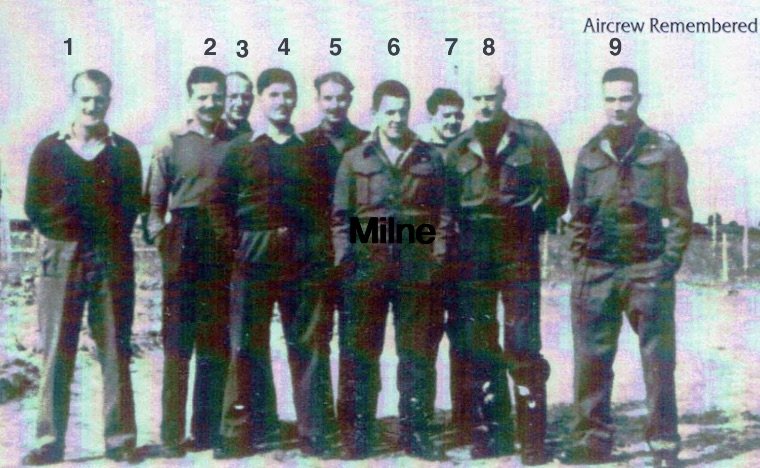
P/O. George Maurice Baird shown as 1 - for the remainder see PoW details below
BURIAL AND ADDITIONAL DETAILS:
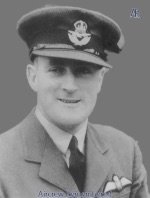
P/O. George Maurice Baird. Born on the 28 October 1913 in Foxton, Manawatu, North Island, New Zealand. 5 Flying Training School, Sealand on the 30th May 1939, 10 Elementary and Reserve Training School, Yatesbury on the 13th March 1939
After his release, he was repatriated to NZ, but in late 1947 applied to rejoin the RAF and was granted an extended commission. After a refresher course on Oxfords and Wellingtons he converted to Lincolns and joined 35 Squadron at Mildenhall, as a Flight Commander (late 1947). In February 1950, Baird went on an Air Traffic Control course. He served as a Controller at stations in the UK, the Far East and Germany and retired from the RAF on 2nd December 1963 as a Flight Lieutenant. Son of William Alan Baird (died 1948, age 67) and Margaret Anne 'Annie' Baird (née Rough - died 1876, age 89) of Foxton, Manawatū-Whanganui, New Zealand. Husband of Dorothy Ann Baird (née Tennant - died 2014, age 99). Married on the 01st May 1946. Father of Catriona and Pete. George passed away on the 01st May 2008, age 94. He is remembered with Dorothy in Foxton Cemetery.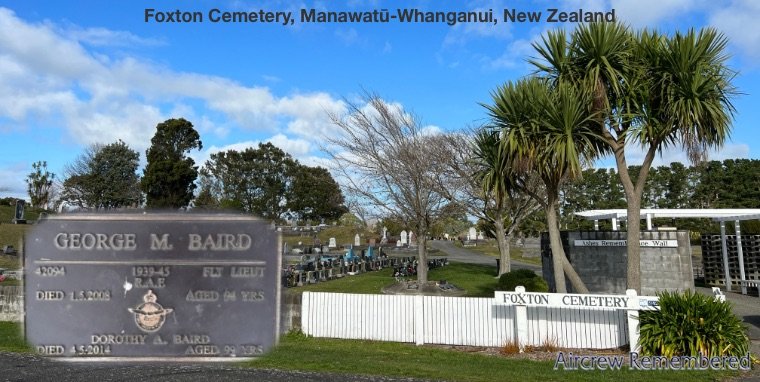
Sgt Richard Copcutt. Runnymede Memorial. Panel 13. Born on the 08th January 1920 in Hackney. Son of Thomas Edward Joseph Copcutt (died 1960, age 83) and Ada Elizabeth Copcutt (nee Smellie - died 1958, age 79). Joined RAF in March 1939 and, after training at No. 1 Coastal OTU, joined 248 Squadron on the 26th June 1940. The family lived in Whetstone, Middlesex, England.
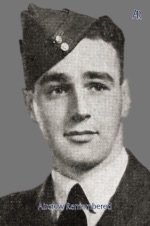
Sgt. Douglas Lawrence Burton. Born on the 14th December 1916 in Opunake, New Zealand. After training at Weraroa and flying at the Air Observers School at Ohakea, Burton sailed for the UK in the RMS Rangitata on 7th June 1940. At the end of July he was posted to 17 OTU Upwood, and he joined 106 Squadron at Finningley on the 02nd October. Ten days later, he went to Sumburgh in the Shetlands to join 248 Squadron, a Coastal Command unit seconded to Fighter Command. He was treated at the hospital in Stavanger, sent to Stalag Luft 1 and later Stalag Luft 3, where he worked in the Red Cross Store. He was promoted to Warrant Officer in May 1943. After his release at the end of the war arrived back in New Zealand in January 1946, spent some time in hospital and went on to the reserve in December. He became a partner in a sports-outfitting business in Wanganui. Son of John Percival “Jack” Burton (died 1944, age 73) and Ethel Burton (née Pettit - died 1941, age 63). His brother Clifford Burns Burton also served as a PoW. He survived the war and passed away on the 25th January 2002, at the age of 84. Douglas Burton passed away at the young age of 59 on the 20th November 1974 in Manawatū-Whanganui, New Zealand. No details on wife and children.
Sgt Stanley Victor Wood. Born on the 04th January 1920 in Bury, Lancashire, England. Joined the RAF in June 1939 as an Aircrafthand. He later remustered as an Airman u/t WOp/AirGnr and after completing his training he joined 248 Squadron in September 1940. He was in Stalag Luft III at Sagan and Belaria. Freed in May 1945, he was released from the RAF later in the year as a Warrant Officer. No further details available.
Researched and dedicated to the relatives of this crew with thanks to the extensive research by Errol Martyn and his publications: “For Your Tomorrow Vols. 1-3”, New Zealand Cenotaph, Weekly News of New Zealand, Air Museumof New Zealand, Museum of Transport and Technology, Auckland, National Archive Kew. Sumburgh History. Papers Past of New Zealand. Key Aero. Other sources as quoted below:
(1) 248 Squadron and the Bristol Blenheim; reformed at RAF Hendon as a night fighter squadron after the outbreak of WWII, receiving its first aircraft - Bristol Blenheim IFs - in December 1939.
Lacking any form of radar, its initial night flying was ineffective, and at the end of February 1940 it was transferred to Coastal Command, equipped with seven Blenheim Mk.IVFs. It moved to North Coates and later to Thorney Island and Gosport, where it acquired its full complement of Blenheims.
The squadron moved to RAF Sumburgh in the Shetland Islands on 31 July 1940, flying reconnaissance and anti-shipping missions off the coast of Norway. This was a particularly dangerous period, and several 248 Squadron Blenheims were lost flying these Norwegian coast patrols in mid-to-late 1940. (Courtesy RAF History)
(2) RAF Sumburgh, Shetland Islands; occupied a uniquely strategic position at the very southern tip of the Shetland mainland, making it one of Britain's most important and exposed northern outposts during the war. The RAF gained the airfield in 1939 when the Second World War commenced. Gloster Gladiators arrived in December to form a Fighter Flight to provide defence for the islands. Three tarmac runways were completed in 1940, with Bristol Blenheims of No. 254 Squadron arriving as a Station HQ was established in May.
Between 1939 and 1945, RAF Sumburgh played host, at various times, to more than 40 different RAF or naval air squadrons and a unit of the Royal Canadian Air Force. Substantial numbers of aircrews and support staff were billeted in homes in the surrounding area, with some accommodated in Sumburgh House (now the Sumburgh Hotel) or in specially-built huts.
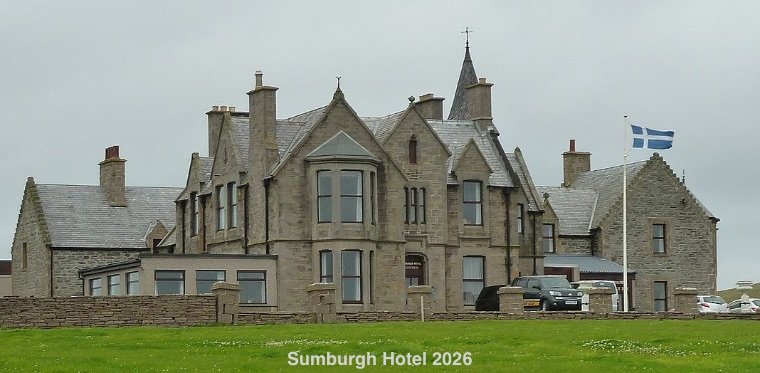
Strategic Role: RAF Sumburgh was in a pivotal location to respond to enemy aircraft appearing over the islands, with daily patrols against raiders, as well as protecting shipping and convoys. While the military involvement was partly defensive, it was also offensive via Coastal Command operations — including U-boat patrols and strikes across to Norway.
Both Spitfires and Hurricanes were posted to Sumburgh to defend Shetland from air attack. The Germans were well aware of this threat - enemy aircraft attacking the area were conscious that Hurricanes from Sumburgh could appear at any moment.
The Rocket Strike Pioneers; 404 Squadron RCAF pioneered the use of unguided rocket projectiles against enemy merchant shipping off the Norwegian coast, launching joint strike attacks with 144 Squadron (torpedo aircraft) from RAF Sumburgh and RAF Wick in 1943 and early 1944.
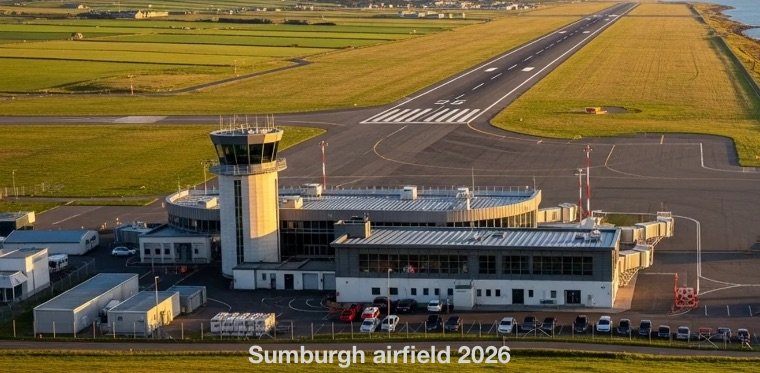
The Radar Station and 'Britain's Pearl Harbour'; One of the most dramatic episodes of the entire war involved Sumburgh Head's radar station. In autumn 1939, a radar station - Admiralty Experimental Station 1 - was established within the grounds of Sumburgh Head Lighthouse. On the evening of 8 April 1940, around 60 Luftwaffe bombers took off from Germany intending to destroy the British Home Fleet at anchor in Scapa Flow in Orkney. Sub-Lieutenant George Clifford Evans detected the raid approximately 100 miles south-east of Sumburgh and provided a 25-minute warning to the commander at Scapa Flow. The barrage repelled the enemy attack, with the noise of anti-aircraft fire heard as far away as Lerwick - 125 miles distant.
Evans himself later wrote that even if the stations never made any other contribution to the war, that night alone had justified the entire enterprise. The restored radar hut at Sumburgh Head has since been recreated to its wartime appearance, including the bicycle-style foot pedals operators used to rotate the aerial.
Under Attack; The airfield was at the forefront of action on the Northern Front and attracted German air interest, witnessing various crashes and German bombing raids. Bombs fell on Sumburgh itself among other Shetland locations throughout the war.
Ground Defences; Protection of RAF Sumburgh was crucial, particularly given the possibility of a German invasion of the islands. Near the airport today there is evidence of a former camp which housed the Black Watch and other regiments who defended the airport, along with key structures in the surrounding area providing evidence of airport protection. Anti-aircraft batteries steadfastly guarded the airfield and coastal positions.
Legacy: today Sumburgh is the Shetland Islands' main commercial airport. Some Second World War buildings can still be seen throughout the airport, although all the wartime hangars have been removed and the control tower has been substantially modernised. The site stands as one of the most evocative reminders of Britain's northern wartime frontier. (Courtesy Sumburgh History)
(3) Seenotflugkdo; As early as April 1939, an air-sea rescue service, part of the Deutsche Gesellschaft zur Rettung Schiffbrüchiger (German Maritime Search and Rescue Service), was formed at Norderney in northern Germany and was declared operational by July 1939. It was called Seenotrettungsdienst, usually shortened to Seenotdienst, and was initially equipped with three Heinkel He 59s coded WL-APIE, WL-AHAN and WL-AKAR. Besides national markings on the wings and tail, the aircraft also carried red crosses on the fuselage. At first, they were manned by civilian aircrew, but in August 1939 the machines were taken over by the Luftwaffe and the unit began to expand. (Courtesy Key-Aero)
PoW Stalag Luft Sagan image details
1
P/O. (Fl/Lt) Retired as Fl/Lt George Maurice Baird 42094 RAF Pow No: 61 Stalag Luft Sagan. Whilst flying with 248 Squadron (Coastal Command) flying Blenheim IV P6952 WR-X out of RAF Sumburgh, Shetland Islands. Sunday 20 October 1940 at 07:25 hrs for a reconnaissance off the south-west coast of Norway. After engaging and damaging a Dornier Do18 of 1./KuFlGr.406 the Blenheim was attacked by Bf109's of JG77. His observer, 20-year-old Sgt Richard Copcutt 581146 RAF from Whetstone, Middlesex, was listed as missing, believed killed. The two wireless operators/air gunners, 23-year-old Sgt. Douglas Lawrence Burton NZ40187 RNZAF from Opunake, New Zealand (PoW No: 55544) and 20-year-old Sgt Stanley Victor Wood 649800 RAF from Bury, Lancashire (PoW No: 69103) survived with the pilot after climbing into their rescue dinghy. They were later picked up by He59 BV+HH of Seenotflugkdo.5 and landed at Stavanger. They spent the rest of the war as prisoners. ( Fl/Lt George Baird passed away on the 01st May 2008, age 94) (Further details available)
2
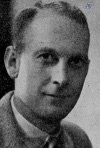
P/O.(Fl/Lt.) Basil William Berryman 36205 PoW No: 413 Stalag Luft Sagan. Whilst flying with 142 Squadron (Bomber Command) Fairey Battle I L5200 out of Villiersfaux, France, Tuesday 11th June 1940. On an operation to attack pontoon bridges over the Seine at Le Manoir, six aircraft from 142 squadron were hit by 20mm AA fire from 2./Flakabteilung 37. The pilot was thrown out by the blast at 1000 ft, and although injured with burns, landed safely by parachute and was captured. The other two crew members were killed after the aircraft crashed in flames in woodland. They were 21-year-olds, Sgt. James Henshall Ledson 615842 RAF from James Henshall Ledson and 19 year old Sgt. Jack Nairn Fraser 581049 RAF from Hempnall, Norfolk. (P/O. Basil Berryman passed away on the 24th May 2000, age 80), age 77) ~ (Further details available)
3
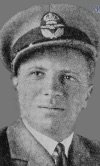
Fl/Lt. Robert Garth Stark NZ40631 PoW No: 414. Stalag Luft Sagan Whilst flying with 75 Squadron (Bomber Command) Wellington ICR3211 AA-J out of RAF Mildenhall, Suffolk.Sunday/Monday 29/30th December 1940 . Aircraft ran out of fuel due to strong head headwind and made a forced landing at 02:25 hrs. Pilot, Fl/Lt Henry Daniel Newman RAF 37584 Pow No. 4509 and P/O. Sgt. Jack Middleton Garrett NZ/40631 RNZAF PoW No. 414, Wireless operator / air gunner Sgt. Sidney Laurence Spittle 968421 RAF PoW No. 447, air gunners Sgt. Manville Charles Fenn 909269 RAF Pow No. 447 and Sgt. David Garrick Branscombe Protheroe NZ//401231 RNZAF PoW No. 446 all survived the war. (Fl/Lt. Robert Stark passed away on the 08th October 1999, age 83 MBE. Bronze Star (USA)
(Further details available)
4
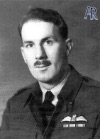
Fl/Lt. Arthur Vicary Hunter NZ/40723 RNZAF PoW No: 467. Stalag Luft Sagan. 217 Squadron (Coastal Command) Beaufort I N1173 MW-E out of St. Eval, Cornwall on a Reconnaissance patrol. 12th February 1941 at 11L:15hrs . Shot down by enemy flak near the German-occupied naval base at Brest. One of the pilots. F/O. John Hexley Wybrants 79689 RAF was killed, the remaining four were picked up by the Germans and made PoW. Two wireless operator air gunners P/O Louis Brull Barry, 78668 RAF PoW No. 407 and Sgt Geoffrey Dean Holiday. 627394 RAF POW Number 432 and the observer Sgt Peter Henry Clarke, 745759 RAFPOW No. 490, (note; some records incorrectly have F/O. Wybrants middle name as Hetley, and that it was a four man crew) (Fl/Lt. Arthur Hunter passed away on the 11th May 2008, age 90 MiD) (Further details available)
5
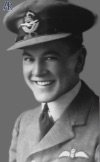
F/0. (Fl.Lt.) Eric Neil Baker 41641 RAF PoW No: 463 Stalag Luft Sagan. Whilst flying with 419 Flight Whitley V T4264 out of RAF Stradishall, Suffolk, Monday/Tuesday 17/18th February 1941 1:15 hrs. A Lysander pilot, but flying as an air gunner to familiarise the route. On return the aircraft was hit by flak and forced to land. All six crew survived and were taken prisoner, Pilot Sq/Ldr. Francis John Baptist Keast DFC. 28090 RAF PoW No: 468, F/O. Kenneth Stanley McMurdie 43832 RAF PoW No: 474, Observer Sgt Archibald John Cameron 517909 RAFVR PoW No: 488, Air Bomber Sgt David Harold Bernard 966856 RAFVR PoW No: 481 and another Air Gunner David Waldo Davies 904254 RAFVR PoW No: 493. (F/0. Eric Neil Baker passed away on the 05th May 2008 age 93)
(Further details available)
6
F/O. (Fl/Lt.) Herbert Douglas Newman 37584 RAF (later RNZAF) PoW No. 4509 Stalag Luft Sagan. Whilst with 75 Squadron (Bomber Command). Flying Wellington IC R3211 AA-J out of RAF Mildenhall, Suffolk. Sunday/Monday 29/30th December 1940 02:25 hrs. During the return trip, encountered strong headwinds. All six crew survived as PoW: 2nd pilot, Sgt. Manville Charles Fenn 909269 RAF PoW No. 429 observer Sgt. Sergeant Robert Garth Stark Sergeant Robert Garth Stark NZ/40631 PoW 597, wireless operator, air gunners, Sgt. Sidney Laurence Spittle 968421 RAF PoW No. 447 and Sgt, Manville Charles Fenn 909269 RAF PoW No. 429, air gunner. David Garrick Branscombe Protheroe NZ//401231 RNZAF PoW No. 446. (F/O. Herbert Newman passed away in April 1996, at the age 77)
(Further details available)
7
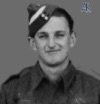
P/O. (Fl/Lt.) Michael Cyril Wallace Ormond (pre commission 907903) 88465 RAF NZ/2387 RNZAF PoW No. 39327 610 Squadron. Flying Spitfire IIa P7752 DWW-E. Three others from the squadron were lost; 21-year-old P/O. Nigel George Drever 42205 RAF PoW No. 451. (survived the war, passed away on the 10th September 1964, age just 43) Flying Spitfire Ia P8027. Sgt. Samuel Hamer 758049 RAFVR killed flying Spitfire IIa P7501 DW-O. 22-year-old P/O. Raymond Edwin Owen 88466 RAF Spitfire P7752 DW-N missing - believed killed (PO. Michael Ormond passed away on the 10th Sept 1964 in Fife, Scotland, age 43) (Further details available)
8
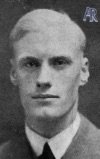
F/O (W/Cdr) Cecil Dunn “Snowy” Milne PoW No: 412 Sagan 57 Squadron (1936), 212 Squadron PDU (later PRU); 617 Sqn (1947). Flying Spitfire PR. III N3071 was shot down on the 25th April 1940 at Esslingen near Stuttgart. Captured by German forces and made a POW. Son of William and Catherine Milne. Death: August 15, 1983, in New Zealand. W/Cdr. Cecil Milne DFC. passed away on the 15th August 1983, age 67 DFC)
(Further details available)
9
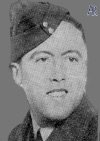
Sgt. (W/O.) Albert George Murray Coulam PoW No: 42719 Sagan. NZ/413286 RNZAF, 35 Squadron. Halifax II W7851 on an operation to Nurnberg on the 09th March 1943, taking off at 00:30 hrs. Shot down by Oblt. Ludwig Meister of the Stab I/NJG 4, flying Bf 110 F-4 3C+MB from Laon-Athies airfield. Pilot, F/O. John Hilton Brown RAFVR 109028 (NCO:1066452) killed. Fl/Eng. Fl/Sgt. Alan Tacey RAF 1057600 PoW No: 27744, Navigator Sq/Ldr. Gomer Donald Waterer, RAF 77214 (NCO:749414: Commission Gazetted Tuesday 06 February, 1940) PoW No: 937, Air/bmr. Albert George Coulam, W/Op/Air/Gnr. Fl/Sgt. David Aitken Sibbald DFM RNZAF NZ/411102 evaded capture, Air/Gnr. Fl/Sgt. Patrick Flynn, RAFVR 1174414, killed, Air/Gnr. Stanley Seymour Vinicombe NZ/413286 RNZAF killed. (Albert Coulam passed away on the 17th August 1999, age 82) (Further details available)


