




Operation: Patrol
Date: 7th June 1944 (Wednesday)
Unit: No. 421 Squadron RCAF (motto: Bellicum Cecinere - They Have Sounded the War Trumpet)
Type: Spitfire IX
Serial: MJ554 (1)
Code: AU-Z
Base: RAF Tangmere, West Sussex
Location: English Channel, off Moisy, Normandy, France
Pilot: Fl/Lt. William John Drope, J/9146, RCAF, Age 22 - Killed
Reason for Loss
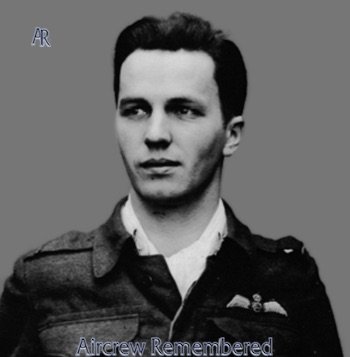
On the day after D-Day, No. 421 Squadron was kept busy flying patrols over the Allied beachhead in Normandy. At 11:20 hrs Fl/Lt. Drope took off with six other pilots on the squadron's second patrol of the day, Operation No. 127/19, covering the Western Assault Area over the American beaches.
About ten miles inland he reported that his engine was overheating, and glycol was seen streaming from his aircraft. The official casualty signal assumed that the damage had been caused by enemy action, while the squadron diarist recorded that he was forced down by mechanical trouble. The exact cause was never established.
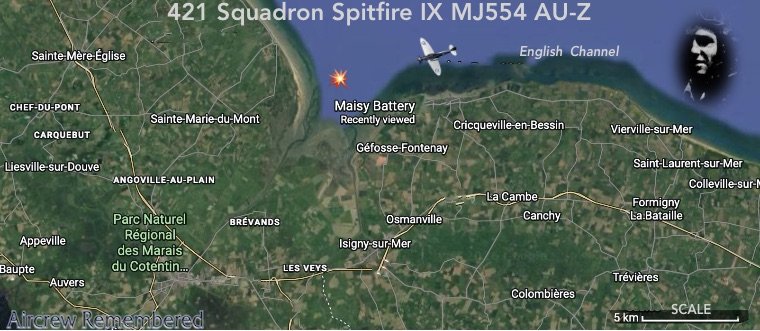
At 13:00 hrs, flying at 2,500 feet about 500 yards offshore from Maisy, he abandoned his Spitfire over the sea. His parachute was not seen to open. His body was seen floating in the water near an American destroyer, and a boat was seen to put off from the destroyer to pick him up.
The casualty signals of the time spell the location "Moisy", which is an error for Maisy, a village lying between Omaha and Utah beaches.

Squadron Operations Record Book entry:
"Operation No. 127/19, Patrol of Western Assault Area. 5 trucks and 1 bus left burning at T.3375. Later bombed by Typhoons. 50 cars and trucks seen moving south from Montebourg. Civilians moving south evacuating Balognes. 2 cars and trucks moving south from Lessay, T.1977. Attacked and left on fire. F/L W.J. Drope bailed out at T.0095. Chute did not open. Body seen floating in water. No enemy air opposition. Flak light and inaccurate generally. Weather (over target) 9/10ths 5000 ft. over beaches down to 1500 feet inland. Scattered rain. St. Lo - Clear, visibility good."
("Balognes" is a typing error in the original for Valognes.)

Squadron Operations Record Book summary for the day:
"7.6.44. D+1 arrived and squadron once again carrying out patrols. Boys felt very discouraged upon hearing that 126 Airfield had bagged a flock of JU 88's meanwhile we had not even seen enemy aircraft let alone mixed with them. On top of this the squadron suffered the loss of two popular members of the squadron. On the second patrol of the day F/L W.J. Drope was forced to bale out off MOISY, due to mechanical trouble and his parachute did not open. This was a very poor way for JOHNNY to 'buy it' since he was very popular and one of the best and most consistent members of the squadron. On the last patrol of the day F/O R.J. Grigg gave a brief 'May day' over the R/T. He became separated from the rest of the squadron while flying spare on this patrol and he was never seen or heard from again. He failed to return to base and at the writing of this note he still remains missing."
 A signal dated 12th October 1944 reported that Fl/Lt. Drope had been buried on 9th June 1944 in grave No. 607 of a temporary cemetery, and he was reclassified from "missing" to "missing, believed killed". The place name given in the signal appears to be garbled, but it seems likely that he was buried in an American temporary cemetery near the beaches, which would fit with his recovery by the boat from a US destroyer. He was later moved to Bayeux War Cemetery.
As late as January 1945 the Air Ministry was still asking Graves Registration to confirm that he had been buried by Allied personnel. Even after the war the matter was never fully cleared up: a letter of June 1947 from the US Army's Foreign Liaison Officer stated that an extensive investigation overseas "failed to supply information as to how the body of Flight Lieutenant Drope was located."
In September 1946 his father sent the RCAF a photograph of his son's grave. The reply explained that the temporary wooden cross had been wrongly marked "Pres." (for "Presumed"), called it an error on the part of whoever made the cross, and gave an assurance that the permanent headstone would not carry the word.
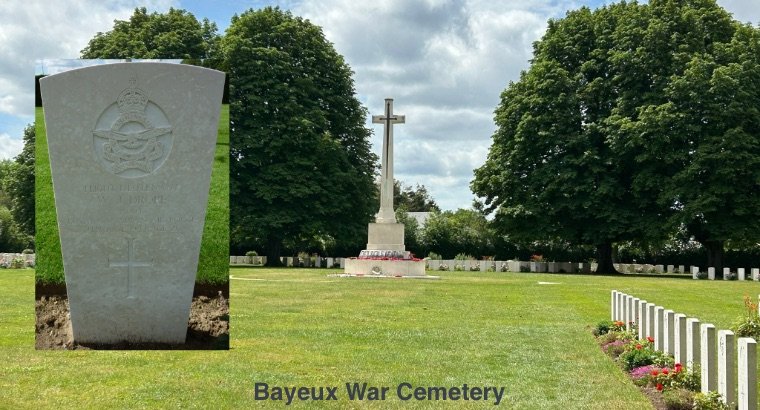
Burial Details
Fl/Lt. William John Drope. Bayeux War Cemetery, Normandy, France. Grave IV. F. 11. Born on 21st December 1921 in Regina, Saskatchewan, Canada. He was educated at Victoria Public School, Campion College and Central Collegiate in Regina. He enlisted in Regina on 8th April 1941, was awarded his pilot's wings on 5th December 1941 and remained in Canada as a flying instructor until he was posted overseas in early 1943. Son of Harry Earl Drope (died 1978, age 89) and Jean Brand Drope (née McDonald, died 1985, age 92), of Regina, Saskatchewan, Canada.
Many sources, including the CWGC, state that he was 21 at the time of his death. This is incorrect: his service records confirm his date of birth as 21st December 1921, which made him 22.
(1) Spitfire MJ554 was a Supermarine Spitfire LF Mk IX built at the Castle Bromwich Aircraft Factory and powered by a Rolls-Royce Merlin 66 engine. Operated by No. 421 Squadron RCAF. Abandoned over the sea off Maisy 7-6-44, Cat. E, Fl/Lt. W.J. Drope +.
Bayeux War Cemetery, Normandy (CWGC)
History
The Allied offensive in north-western Europe began with the Normandy landings of 6th June 1944. There was little actual fighting in Bayeux, although it was the first French town of importance to be liberated.
Bayeux War Cemetery is the largest Commonwealth cemetery of the Second World War in France and contains burials brought in from the surrounding districts and from hospitals that were located nearby. The cemetery, which was completed in 1952, contains 4,144 Commonwealth burials of the Second World War, 338 of them unidentified. There are also over 500 war graves of other nationalities, the majority German.
The Bayeux Memorial stands opposite the cemetery and bears the names of more than 1,800 men of the Commonwealth land forces who died in the early stages of the campaign and have no known grave. They died during the landings, during the intense fighting in Normandy itself, and during the advance to the River Seine in August.
Visiting Information
Bayeux War Cemetery and Memorial have For Evermore tours available using the free CWGC app for mobile phones and tablets. The tours cover different aspects of the site and the Commonwealth servicemen and women commemorated within the grounds. The app can be used remotely or, if you are visiting the cemetery, to follow a path around it, reading the stories along the route. A scan function also allows visitors to scan a headstone and bring up the related casualty information.
Parking
The main entrance to the cemetery is off the main road, Boulevard Fabian Ware, opposite the Bayeux Memorial. It is not possible to park in front of the cemetery. Approximately 300 metres away is the Musée de la Bataille de Normandie, which has a large car park. The route from the car park to the memorial is along a pedestrian path beside the main road; the ground is flat and firm with a tarmac surface.
Access, Layout and Main Entrance
The main entrance gate is eight metres wide and stretches across a wide brick-paved entrance area, with three sets of double latched gates, each pair two metres wide, opening outwards. There are seating areas on each side of the main entrance. The entrance is approximately three metres from the pedestrian pathway on the south side of the road. The ground is level stone paving and is step-free into the cemetery.
The Stone of Remembrance is approximately 50 metres from the entrance, with shelter buildings on either side. The shelter buildings have stone benches inside, and the Register Box is in the shelter building to the right of the Stone of Remembrance, looking into the cemetery. There are semi-circular seating areas to the rear of each shelter building, timber benches opposite these, and further timber benches around the perimeter of the cemetery, many under trees. All internal paths are grass, and the ground is flat and firm.
Alternative Access
It is possible to enter the cemetery from the rear of the site via the staff parking area, but visitors may not park there.
Additional Information
The cemetery is permanently open. It lies within three metres of the pavement and 25 metres from the entrance to the Bayeux Memorial, across a pedestrian crossing. The main road consists of two single lanes with a four-metre-wide paved island between them, and is cobbled, with flat paving stones for the adjacent pathways.
Sources and Acknowledgements
- National Archives, Kew - AIR 27/1828 (No. 421 Squadron Operations Record Book, June 1944
- Library and Archives Canada - Service file of Fl/Lt. W.J. Drope, J/9146
- Commonwealth War Graves Commission
- Veterans Affairs Canada - Canadian Virtual War Memorial
- Paradie-Dutil RCAF Archive
- Canadian Aircraft Serials Personnel Information Resource (CASPIR)
- Vintage Wings of Canada
- Aircrew Remembered Archives
Supplement - Additional Information
The following details were found in Fl/Lt. Drope's RCAF service file and related records during research for this page.
Early Life and Enlistment
John, as he was known to family and friends, spent three years at Regina Central Collegiate Institute, completing Grades X to XII and graduating with Senior Matriculation in June 1940. After leaving school he worked as a clerk for Minneapolis Moline in Regina. He listed his sports as skating, badminton and football.
When he applied to the RCAF, the Principal of Central Collegiate, W.G. Scrimgeour, wrote in support:
"John Drope was a student who was well-thought of by the Staff and his fellow students. He gave full co-operation to the Staff and presented no problem in discipline. I believe him to be a young man of excellent moral character."
He attested at the RCAF Recruiting Centre in Regina on 8th April 1941, and his medical board described him as "very fit, physically and mentally alert... an excellent candidate".
Training and Service in Canada
He completed Initial Training at Edmonton, Alberta (21st June to 26th July 1941, passed 77%), Elementary Flying Training at Boundary Bay, British Columbia (27th July to 13th September 1941, passed 66%), and Service Flying Training at Claresholm, Alberta (13th September to 5th December 1941). He was awarded his wings and commissioned as a Pilot Officer on 5th December 1941.
He was then selected as an instructor, attending the Central Flying School at Trenton, Ontario (Flying Instructors' Advanced Course No. 51), and was posted to No. 12 Service Flying Training School, Brandon, Manitoba, on 27th February 1942. He was promoted to Flying Officer on 1st October 1942, and was posted to the "Y" Depot for overseas service the same day. He was taken on strength of the RAF overseas on 24th January 1943.
Operational Training
In Britain he attended No. 53 Operational Training Unit (Course No. 34, 25th May to 3rd August 1943), where he converted to the Spitfire. He was assessed as average to above average in every subject, and the Officer Commanding the Training Wing wrote:
"This officer, due to his experience, flies well and has a good sense of discipline. He is keen to fly on operations and should make a useful fighter pilot."
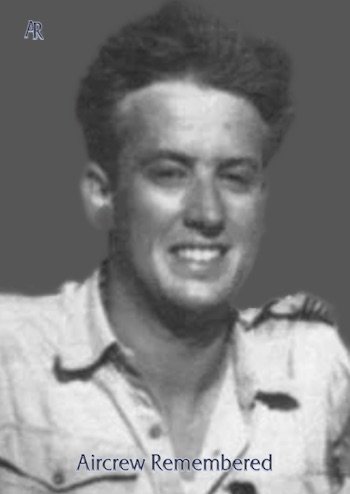
He was promoted to temporary Flight Lieutenant on 5th December 1943. At the t (shown left) ime of his death No. 421 Squadron was commanded by Walter Allen Grenfell "Wally" Conrad.
Time of Loss
The RAF casualty telegram sent on 8th June 1944 records the loss at "1300 HRS" on 7th June, 500 yards off shore, and notes that the aircraft was abandoned at 2,500 feet on Operation 127/19. The telegram mistypes his service number as J9164.
A Second Loss the Same Day
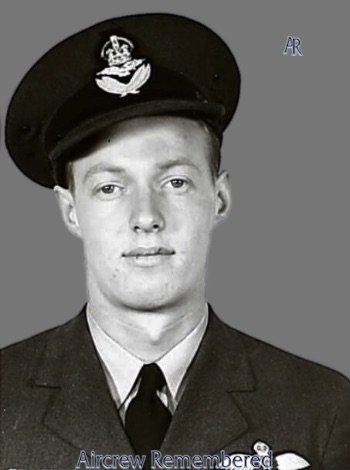
Later the same day, on the squadron's last patrol (Operation 127/21), F/O Robert Jackson Grigg (shown right), J/21140, of Sault Ste. Marie, Ontario, was lost while returning to base as the spare pilot. At approximately 20:15 hrs he was heard to give a brief "Mayday" 10 to 12 miles off St. Catherine's Point, Isle of Wight. He was never found and is commemorated on the Runnymede Memorial, Panel 246
The Search for His Grave
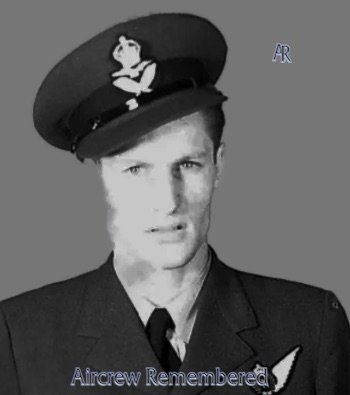
On 11th January 1945 the Air Ministry wrote to the Graves Registration and Enquiries branch of 21 Army Group asking for confirmation that Fl/Lt. Drope had been buried by Allied personnel, noting that extensive enquiries had so far proved fruitless. The same letter asked for information on F/O Douglas Haig Baker (shown left) J/25179, who was believed to have died in much the same circumstances.
The October 1944 burial signal gives the site as "Macon Temporary Cemetery near St Malo" and states that the burial was made "whilst area in enemy hands". Neither detail fits the Normandy beachhead in June 1944, and the place name appears to have been garbled in transmission.
After the War
His father, Harry Earl Drope, was associated with the firm of Drope and Hosie Ltd., Scarth Street, Regina, to which the RCAF addressed its 1946 letter. On 10th January 1947 his mother, Jean Drope, was sent her son's Operational Wings and certificate "in recognition of the gallant services rendered" by him.


