




Operation: Training
Date: 17th August 1941 (Saturday)
Unit: No. 7 Service Flying Training School (FAA)
Type: Hawker Hart (1)
Serial: K5799
Code: -
Base: RAF Peterborough, Cambridgeshire.
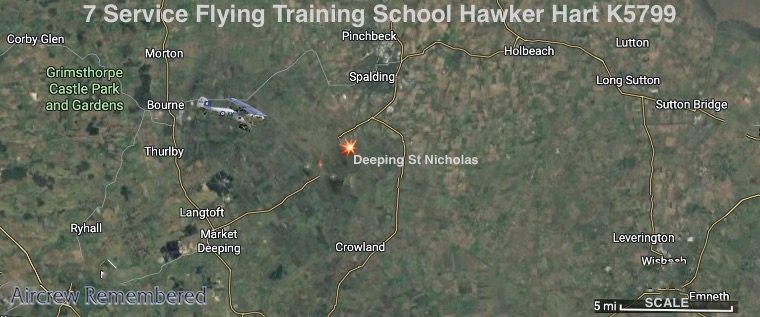
Location: Deeping St Nicholas
Pilot U/T: L/A. Charles Bryan Irving FX FAA (Royal Navy) Age 18. Killed
Pilot U/T:/A L. Edward George Culley FX.78421 (Royal Navy) Age 18. Killed (2)
REASON FOR LOSS:
During an instrument flying training sortie from RAF Peterborough, the Hawker Hart K5799 entered an unrecovered spin and struck the ground at Deeping St Nicholas, approximately 5 miles south-west of Spalding, Lincolnshire. Both occupants - Leading Airman Charles Bryan Irving and Leading Airman Edward George Culley - were killed. Both men were rated as Pilots Under Training (U/T) and were attached to No. 7 Service Flying Training School from HMS Daedalus (RNAS Lee-on-Solent), the principal shore establishment for Fleet Air Arm pilot training.
 Spinning accidents were a recognised hazard of instrument flying training in this period. Pupil pilots flying under the hood - a canvas screen fitted over the cockpit to simulate cloud conditions - relied entirely on their blind-flying panel instruments and were especially vulnerable to spatial disorientation.
The standard British blind-flying panel of the era comprised six key instruments: an airspeed indicator, artificial horizon, altimeter, rate-of-climb indicator, turn-and-bank indicator, and directional gyro. An inadvertent entry into a spin, combined with disorientation and the inherently lively handling of the Hawker Hart at low speed, could rapidly become unrecoverable at training altitudes.
BURIAL AND OTHER DETAILS:
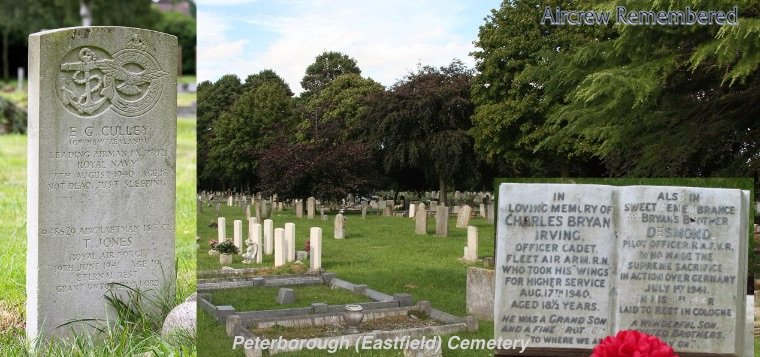
L/A. Charles Bryan Irving. No rthwood Cemetery. Sec. H. Grave 16. B on the 03rd February 1922. Son of Norman and Jane Martin Macdonald Irving, of 'Oakhurst', 7 Pinner Road, Pinner Green, Middslesex, England. Epitaph: 'He was a grand and a fine brother to where we are'. His brother, 20 year old P/O Desmond Irving was killed on thr 01st July 1941. Read more here.
L/A. Edward George Culley. Peterborough Cemetery (Eastfield). Div. 4. Block 4. Joint grave (2) 1702.Born on the 09th 9th September 1921, son of Edward Culley and of Annie Beatrice Culley (nee Smith), of Lower Hutt, Wellington, New Zealand. Epitaph: 'Not Dead, Just Sleeping'.
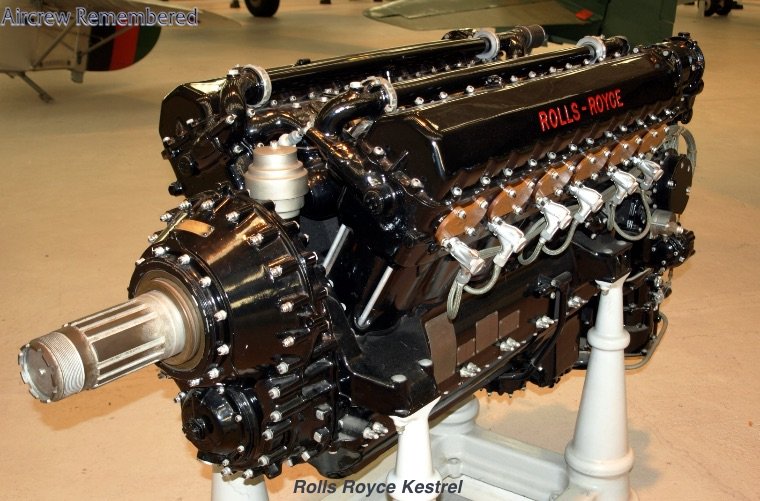
(1) Aircraft: Hawker Hart K5799: The Hawker Hart was a two-seat biplane originally designed as a light day bomber, powered by a 525 hp Rolls-Royce Kestrel IB V12 engine. The trainer variant - the Hart Trainer - was introduced in 1932 specifically because the Hart’s exceptional performance as a bomber had outpaced the RAF’s existing training aircraft, which were incapable of providing adequate preparation for the type. The trainer version was fitted with dual controls, and all armament was removed.
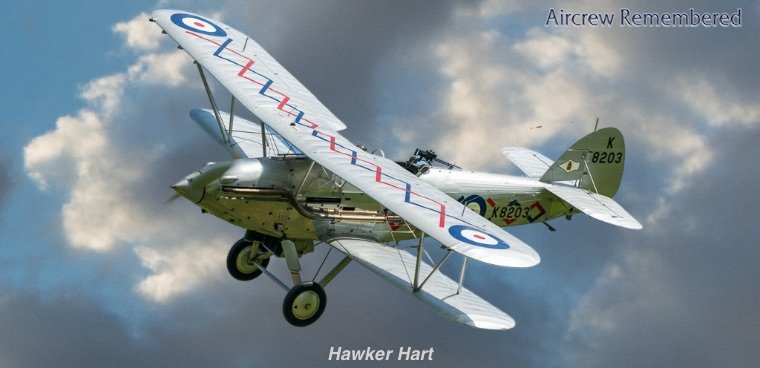
The Hart’s top speed of 184 mph in level flight made it faster than contemporary front-line fighters such as the Bristol Bulldog when it entered service, a remarkable achievement for a bomber that led directly to the accelerated development of the Hawker Fury - the first RAF fighter to exceed 200 mph - and, in the longer term, contributed to the design lineage that produced the Hawker Hurricane.
Serial K5799 was one of approximately 992 Harts produced across several manufacturers. Of those built in the United Kingdom, Armstrong Whitworth alone produced 456 examples; Hawker built 234, Vickers 226, and Gloster 46.
 Unit Context: No. 7 Service Flying Training School (No. 7 SFTS) was based at RAF Peterborough, Cambridgeshire, and operated as one of the primary schools training Fleet Air Arm pilots under joint RAF–Royal Navy arrangements. The school was specifically tasked with producing pilots for the Fleet Air Arm; Irving and Culley, both Royal Navy Leading Airmen, were undergoing their service flying training before progression to advanced and operational flying.
The school’s time at Peterborough was drawing to a close at the time of this accident: with the deteriorating strategic situation following the fall of France in June 1940, the British government took the decision to move RAF flying training assets to Canada. No. 7 SFTS sailed for Canada on 29 August 1940 - just twelve days after this crash - and re-opened on 7 October 1940 at Kingston, Ontario, as No. 31 Service Flying Training School, continuing to train Fleet Air Arm pilots under RCAF administration.
HMS Daedalus - Shore Station: Both crew members were attached to HMS Daedalus, the Royal Naval Air Station at Lee-on-Solent, Hampshire. HMS Daedalus was commissioned on 24 May 1939 when administrative control of the Fleet Air Arm was formally transferred from the Royal Air Force to the Admiralty under the ‘Inskip Award’. It served as the principal headquarters of Fleet Air Arm shore establishments and the base from which many FAA pilot trainees were assigned to RAF flying training schools for their service flying instruction. The Hart was one of several aircraft types operated at or associated with HMS Daedalus during this period, including the Hawker Nimrod, Fairey Swordfish, and Supermarine Walrus.
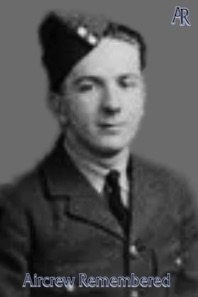 (2) Joint grave; Shared with AC1 Thomas Jones, 948629, RAFVR. Age 19. Born 9th September 1922.
Served with No. 5 Elementary Flying Training School (E.F.T.S.), Royal Air Force Volunteer Reserve (RAFVR.) - later redesignated the 25th (Polish) Elementary Flying Training School, which was formed at Peterborough in June 1941 before relocating to Hucknall in July 1941.
Before his service, he worked as a bar assistant at the NAAFI at RAF Sealand, where his father was also employed as a labourer. He was the son of Thomas Bickley Aloysius Guilfoyle Jones (died 1958, aged 77) and Phoebe Jones (née Games, died 1946, aged 53), of Queensferry, Flintshire, Wales.
Epitaph: 'Eternal Rest Grant Unto Him, O Lord.'
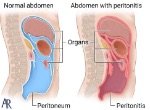
A number of external sources incorrectly record his death as likely the result of a flying accident. In fact, he died of peritonitis following acute appendicitis at Peterborough Memorial Hospital. Peritonitis is a serious, life-threatening inflammation of the peritoneum - the membrane lining the inner abdominal wall and encasing the abdominal organs. It is most commonly caused by bacterial or fungal infection arising from a ruptured organ, such as a burst appendix or severe liver disease, and requires immediate emergency medical intervention.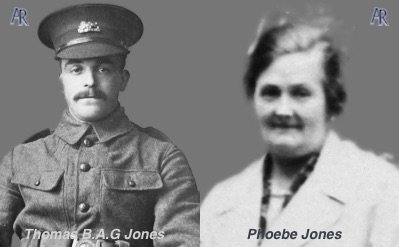
SOURCES AND ACKNOWLEDGEMENTS
Researched and dedicated to the relatives of Irving and Culley, with thanks to:
National Archives, Kew
Aircrew Remembered (aircrewremembered.com)
New Zealand Cenotaph / Auckland War Memorial Museum Online Cenotaph
Errol Martyn, For Your Tomorrow, Volumes 1–3
History of War (historyofwar.org) - Hawker Hart
BAE Systems Heritage - Hawker Hart (baesystems.com)
RAF Museum - Hawker Hart II (rafmuseum.org.uk)
Wikipedia - No. 7 Flying Training School RAF; HMS Daedalus; Hawker Hart; Fleet Air Arm
Flintshire War Memorial
Other sources as quoted below:


