





Operation: Escort cover
Date: 23rd September 1943 (Thursday)
Unit No: 17 Squadron RNZAF
Type: Kittyhawk
Serial: NZ3086
Code: ??
Base: Guadalcanal, Solomon Islands
Location: Near Kahili, Bougainville
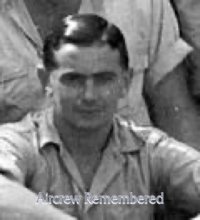
Pilot: Flt Sgt. George Ian Luoni 421701 RNZAF Age 21. Evaded
Kittyhawk NZ3086 was built as a P-40M Warhawk, Bureau Serial No. 43-5788
REASON FOR LOSS:

Above 17 Squadron Kittyhawks
Taking off at 07:10 hrs to escort twelve (12) US Avengers that were to attack Anti-Aircraft gun positions at Jakohing south of Kahili on Bougainville Island. Nine (9) aircraft from 17 Squadron were tasked for the escort of which two (2) failed to return.
The second aircraft was Kittyhawk NZ3111 flown by Flt Sgt. Norman N. Vickers 413232, RNZAF.
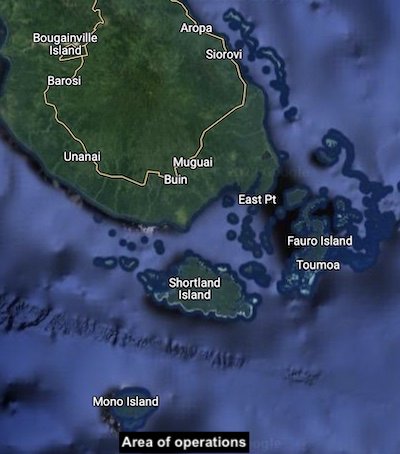

Flt Sgt. Luoni was attacked by three (3) Zekes (Zeros) which came from underneath and in front. His aircraft was hit in the oil tank and cowling and oil sprayed over the canopy and into the cockpit. It was clear to Luoni that his plane was crippled. Luoni knew that P-40s, once hit, had a tendency to 'go whoof'. His plane was losing height rapidly, the oil pressure went off the clock, the engine was running roughly and smoke started to fill the cockpit. He turned the aircraft onto its back and set the tabs to fly up. He undid the straps, pulled back the canopy and bailed out of the stricken aircraft at a height of 4,000 feet, about two miles north of Mono. Much to Luoni's relief, the Zekes (Zeros) had broken off their attack.
Fg Off. Geoffrey Reid Burton Highet 42402, followed Flt Sgt. Luoni's stricken machine and saw him bale out.
- Fg Off. Highet was awarded the Distinguished Flying Cross (DFC) on the 11th April 1944:
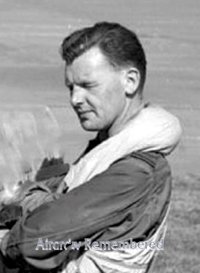
- Citation: "Two enemy aircraft were destroyed and a third probably destroyed by this pilot in a single action over Rabaul on 24th December 1943, in which he displayed extraordinary skill and courage against heavy odds. His coolness, ability and disregard of his own safety have been of the highest standard, and were again proved when, on 7th January 1944, he exposed himself to attack to shoot down another enemy aircraft which was engaging one of Flying Officer Highet's formation. Flying officer Highet has distinguished himself in aerial combat from Kahili to Rabaul and has become a highly successful leader."
- Geoffrey Reid Burton Highet survived the war. Born on the 16th November 1923. Retired as a Wing Commander. Passed away on the 18th July 2012, age 88, surrounded by loving family. Dearly loved father and father-in law of Chris and Annie; Simon and Robyn. Loved poppa of Katie, Joe and Sam; Louise, Isabelle and Cory.
- Geoffrey HIGHET Obituary:
- HIGHET, Geoffrey Reid Burton. DFC, AFC and Bar, RNZAF and ex Captain Air New Zealand. Geoff passed away peacefully at home on 18 July 2012 surrounded by loving family. Dearly loved father and father-in law of Chris and Annie; Simon and Robyn. Loved poppa of Katie, Joe and Sam; Louise, Isabelle and Cory. Messages to the Highet family C/- P O Box 57120, Wellington 5247. A celebration of Geoff's life will be held in the Union Church, Nayland Street, Sumner, Christchurch, on Thursday 26 July at 2.00 pm. Private cremation thereafter. Bell, Lamb & Trotter Funeral Directors - FDANZ Ph. 03-389-7999.
He inflated his Mae West life jacket and then his brightly coloured one-man dinghy, and using his paddle, tried to maintain the same position hoping that rescue would be underway, perhaps by seaplane, submarine or PT boat. Flt Sgt. Luoni was wearing a flying suit over his shirt and shorts and had a revolver, ammunition and jungle knife.
In mid-afternoon, he saw four Japanese aircraft at about 2000 feet coming in from the north. He feared they would see his bright yellow dinghy and machine gun him in the water. He left the dinghy and swam 20 yards in front of it. The Zekes (Zeros) passed overhead and later turned back to Kahili. The dinghy had, meantime, drifted away and Luoni tried unsuccessfully to swim to it. The current was pulling it towards Mono Island. He jettisoned his boots and revolver but kept the jungle knife. The water was warm and, fortunately, there were no sharks in evidence. Luoni was aware that his Mae West contained shark repellent and was confident that he would be safe.
At dusk, having been in the water for some nine (9) hours, Luoni decided to swim to the island. He stripped off everything except his singlet and underpants and repositioned his Mae West around his chest. He struck out for the shore, swimming and resting.
The current helped him to reach the island where he landed on the northern coastline of Mono near the Soanatalu River. Darkness fell quickly and he took shelter for the night under a tree. A violent tropical storm shook the island, but Luoni was exhausted and slept.
He woke at sun-up and ate a coconut that was lying on the beach. Surrounded by dense jungle, Luoni decided to strike out towards the west. Because he was in bare feet, he fashioned some footwear from his Mae West, wrapping his feet in the kapok and using the fabric as binding.
A briefing from the squadron's intelligence Officer had indicated there were Japanese on Monro, particularly in the southern area, so Luoni knew that he had to move carefully on Mono, particularly in the southern area, to avoid capture. It had also been said that it was likely that the natives were friendly and a possible source of help. Luoni was determined that 'I wasn't going to hand myself into the Japs.' The Japanese had an evil reputation for their handling of prisoners.
Drinking water was plentiful on Mono, but the food was a problem and for two days Luoni went without food. On the second day he saw a three-man Japanese patrol in the distance and headed for the central hills. He doubted they saw him. Natives later told him that the Japanese knew of his presence on Mono. In all likelihood, they had neither the manpower nor inclination to mount a manhunt on the thickly-forested island.
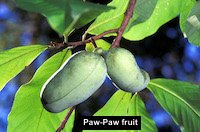
Luoni's evasion of the Japanese patrol resulted in some good luck: finding paw-paw and coconuts growing where the jungle was less dense. For a period Luoni survived on a diet of these but they lacked nourishment. He supplemented his diet with the occasional land crab and fish which he ate raw. However, he got progressively weaker. From time to time he heard Japanese soldiers but evaded them by hiding in the jungle. After a few days Luoni's self-made foot wear fell apart and he suffered excruciating cuts from the coral, which made walking difficult. Luoni's situation was increasingly perilous and he was reaching the end of his tether.
He intended to try to contact hopefully friendly natives on the northern coast, but after several days of wandering he ended up at Soanatalu, where he had started. This time, he moved in a westerly direction along the coast. When he reached the area near Lua Point he chanced across a group of four native men and four native women. Luoni must have presented a fearful sight. He was virtually nude, weakened from his time in the jungle, semi-delirious and could barely stand. They carried him to their village and fed him a large boiled egg and some type of root vegetable which he found stringy and almost indigestible. They were friendly and spoke broken English. They referred to the Japanese as 'Demon Men' and complained that the Japanese had stolen food from their gardens.
A lean-to shelter was made in the jungle for him and during the day Luoni would be hidden there. The Japanese regularly visited the village and the consequences of Luoni being sheltered by the natives would have been frightful for them if he had been discovered being sheltered by the natives would have been frightful for them if he had been discovered. The natives fed him roots which were not enticing, but he saw that his hosts were poor and hard up and that they gave him the best they could. They gave him a stolen Japanese loin cloth which helped to restore his dignity.
For Luoni, isolated from his countrymen, the hope of rescue must have seemed remote.
All he could do was take one day at a time. A little over a month later and 4 stone lighter he met up with New Zealand soldiers who had come ashore in connection with the forthcoming Allied invasion of the islands.
George Ian Luoni was born on the 23rd March 1922 in Dunedin City, Otago, New Zealand.
WO. Luoni served with 17 and 16 Squadrons and survived the war. He was a member of the “Goldfish Club”.
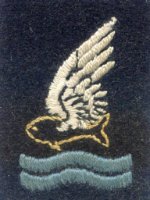
The “Goldfish Club” was formed during World War II to recognize airmen who survived ditching their aircraft in the sea and were saved by life jackets or dinghies. By the end of the war, it had over 9,000 members from various branches of the Allied forces.
On Friday, 23rd October 2009 he passed away peacefully at his home, surrounded by family in Hamilton. Aged 87 years. Dearly beloved husband for 59½ years and best friend of Jean. Much loved father and father-in-law of Chris and Rosanna, Virginia and Kim, Simon and Helen, Rosemary and Gavin and much loved Grandad of 10 grandchildren. Hamilton Park Cemetery. RSAB-A-125.
BURIAL DETAILS:
None – Survived the War
Originally researched Kelvin Youngs (Webmaster) and dedicated to the relatives of this pilot, thanks to the extensive research by Errol Martyn and his publications: “For Your Tomorrow Vols. 1-3”, New Zealand Cenotaph, Weekly News of New Zealand, Air Museum of New Zealand, Museum of Transport and Technology, Auckland. (23rd Sep 2022). New separated report created from the original narrative in Flt Sgt. Norman Nicholson Vickers’ report (8th Nov 2026)
Other sources listed below:
Reference(s)
‘Operation Goodtime and the Battle of the Treasury Islands, 1943’: A History of the World War II Invasion by the U.S. and New Zealand Forces - Author: Reg Newell - Publisher: McFarland and Co; Illustrated edition (7 Nov. 2012) ISBN: 978-0786468492 249


