





Alek Pietrzak - 'Diver' (V1) Confirmed Claims

No. 316 Squadron and the Flying Bombs
Between 13th June 1944 and 29th March 1945, a total of 9,251 V1 flying bombs (known as Doodlebugs or Divers) were plotted by the Royal Observer Corps (ROC), from its 1,500 observer posts. Of these pilotless monoplanes, 2,419 reached London. The total number destroyed was 4,261 - 1,971 by anti-aircraft fire, 1,979 by the skilled flying of Allied pilots, 278 by balloons and 33 by the Royal Navy.
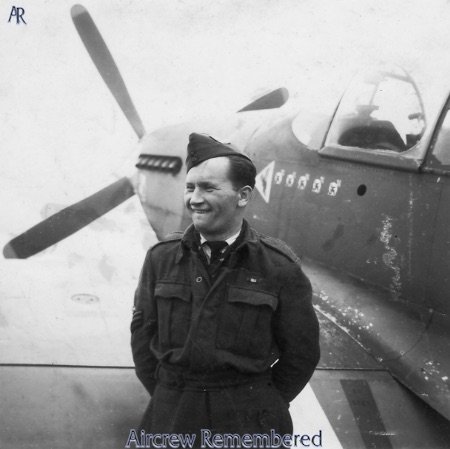
A total of 412 came down in the county of Essex. Sgt. Aleksander Pietrzak of 316 Squadron was personally responsible for destroying six Divers.
Aleksander Pietrzak's V1 flying bomb (Diver) kill history is set out below. He is listed as a V1 'Ace,' with five or more confirmed kills.
4th July 1944 (Tuesday)
Squadron: 316 (Polish)
Base: RAF West Malling
Aircraft: Mustang III FB161/SZ-1
Time: 11:45 hrs (time up 10:45 hrs, time down 12:20 hrs)
Area: Three miles NNW of Boulogne
One V1 destroyed by Fl/Sgt. Alex Pietrzak. A very busy day against the V1 flying bomb, with 53 V1s destroyed by fighters during the day and a further 8 destroyed, plus 1 probable, during the night (3 by 316 Squadron). The Poles of 316 Squadron were soon learning the art of tackling the flying bombs, and also what to avoid, as Sqn Ldr Arct explained: 'In theory, the engaging of flying bombs by fighter aircraft was a simple matter. In practice it was much more complicated. As a rule, one attacked the missile the same way as a normal aircraft, from behind, with a small deflection. Firing straight from the rear was not effective, as bullets might slide along the flexible sheet metal of the projectile's fuselage. One had to aim at the framework, to hit either of the gyroscopes, or the engine and fuel tanks. Owing to the great speed of the missiles, attacks had to be made with a height advantage, to increase one's speed in diving. Firing from the right distance was of paramount importance. This rule, instructing pilots to open fire at a minimum distance, could in no circumstances be applied against the mischievous "Witches." When the pursuing fighter carelessly closed in and pressed the trigger at, say, 100 yards, and if he accidentally hit the fuses or the front of the fuselage where the high explosives were loaded, the bomb exploded in the air, and its splinters and other fragments flew towards the pursuer, often causing serious damage.'

7th July 1944 (Friday)
Squadron: 316 (Polish)
Base: RAF West Malling
Aircraft: Mustang III F161/SZ-1
Time: 19:58 hrs
Area: Off Bexhill
One V1 destroyed by Fl/Sgt. Alex Pietrzak. Forty-eight V1s were destroyed by fighters during the day, and a further thirteen at night (seven by 316 Squadron). This successful day for the Poles came to a close at 19:58 hrs, with the shooting down of another Diver by Alex: 'Intercepted ten miles off the French coast. Attacked from starboard rear from 250 yards. Strikes all over, and it exploded in the sea ten miles south-south-east of Bexhill.'
12th July 1944 (Friday)
Squadron: 316 (Polish)
Base: RAF Friston
Aircraft: Mustang III FB378/SZ-X
Time: 07:05 hrs / 07:42 hrs
Area: Two miles NW of Appledore (Kent), height 2,500 metres; north of Lympne, height 1,100 metres

Two V1s destroyed by Fl/Sgt. Alex Pietrzak. Sixty-two V1s were destroyed by fighters during the day (seven by 316 Squadron). Fl/Sgt. Alex Pietrzak sighted the first Diver crossing the coast at Dungeness: 'Attacked from around 200 yards dead astern, closing to 100 yards. Strikes all over, and the Diver exploded on the ground two miles north-west of Appledore.' The second Diver exploded in mid-air after accurate fire from his Mustang and caused severe damage. He reported: 'The first burst of fire slowed it down, and after letting off a second burst it exploded in the air; the blast damaged the propeller and the left side of my aircraft, and I was obliged to bail out.'

Sqn/Ldr Arct went into greater detail: 'Fl/Sgt. Pietrzak, in the heat of the fighting, closed in to 100 yards and opened accurate fire. He must have hit the fuses, as the main bomb exploded in the air. The blast was so powerful that the Mustang lost its propeller and the wings bent to a most peculiar shape. The aircraft went out of control; fortunately, Pietrzak, a stocky, well-built fellow, possessed very quick reflexes. His misfortune happened at 800 yards; he had lost quite a lot of precious height and at the last moment got out to save his life. Conclusions were drawn, and we introduced the rule forbidding opening fire from less than 200 yards. This distance could easily be judged both in the daytime and at night. When a fighter approached a diver from behind, which was the normal way of attacking, and when he could see the red-hot ring of the jet engine's nozzle, it meant the distance was right to open fire. On the other hand, firing from more than 300 yards was rather useless, as the V1 was much smaller than a normal fighter plane and it was easy to miss it from a big difference.'
Left: The movement card (A.M. Form 78) for Mustang FB378 - the aircraft Alex bailed out from in the early morning of Friday 12th July 1944. No loss card can be found from RAF records - unless of course you know differently?

tSh August 1944 (Saturday)
Squadron: 316 (Polish)
Base: RAF Friston
Aircraft: Mustang III FB383/SZ-J
Time: 05:15 hrs / 07:00 hrs
Area: Kent (exact location not recorded)
Two V1s destroyed by Fl/Sgt. Alex Pietrzak. Thirty-two V1s were destroyed by fighters during the day, and a further ten at night (six by 316 Squadron).
We welcome any suggestions from anyone able to provide further details or names for the photographs that follow. Anyone wishing to use any of these photographs is invited to contact us.


