




Operation: Reconnaissance
Date: 22nd March 1940 (Friday)
Unit: No. Photographic Development Unit (PDU) (1)
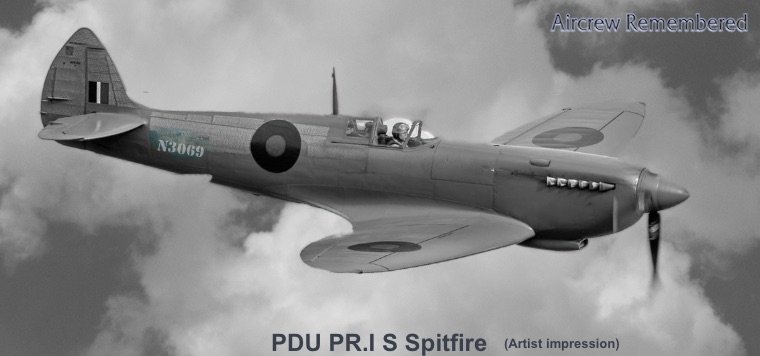
Type: Supermarine Spitfire PR IB (2)
Serial: N3069
Code: -
Base: RAF Stradishall, Suffolk
Location: Herwen /Düffelward
Pilot: F/O. Claude Mervyn Wheatley 39147 RAF Age 26. Killed
REASON FOR LOSS:
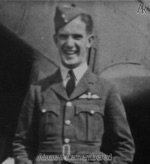
F/O Wheatley departed RAF Heston on a high-altitude photographic reconnaissance mission tasked to photograph German industrial targets in the Ruhr.
The Spitfire N3069 was planned to operate at approximately 33,000 feet, an altitude believed at the time to be beyond the reach of German fighter aircraft.
German radar installations detected the aircraft. Two Luftwaffe Messerschmitt Bf 109E fighter aircraft of 1./JG 20 (later records also indicate association with JG 51) were immediately scrambled to intercept.
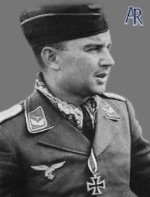
Lt. Harald Jung succeeded in gaining altitude and, with considerable difficulty, positioned himself within firing range at approximately 34,500 feet. His guns found their mark, fatally damaging Spitfire N3069.
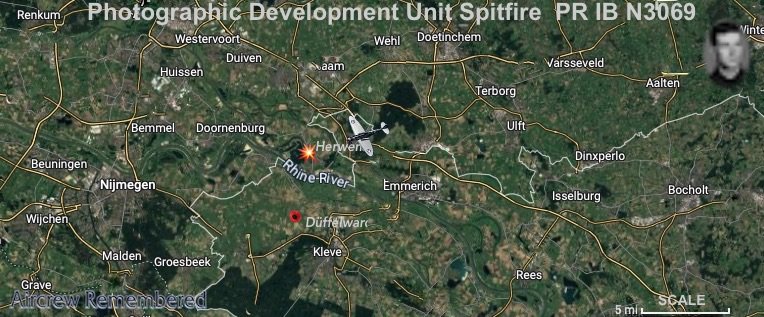
F/O Wheatley successfully abandoned his stricken aircraft. However, upon exiting the cockpit, he struck the tailplane of the Spitfire with his head.
Rendered unconscious by the impact, he was unable to deploy his parachute. F/O Wheatley fell to his death and was found in a field outside the German village of Düffelward, approximately three miles south of the crash site of the aircraft. (Right: Lt. Harald Jung)
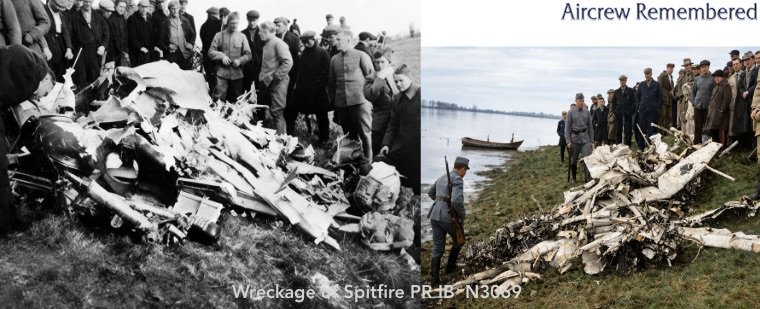
The aircraft itself came down on the Dutch side of the River Rhine, near the village of Herwen, in what was then still neutral Holland.
F/O Wheatley's body landed on the German side of the river. N3069 was the first aircraft to crash on Dutch soil during the Second World War; the Netherlands would not itself be invaded by Germany until May 1940.
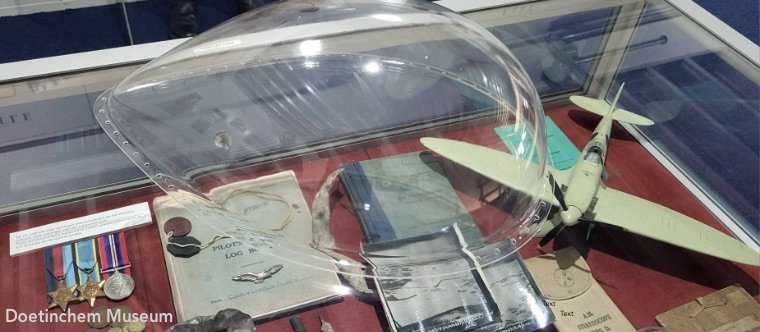
Above: Display of N3069 at the Doetinchem Museum (Sander Woonings)
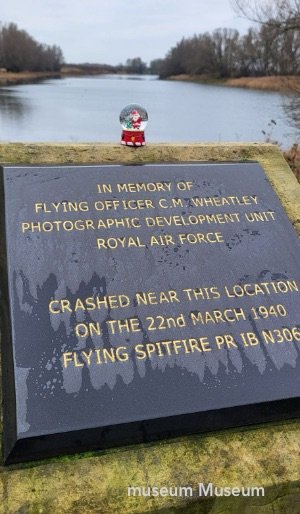
Dutch historian and researcher Sander Woonings has dedicated many years to recovering and preserving the story of F/O Wheatley and Spitfire N3069. His work has resulted in a memorial erected at the crash site near Herwen in 2020, on the 80th anniversary of F/O Wheatley’s death.
Right: The beautiful memorial dedicated to F/O. Wheatley (courtesy Sander Woonings)
The opening of a dedicated museum in Doetinchem, Netherlands in December 2024, housing a reconstruction of Spitfire PR IB N3069 and artefacts relating to the founding of the RAF’s Photo Reconnaissance Unit and the life of F/O Wheatley.
A documentary titled Spitfire Overdue - The Story of F/O Mervyn Wheatley.
F/O Wheatley is commemorated at the Reichswald Forest War Cemetery, Kleve, Germany, maintained by the Commonwealth War Graves Commission.
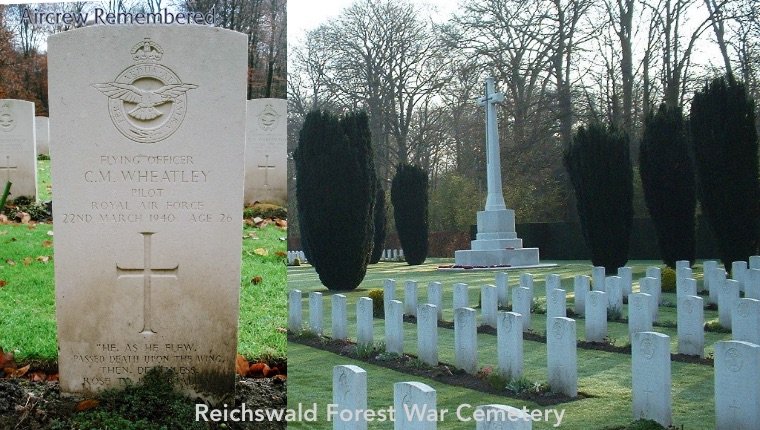
Reichswald Forest War Cemetery was created after the Second World War, when burials were brought in from all over western Germany and is the largest Commonwealth cemetery in the country.
Some of those members of the land forces buried there died in the advance through Reichswald Forest in February 1945. Others died crossing the Rhine, among them members of the airborne forces whose bodies were brought from Hamminkeln, where landings were made by the 6th Airborne Division from bases in England. Some of the airmen buried in the cemetery lost their lives in supporting the advance into Germany, but most died earlier in the war in the intensive air attacks over Germany. Their graves were brought in from cemeteries and isolated sites in the surrounding area.
There are now 7,594 Commonwealth servicemen of the Second World War buried or commemorated in the cemetery. 176 of the burials are unidentified. There are also 78 war graves of other nationalities, most of them Polish. Special Memorials to 9 airmen are located at the East boundary wall, near Plot 10. Further Special Memorials to 7 airmen are located within Plot 31, near the Cross of Sacrifice. The cemetery was designed by Philip Hepworth.
BURIAL DETAILS:I
Initially bred at the local cemetery, Düffelward, Germany, - buried the same day with full German military honours
F/O.. Mervyn Wheatley. Reichswald Forest War Cemetery, Grave 3.F.14. Son of Ernest and Marion Wheatley; husband of Joan Wheatley, of Worthing, Sussex. Epitaph: 'He As He Flew, Passed Death Upon The Wing, Then, Deathless, Rose To Immortality'.
(1) The Photographic Development Unit (PDU) was a pioneering RAF reconnaissance unit formed in 1939, directly responsible for transforming the Spitfire into one of the most important intelligence-gathering tools of the Second World War.
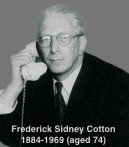
Origins: The PDU was established in September 1939 at Heston, largely through the vision and determination of Wing Commander Sidney Cotton, an Australian aviator and entrepreneur.
Cotton had already been conducting covert photographic missions over Germany before the war even began, using a civilian Lockheed 12 fitted with hidden cameras.
He convinced the RAF to adopt his methods and equipment, leading to the creation of the unit.
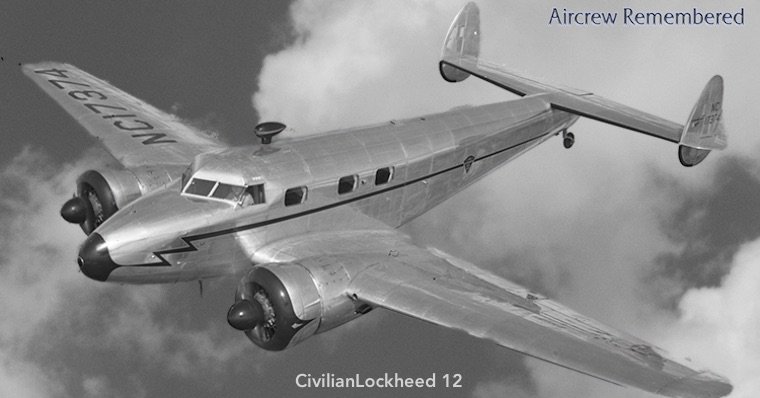
Why the Spitfire? Cotton argued that existing RAF reconnaissance aircraft - lumbering, heavily armed machines - were too slow and too vulnerable. His radical idea was to use speed and altitude as protection, stripping away guns and armour entirely and using the Spitfire's superior performance to simply outrun enemy fighters.
The early Spitfire PR variants were modified by:
- Removing all armament
- Fitting extra fuel tanks (in the wings and sometimes a slipper tank beneath the fuselage)
- Installing cameras (typically two vertically-mounted F.24 cameras in the lower fuselage)
- Applying a distinctive pale blue-grey camouflage ('PRU'Blue') to blend with the sky
Key Missions and Achievements:
The PDU (which became 1 Photographic Reconnaissance Unit / PRU in 1940) achieved remarkable things:
- Tracking the German fleet - including the battleships Bismarck and Tirpitz in Norwegian fjords
- Pre- and post-raid bomb damage assessment over Germany
- Monitoring V-1 and V-2 rocket sites at Peenemünde - the photographs taken by PRU Spitfires were crucial in revealing the German secret weapons programme
- D-Day planning - extensive coverage of the Normandy coastline, beach obstacles, and German fortifications
Variants Used: Several marks of Spitfire were adapted for photo-reconnaissance:
PR Type A/B/C/D. Early conversions of the Mk IPR IVLong-range variant with 114-gallon wing tanks
PR XI Most widely used, based on Mk IX airframe
PR XIX Final and highest-performing variant, pressurised cockpit
Legacy: The PDU and its successors proved that unarmed speed was a viable - and superior — reconnaissance doctrine. The Unit's photographs filled over 25 million prints by the war's end and were interpreted by the Central Interpretation Unit at Danesfield House, Medmenham. The intelligence generated shaped strategy at the highest levels, from Churchill's War Cabinet downward.
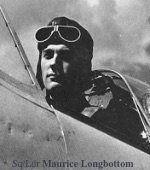
The conversions were largely pioneered by Flight Lieutenant Maurice "Shorty" Longbottom (shown above) and carried out under the direction of Sidney Cotton.
(2) N3069 and N3071 were the first fast, high-flying reconnaissance aircraft to be used by the PDU. The urgent need for a more effective solution led to the release of these two Spitfire Is for conversion to reconnaissance standards.
Both aircraft were delivered on 20 October 1939 to Heston, where they were prepared by Cotton and his ground staff before being sent to the Royal Aircraft Establishment at Farnborough for conversion.
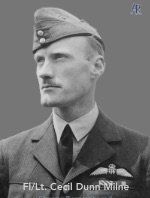
N3069 was delivered as a PR IB to Heston on 18 January 1940. N3071 was also lost when Fl/Lt. Cecil Dunn Milne (shown left) was shot down and taken PoW on the 25th April 1940.
Researched and dedicated to the relatives of this crew, with thanks to National Archives Kew, Aircrew Remembered Archives, and Wikipedia. A recce photograph of a damaged railyard in Italy during World War Two. WW2Aircraft.net. TracesOfWar, Kracker Luftwaffe Archive,
Other sources as quoted below:
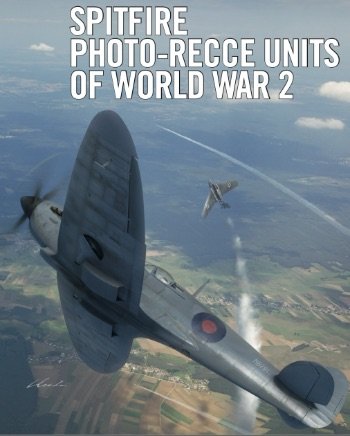
The photographic reconnaissance (PR) versions of the Supermarine Spitfire saw service against the Axis Tripartite throughout World War 2. Its superior performance even led to the USAAF adopting the type for the Eighth Air Force's reconnaissance needs in Europe.
PR Spitfires were responsible for some of the most significant intelligence finds of the war – from low-level oblique photographs of new German radars in France to locating the battleship Bismarck off the Norwegian coast before it attempted to sortie into the Atlantic.
It has been estimated that as much as 80 per cent of Allied intelligence was gathered from aerial photographs, many of which were taken by cameras installed in PR Spitfires.
Ospey Publishing August 29, 2023 96 pages by Andrew Fletcher (Author), Jim Laurier (Illustrator), Gareth Hector (Illustrator) ISBN-13: 978-1472854612 (Paperback)ISBN-13: 978-1472854599 (ePDF)ISBN-13: 978-1472854629
In this volume, RAF PR specialist Andrew Fletcher details the important part played by the small number of 'photo-recce' Spitfires in the key theatres of World War 2. His detailed text, which includes numerous first-hand accounts, chronicles operations from the first months of the conflict through to VJ Day.
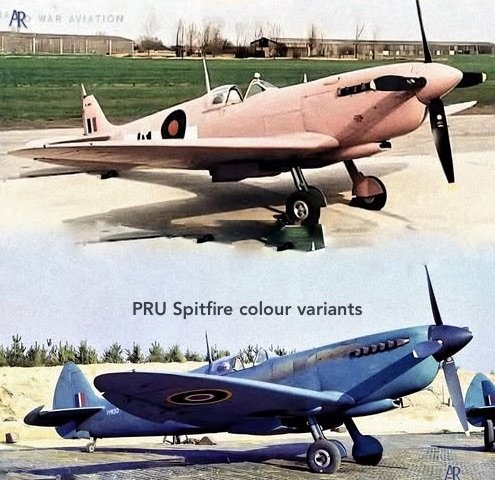
Above: These two Spitfires have a colour code of PRU Pink and PRU Blue. The pink Spitfire is mainly used for dusk and dawn operations with good cloud cover, which makes it practically invisible to the naked eye. The blue Spitfire is for high-altitude photo recon, best used without cloud cover.


