




Herbert Heinz Arthur Klein
24 August 1914 – 13 May 1942
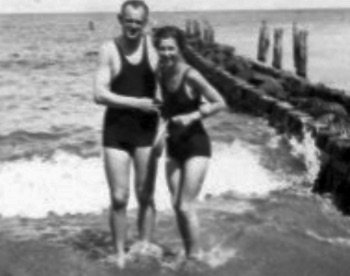
This page tells the story of Hauptmann Herbert Heinz Arthur Klein, a Luftwaffe reconnaissance pilot who was killed on 13 May 1942, on the second day of the Soviet Izyum–Barvenkovo offensive south of Kharkiv. It has been made possible by his granddaughter, Carola, who has spent years gathering, preserving and digitising an extraordinary family archive- school records, training certificates, decorations, a handmade squadron album, and above all the personal correspondence between Herbert and his wife Lieselotte, including the field-post letter she wrote him just two weeks before his death, which was later returned to her unopened. Together, these documents allow us to trace Herbert's life in unusual detail, from a small farming village in East Prussia through his training as an aviator, to his final mission as squadron commander of 1.(H)/14. They also offer a rare, intimate window into the experience of a Luftwaffe aircrew family during the war - the anxious wait for news, the letters from comrades, and the quiet persistence of a family determined, more than eighty years later, to ensure he is remembered. Research into the precise circumstances of his final flight continues, and we hope this page may yet connect us with others who can help complete the story.
(Research is ongoing. The family warmly welcomes contact from relatives of anyone who served alongside Herbert, and would be especially glad to see any photographs of the crash, the crew, or the unit.)
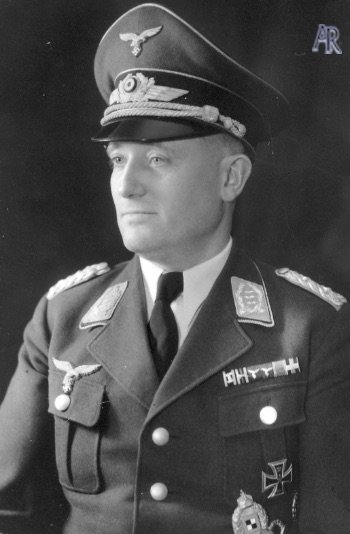
- Herbert Klein – Origins and Youth
Herbert Heinz Arthur Klein was born on 24 August 1914 in Labuch, Rößel district, East Prussia. His parents were Gustav Hermann Klein and Auguste Rosette Klein, née Neumann. The family had owned a farm in Labuch for several generations. Gustav Hermann is listed as the owner in the surviving records.
Herbert attended the primary school in Labuch from April 1920 until March 1924. He then transferred to the municipal secondary school in Bischofsburg. From Easter 1930 onwards, he attended the Kopernikus-Schule, a municipal upper secondary school in Allenstein.
Several original school reports and other school records from this period have survived. As a result, Herbert's education can still be traced today from the small village of Labuch, through Bischofsburg, to Allenstein.
AR 1. Herbert Klein – Origins and Youth.pdf
2. Herbert and Lieselotte
Lieselotte Jagusch and Herbert Klein had known each other for several years before their marriage. Exactly when and where they first met cannot yet be established conclusively from the surviving records. What is certain, however, is that both lived in Allenstein for periods of time during the early 1930s. By 1935 at the latest, Herbert was already part of Lieselotte's life; he is mentioned in her surviving diary.
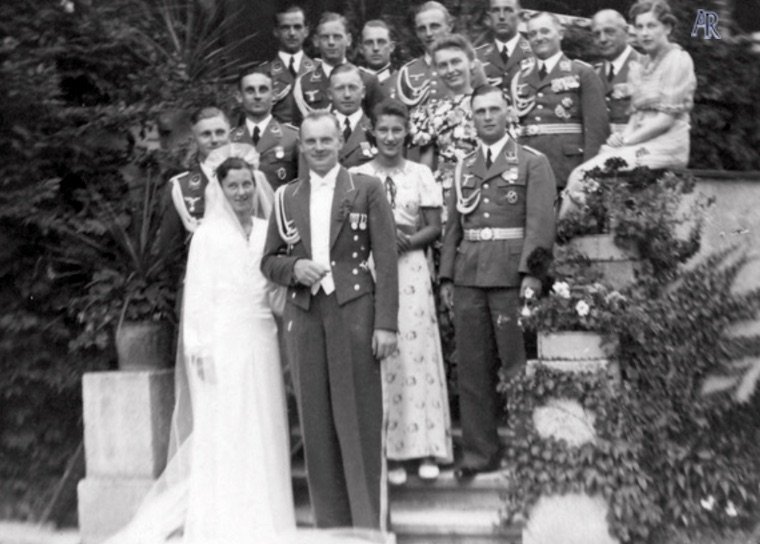
Wedding of Herbert and Lieselotte Klein Baden bei Wien, 21 August 1939
Lieselotte had completed her Abitur in Allenstein in 1932 and subsequently studied philology. She studied in Heidelberg, Innsbruck, Vienna, Jena and Königsberg. Königsberg therefore represents another place where Herbert's and Lieselotte's paths overlapped during this period. Extensive records relating to Lieselotte's education have survived, including university and other personal documents.
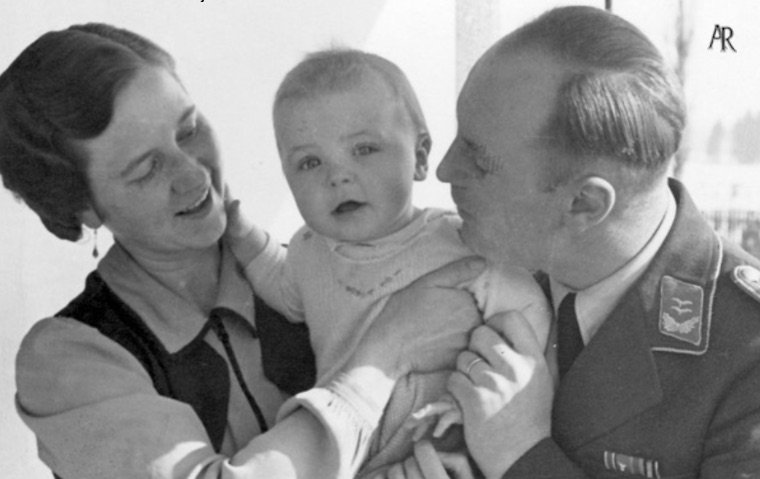
Herbert and Lieselotte Klein with their son Günter, probably 1941.
Herbert and Lieselotte were married in a civil ceremony in Baden bei Wien on 21 August 1939. At the time, Herbert held the rank of Oberleutnant and, according to the marriage certificate, lived at Marchetstraße 80 in Baden. Lieselotte was employed as an office clerk and lived at Zimmerstraße 16 in Allenstein. No evidence of a church wedding has so far been found in the surviving records.
Their first son, Günter Gerhard Klein, was born on 4 July 1940 at Reserve Military Hospital III Maraunenhof in Königsberg. Later that year, the family moved to Fürstenfeldbruck. A surviving tenancy agreement documents their residence at Feldstraße 15 from 1 November 1940.
While Herbert was serving on the Eastern Front in 1942, Lieselotte remained in Fürstenfeldbruck with Günter. Her field-post correspondence to Herbert from this period has also survived. Particularly significant is her letter of 29 April 1942, which was returned to her after Herbert's death.
Their second son, Udo, was not born until 23 November 1942 – more than six months after Herbert's death. Herbert therefore never met his second son.
AR 2. Herbert und Lieselotte.pdf
3. Training and Military Aviation Career
After completing his schooling, Herbert chose a military career in aviation. In 1934, he applied for a position within the sphere of the Reich Air Ministry. A surviving letter from the Königsberg Air Office dated 7 July 1934 confirms that his application had been successful and that preparations were being made for his appointment. Herbert subsequently entered military aviation training as an officer candidate.
In 1935, Herbert passed his officer examination at the military academy in Dresden. On 1 April 1936, he was commissioned as a Leutnant. His aviation and military training continued during the following years. Several certificates, military documents and records concerning his courses and qualifications have survived in the family archive.
Braunschweig is among the training locations documented in these records. The surviving documents make it possible to trace individual stages of his military and aviation training directly.
Herbert was trained as an aircraft observer and later qualified as both a pilot and an observer. Further surviving certificates document his promotions and decorations up to the rank of Hauptmann.
Later, Herbert also served for a period as an instructor at the Luftkriegsschule in Fürstenfeldbruck. The family is documented as having lived there at Feldstraße 15 from November 1940.
AE 3. Training and Military Aviation Career.pdf
4. The “Herzstaffel” and the War in the East
During the war, Herbert served with several Luftwaffe reconnaissance units. One of these was 3.(H)/21 (Pz.), known as the “Herzstaffel” (“Heart Squadron”).
On 25 October 1941, when leaving this squadron, Herbert was presented with a handmade commemorative album by his comrades. The heart on the album refers to the Herzstaffel. The album has survived in its entirety and includes, among other things, Schulte's signature.
The album contains photographs, aerial photographs, drawings and names of comrades, as well as a map entitled “Unser Weg nach Moskau…” (“Our Road to Moscow…”). Locations appearing on its pages include Gomel, Roslawl and Vyazma, together with references to the Vyazma encirclement, tank battles and the 11th Panzer Division.
The album is highly personal in character. Several comrades are depicted in photographs and caricatures. Together with the signatures and captions, this may make it possible to identify further members of the squadron by name.
In addition to this album, numerous other photographs from Herbert's military service have survived. They show him with different units, with comrades, beside aircraft and during operations, but also while on leave from the front and with his family.
The surviving records and photographs therefore document more than Herbert's own career. They may also contain information about other men who served with him and whose histories are now only incompletely known.
5. The Final Squadron
After leaving the Herzstaffel, Herbert was transferred. His final unit was 1.(H)/14. By 1942 he held the rank of Hauptmann and was the commander of a short-range reconnaissance squadron on the Eastern Front.
Among the aircraft flown by the unit was the Focke-Wulf Fw 189, a twin-engined reconnaissance aircraft. As squadron commander, Herbert was not only himself a member of an aircrew but was also responsible for leading the squadron.
One particularly personal document survives from the final weeks of his life. On 29 April 1942, Lieselotte wrote him a field-post letter from Fürstenfeldbruck. She wrote about everyday life at home, about Günter and about their future together. Herbert never received the letter. After his death, it was returned to Lieselotte; the original letter and its field-post envelope have both survived.
Only two weeks later, Herbert's squadron was transferred to the area south of Kharkov. On 12 May 1942, a major Soviet offensive began from the Izyum-Barvenkovo bridgehead. The front situation changed rapidly.
The following day, Herbert took off on a reconnaissance mission. According to a later letter from his group commander, this was his squadron's first operational sortie in this area.
6. 13 May 1942
On 13 May 1942, Herbert took off with Oberleutnant Berthold Blattner and Gefreiter Heinz Heuer on a reconnaissance mission south of Kharkov. The three men flew together in a Focke-Wulf Fw 189, Werknummer 0181.
The mission took place on the second day of the Soviet offensive from the Izyum-Barvenkovo bridgehead. According to the surviving letter from his group commander, Herbert's aircraft received a direct hit during his squadron's first operational sortie in this area and crashed.
The surviving records give the crash site, and subsequently the place of death, as Gruschino, 69 kilometres south of Kharkov; letters from his unit also use the spelling Grischino. Herbert was 27 years old.
The group commander wrote to Lieselotte that same day. At that point, the crash site could not yet be reached. The unit therefore initially knew only that the aircraft had crashed and that none of the crew had returned. The commander promised Lieselotte that she would be informed as soon as the crash site could be reached.
For Lieselotte, this marked the beginning of a period in which she had to assume that her husband was dead, while still not knowing exactly what had happened to Herbert and the other two members of his crew.
It was only several weeks later that the crash site could be reached. What was found there is documented in unusual detail in several surviving letters from Herbert's unit.
7. The Crash Site and the Letters to Lieselotte
In the weeks following the crash, Lieselotte received several letters from Herbert's unit. The originals have survived and document how, step by step, it was established what had happened to Herbert, Berthold Blattner and Heinz Heuer.
On 4 June 1942, the group commander reported that the crash site had finally been reached. Herbert and the other two crew members had been found beneath the wreckage of the Fw 189. In the commander's assessment, Herbert had probably already been killed by the direct hit. The three men were buried near the crash site at Grischino, south of Kharkov. A photograph of the graves was enclosed with the letter.
That photograph remains in the possession of the family today. It shows the three graves with their crosses standing side by side.
On 7 June 1942, Lieselotte received another, more detailed letter. She had apparently asked whether it could truly be ruled out that Herbert had survived the crash. The writer explained why there was no longer any doubt: a comrade had witnessed the crash, and no one had left the aircraft by parachute.
The surviving letters are particularly important for reconstructing Herbert's final mission. They were written only days or weeks after the event and came from men in his immediate military environment. Together with the death certificate, the photograph of the graves and the other surviving records, they constitute an unusually complete body of documentation concerning his death.
Contact between Lieselotte and members of Herbert's unit continued afterwards. Another surviving letter is dated 8 September 1942.
8. Awards and Aviation Qualifications
Herbert's surviving records document several aviation qualifications and military decorations:
- Aircraft Observer Badge – 26 January 1937
- Wehrmacht Long Service Award, 4th Class – 1 July 1938
- Commemorative Medal of 13 March 1938 – 16 December 1938
- Combined Pilot-Observer Badge – 15 February 1939
- Commemorative Medal of 1 October 1938 – 1939
- Iron Cross 2nd Class – 28 September 1939
- Front Flying Clasp for Reconnaissance Crews in Bronze – 22 October 1941
- Iron Cross 1st Class – 3 November 1941
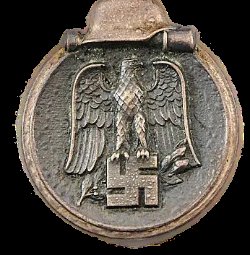
- Eastern Front Medal (“Winter Battle in the East 1941/42”) – awarded posthumously on 8 August 1942
The corresponding certificates for these qualifications and decorations have survived in the family archive.
AR 8. Awards and Aviation Qualifications.pdf
9. Surviving Family Archive
An extensive collection of original records and photographs relating to Herbert has survived. These include:
- school reports and records from Labuch, Bischofsburg and Allenstein
- records relating to his military and aviation training, including material from Königsberg, Dresden and Braunschweig
- appointment, promotion and award certificates
- certificates documenting his aviation qualifications and military decorations
- the handmade farewell album presented by the Herzstaffel on 25 October 1941, containing photographs, aerial photographs, drawings, operational locations, names and signatures of comrades
- numerous other photographs from his military service, including photographs with comrades, aircraft and during operations
- private photographs with Lieselotte, Günter and other members of the family
- field-post correspondence between Herbert and Lieselotte
- letters sent to Lieselotte by Herbert's superiors and comrades following the crash
- death records
- the contemporary photograph of the graves of Herbert Klein, Berthold Blattner and Heinz Heuer
10. The Family in 2026
Herbert's records have been preserved within the family for several generations. Today, the documents and photographs are in the possession of his granddaughter, Carola.
Together with her son and daughter, Herbert's great-grandchildren, she is researching the family's history and attempting to reconstruct Herbert's military career and final mission as accurately as possible.
The surviving documents and photographs have now largely been digitised and examined. Further information concerning Herbert, his units and his comrades is therefore of particular interest to us.
11. Lieselotte and the Family After Herbert's Death
Before the war, Lieselotte had worked for the German authorities in Allenstein, including at the Gestapo office there. After Herbert's death, she and their two sons, Günter and Udo, lived in a wooden house in Fürstenfeldbruck together with Lieselotte's mother, Margarete, her sister Ilse, and Ilse's three children. Ilse's husband was still a prisoner of war at the time and returned only later.
Lieselotte's own life after the war took a remarkable turn. From 8 May 1945 she worked as an interpreter for the U.S. Military Government. She later managed an American Red Cross Club and worked for Property Control, before working in Real Estate at Fürstenfeldbruck Air Base from 1948 until 1957, apparently eventually becoming the German head of that office. In 1957 she moved to the Dornier works at Oberpfaffenhofen.
Lieselotte died young, on 21 May 1964, at the age of 51. According to family history, the cause was breast cancer. Her mother, Margarete, lived until 1978.
Günter, Herbert and Lieselotte's elder son, became a lawyer. He married Karin Beneckendorff, and they lived in Kaufbeuren. He died in 2006. Their children are Carola and her brother.
Udo, Herbert and Lieselotte's younger son – born after Herbert's death – became a veterinarian. He married and had two daughters, and the family later emigrated to Canada. There has been no contact with that branch of the family for many years.
Carola, Herbert's granddaughter, lives in Augsburg with her children, who are Herbert's great-grandchildren. It is Carola who has preserved and shared the family's papers, photographs and correspondence, and who has made this account of Herbert's life possible.
Regarding the crash location, Herbert's death certificate does not contain a map-grid reference; it records the location only as “Gruschino, 69 km south of Kharkov.” Carola has since agreed to contact the Bundesarchiv to request confirmation of the crash location, the burial details, and, if available, further information about the operation of 13 May 1942.


