




Date: 24th July 1941 (Thursday)
Unit: No. 152 (Hyderabad) Squadron, Fighter Command (motto: ‘Faithful Ally’; badge: the head-dress of the Nizam of Hyderabad)
Type: Supermarine Spitfire Mk IIa
Serial: P7881
Base: RAF Warmwell, Dorset (previously operated from Portreath, Cornwall)
Location: Porspoder, Finistère, France
Pilot: Flying Officer Eric Simcox Marrs, DFC, RAF, age 20 – Killed
Also lost, same operation: Sergeant James Alexander Short, 745244, RAF, flying Spitfire IIa P8512 – Prisoner of War (PoW Stalag Fallingbostel (357) No. 18)
REASON FOR LOSS
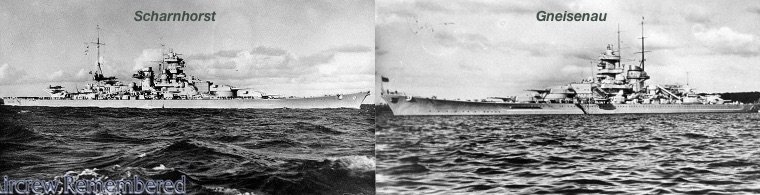
On 24 July 1941, No. 152 Squadron provided close escort for Handley Page Hampden bombers detailed to attack the German capital ships Scharnhorst and Gneisenau in Brest harbour — reported at the time as the biggest daylight raid of the war to that point. The raid was successful and hits were scored on the target, but heavy flak was encountered over Brest. Marrs was shot down in Spitfire P7881 and died of his wounds near Porspoder. Sergeant Short, flying Spitfire P8512, also failed to return; he survived and was taken prisoner, though the site of his aircraft's loss and his capture were not recorded.

The squadron's Operations Record Book captured the loss in the following terms:
“Close escort to Hampden bombers for Raid on BREST. This is reported as the biggest daylight raid of the War. It was a successful raid and hits were scored on the Target. It is with great sadness that it must be recorded that F/O MARRS, D.F.C., and Sgt. SHORT did not return. ‘Boy’ Marrs was just twenty — he had been the ‘B’ Flight Commander for a long time and was probably the best pilot in the Squadron. Apart from that, his personality and ability as a Flight Commander were supreme. He was admired and loved by everyone. His name in this Squadron will live for evermore. Sgt. Short was without doubt the pick of a jolly good lot of Sergeant pilots — a wise old devil, first-class pilot, and most popular. We have reason to believe from a newspaper report that he is a prisoner of war. No one saw him go — the flak was terrific, and the general impression is that it got them both.”
 BURIAL DETAILS
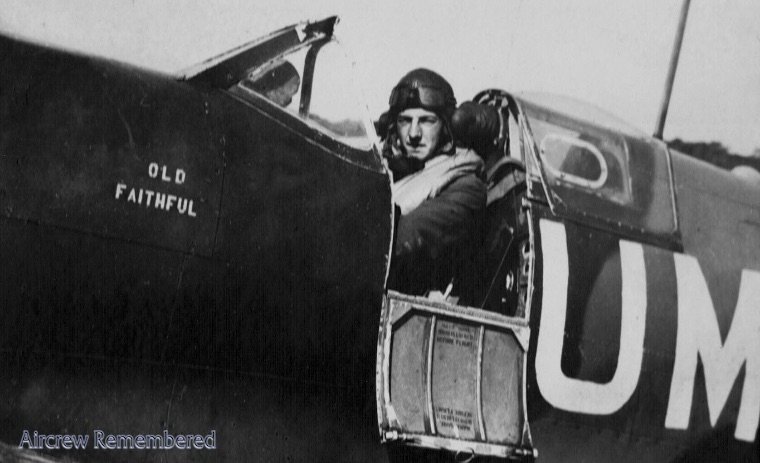
Flying Officer Eric Simcox Marrs is buried in Kerfautras Cemetery, Brest, France. His portrait was drawn by the war artist Cuthbert Orde.
Sergeant James Alexander Short survived as a prisoner of war (PoW serial 357/18); no burial record applies.
BIOGRAPHY — F/O ERIC SIMCOX MARRS, DFC
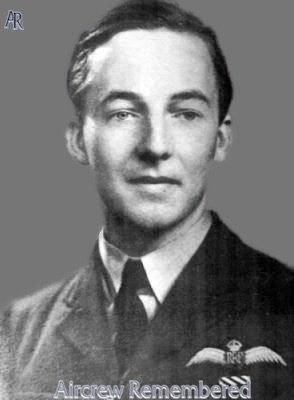
Known throughout the Royal Air Force as ‘Boy’ Marrs, Eric Simcox Marrs was born in Dover on 9 July 1921, the son of Major Robert Marrs, CMG, CIE (1885–1951), and Annie Margaret Florence Marrs, née Simcox (1895–1981). He was educated at Dauntsey's School, Devizes, in Wiltshire. In April 1939 he entered the RAF College, Cranwell, as a Flight Cadet, and was granted a Permanent Commission on 7 March 1940. Ten days later he joined No. 152 ‘Hyderabad’ Squadron at Acklington, Northumberland, flying the Supermarine Spitfire Mk Ia.
No. 152 Squadron moved to Warmwell, Dorset, in July 1940 at the start of the Battle of Britain. On 13 August, Pilot Officer Marrs claimed his first victory when he destroyed a Messerschmitt Bf 110. On the 16th he claimed a probable Heinkel He 111, on the 18th a Junkers Ju 87, and on the 22nd a shared Dornier Do 17. On the 25th he destroyed a further Bf 110.
On 17 September, attacking Junkers Ju 88s, his Spitfire was hit by return fire and he was forced to land with a seized engine, escaping unhurt; he shared in the destruction of a Ju 88 that day. Eight days later, during combat south of Bristol, his aircraft was again damaged but he returned safely to base, and on the morning of 27 September he shot down a Ju 88 near Bristol, though his fighter was once more hit by return fire before he made it back to his airfield.
During the late afternoon of 30 September, Marrs was caught in the crossfire of a formation of Luftwaffe bombers he was attacking, and bullets struck the armoured windscreen of his Spitfire. He landed back at Warmwell with a damaged undercarriage and only one wheel, again unhurt. On 14 November he shared in the destruction of a Ju 88, and on the 28th he destroyed a Messerschmitt Bf 109. By the end of October 1940 he had claims against at least ten enemy aircraft.
Marrs's success in the air was recognised at the start of 1941 with the award of the Distinguished Flying Cross, gazetted on 7 January 1941. The citation, published in the London Gazette (No. 35037), read:
“Pilot Officer Marrs has participated in numerous patrols against the enemy and, on occasions, he has led his flight, with great skill and coolness. He has destroyed at least six enemy aircraft.”
On 4 January 1941 Marrs also destroyed a Dornier Do 17 north of Warmwell. He became a Flight Commander in April 1941, and a further award followed in March 1941 when he was Mentioned in Despatches, gazetted on 17 March 1941.
The squadron moved to Portreath, Cornwall, during April 1941. On 18 July, over the Scilly Isles, the twenty-year-old Flight Lieutenant Marrs shared in the destruction of a Heinkel He 111 bomber — his last victory before he was killed six days later at Brest.
Aircraft History — Spitfire IIa P7881
The aircraft in which Marrs was lost had a documented service history before reaching No. 152 Squadron. It left No. 6 Maintenance Unit on 12 January 1941, served with No. 66 Squadron from 15 February 1941, then No. 609 Squadron (coded ‘PR-B’) from 24 February 1941, during which it was struck by a taxiing Master at Dyce on 27 April 1941. It then passed to No. 616 Squadron on 21 June 1941, before joining No. 152 Squadron. Flying P7881, and escorting the Hampdens over France, Marrs was shot down at Porspoder on 24 July 1941.
 SERGEANT JAMES ALEXANDER SHORT
Sergeant James Alexander Short flew Spitfire Mk IIa, serial number P8512, also of No. 152 (Hyderabad) Squadron. On 24 July 1941, while escorting the Hampden bombers detailed for the Brest raid, his aircraft went missing. Short survived and became a prisoner of war (PoW serial 357/18). The crash site of his aircraft and the exact location of his capture are not recorded.
Research notes consulted for this report flag some uncertainty over the precise identification: whether the pilot of P8512 was indeed J. A. Short, service number 745244, held as PoW 357/18, is noted in the source material as a question meriting further verification rather than an established fact.
SQUADRON AFTERMATH
The Operations Record Book also records the squadron's reaction that same night. Despite the loss of two popular pilots, the entry notes that the squadron marked the day with a party in their billet, during which breakages were sent over the staircase into the hall below. The Commanding Officer, returning in the early hours and having seen gun flashes in the sky from nearby anti-aircraft practice, opened the hall door and believed for a moment that the house itself had been hit. A local resident who heard of the party, and mistakenly believed the pilots would have to cover the cost of the damage, immediately offered to pay the bill in full — a gesture the diarist recorded required “no comment.” The following day's entry was characteristically brief: “Hang over! Nothing to record. Sgt. Mair and Sgt. Heggtveit posted to us.”

STATION BACKGROUND — RAF WARMWELL
RAF Warmwell was a Royal Air Force airfield in Dorset, England, situated about five miles east-south-east of Dorchester, near the site of what is today the village of Crossways. The airfield opened in May 1937 as a landing ground named RAF Woodsford, home to the 6 Armament Training Camp, and was renamed RAF Warmwell in July 1938 to avoid confusion with Woodford, near Manchester. As Fighter Command took over the station, Warmwell became a satellite of Middle Wallop, defending the naval base at Portland. During the Battle of Britain its principal Spitfire squadrons were No. 152 and No. 609, and it was from Warmwell that No. 152 Squadron operated for much of 1940 and into 1941.
SOURCES AND ACKNOWLEDGEMENTS
- marrsAircrew Remembered aRCHIVES
- RAF Museum
- National Archives, Kew
- Kriegsarchiv Luftwaffe Archives
- Wikipedia
- Squadron Operations Record Book (Form 540/541), No. 152 (Hyderabad) Squadron, RAF, entries for 24–25 July 1941.
- London Gazette, No. 35037, 7 January 1941 (DFC citation).
- London Gazette, 17 March 1941 (Mention in Despatches).
- Published biographical accounts of F/O Eric Simcox Marrs and research notes on Sgt James Alexander Short (PoW no. 357/18), including aircraft-loss records for Spitfire P7881 and Spitfire P8512.
Commonwealth War Graves Commission, burial record, Kerfautras Cemetery, Brest, France.


