
- Home
- Maps▾
- FAQ▾
- About/Donate▾
- News▾
- Obits
- Contact/Help▾
- PersonalHistories▾
- Cross Reference Research Lists ▶
- Recent Archive Reports
- Profiles in Courage
- 1914 -1918 WW1 Material
- Royal Air Force + RAFVR ▶
- WAAF/WRAF
- Australia
- Belgium
- Canada
- Site honouring Czechoslovak RAF
- Holland: LOST Rob Philips Memorial Archive
- New Zealand
- Norway, Denmark, Sweden, Finland
- Poland
- South Africa
- Archiwum Mielnika: Polish Air Force Archive
- USAAF & USAF
- USA WASP Flygirls
- USA - Co de Swart Gallery: Baker Crew 95th BG
- USA - Co de Swart Gallery: Geyer Crew 98th BG
- Axis Powers
- Russia/Soviet Union
- RCAF 409 The Nighthawks
- Hore-Kennard RCAF
- Zenon Bartkowiak PAF
- Charles Dills USAAC
- Gerald Schwartz USAAC
- Ralph Malan Memoirs
- Soviet Women 'Night Witches'
- Full Story of Lancaster Z-Zebra
- First Air Raid Victim
- 1914 -1918 WW1 Material
- Databases▾
- Databases Master List
- Consolidated Names: includes 500K+ names from all our databases
- Cross Reference Research Lists
- Research Sources
- MULTI-NATIONAL DATABASES
- Aces and Aviators International WW1 - 3000+
- Vitz Archive: War Crimes Victims of Axis
- NEW! USAAF & Allies Non Combat Incidents and Losses
- ALLIED DATABASES
- Allied Losses and Incidents: all Commands
- Aircrew Deaths & Resting Places Worldwide 1939 - 47 120,000+
- Alamein Allied Air Forces Memorial 3000+
- Allied Non-British Graves in Europe managed by CWGC
- Battle of Britain: Enhanced and Extended
- Glider Pilot Regiment Casualties
- Korean War UN Forces Database
- LOST Rob Philips Memorial Archive Dutch/2TAF Losses
- Malta Memorial Database
- Nordic Allied Database
- Ottawa Allied Air Forces Memorial Database
- Paradie RCAF Archive
- Archiwum: Polish Air Force Archive
- Polish Honour Roll
- RAAF Honour Roll
- RCAF Notes - 9000+
- Royal Navy Fleet Air Arm
- Runnymede Memorial Database
- Soviet Aces Database 1941 - 1945
- US Aces and Aviators WW2
- US Air Service Victories WW1
- USAAF Allies NonCombat Losses
- USAAF Operations WWll
- US Marine Corps Squadrons WWll
- Vitz Memorial Archive: War Crimes Victims of Axis
- AXIS DATABASES
- Kracker Luftwaffe Archive
- Deutsches Kreuz in Gold
- German Graves in UK
- German WW2 Aces
- Luftwaffe Graves Managed by CWGC
- Luftwaffe Victories by Name/Date
- Archives ▾
- Archiwum: Polish Air Force Archive: Data on 17,000
- Kracker Luftwaffe Archive
- LOST Rob Philips Memorial Archive: Holland
- Paradie Canadian Archive
- Paul McGuiness RAAF Archive WW1 & WW2
- Profiles in Courage
- Vitz Memorial Archive: War Crimes Victims of Axis
- USAAF Combat Operations 1941-45 Worldwide
- 409 RCAF: The Nighthawks
- Detailed Personal Archive RCAF Officer
- Charles Dills Archive
- Gerald Schwartz Archive
- Ralph Malan Memoirs
- RAF Coastal Command Patrol Areas
- US Intelligence Analysis German Anti Aircraft
- Allied Mine Laying Map (Gardening)
- Airborne Forces - a short history
- More ▾
- de Swart Gallery: Baker Crew, Geyer Crew
- Guide to Complete Site
- Helpdesk
- Donate
- Lay a Wreath
- Your relative's CWGC grave explained
- CWGC War Graves in USA
- Doing Your Own Research
- Research Sources
- US Assistance to Warsaw Uprising
- Our support for charities
- Axis Awards Descriptions
- Stolperstein: Permanent Remembrance
- Who fought for Britain 1939 - 1945
- Aerotoxic Syndrome
- Bermuda Triangle Mystery
- Cross Reference Research Lists
- Not Many People Know That
- Image Acknowledgements
- Abbreviations Used by Forces
- Poetry of Direct Personal Experience
- Staggering Cost in Lives of WWll
- Animated Map All Allied Bombing WW2
- USAAF Combat Operations 1941-45 Worldwide
- Polish Airmen Fighting (Video)
- Important Links
- Canada Memorial Project
- Remembering Banica
- Book Reviews
- 1 BFTS Texas
- Veterans Appeals
- Korean Conflict
- Vietnam Conflict
- Other Conflicts
- Commercial Aviation
- Bush Flying
- Nose Art
- Military Humour
- Airborne Forces - a short history
-

Aces and Aviators International Database WW1
Check the Databases Menu for the extensive list of our databases which represent decades of original research by our Editors
Data derived from many sources. Corrections/Additions requested through Helpdesk
Search Tips • Researchers • Check Spelling Names • USAS Airservice Database • Databases On Site
As Defence Journal describes it, at the outbreak of the First World War (WW1) in 1914, military aviation consisted of light wooden bi/tri planes with maximum speeds of under 100 mph and very limited load carrying capacity.
Their roles were initially restricted to reconnaissance and artillery observations.
While there may not have been any air power doctrine on the eve of WW1, there was no shortage of alarming speculations about strikes from the sky, thanks to pre-war novels from H.G Wells and others.
Within seven weeks of WW1 beginning, Sopwith Tabloids of Britain's Royal Naval Air Service conducted an air raid on the Zeppelin (airship) sheds in Germany. A year later Germany retaliated when Zeppelins in turn bombed English cities.
The actual damage in all these raids may have been minimal but the psychological impact on civilians and populations was profound.
With both sides using increasing numbers of aircraft for reconnaissance, artillery observations and occasional bombing raids, the inevitable happened and aircraft started to shoot at each other to prevent the adversary from taking military advantage of the new medium. This marked the birth of fighter aircraft whose numbers proliferated whilst their performance took a quantum leap. The battle for control of the air had truly begun. The writing was clearly on the wall for military tactics and precepts that had stood for hundreds of years as the full flower of air power's potential to change the course of events and even win wars had to be acknowledged.
The Air War assumed a giant scale on both sides. By way of example, the British had upwards of 2,000 planes active by war end. And the war saw many tactics and strategies develop that were further developed in the Second World War.
Recovering names and details from over 100 years ago is a big task. If you have additions or corrections, or know of places we can contact to request their data, please let us know via the Helpdesk.
Searching here is powerful. Check the Search Tips first. You can search on single items (a surname for example, or a country) and you can search on combinations: thus a search on 'Australia and Camel' will find all records where BOTH Australia and Camel are mentioned.
You can search on 2 characters or more
Searching is possible on French squadrons, but with some care. The French named their squadrons for the plane each flew, thus N95 was a squadron flying Nieuport, SPA 150 flew the SPAD. To search for squadron N95 search for 'Nieuport N95'. Squadrons flying the Caudron were designated C50 for example, so in this case search for 'Caudron C50'.
Be aware we have used dozens of different sources. Some use special characters (such as umluats on German), others use Anglicized versions of the word. Thus some use Göring, and some use Goering. Try different approaches.
Countries/Nationalities Included: Agentina, Australia, Austro-Hungarian Empire, Austria, Belgium, Bermuda, Bulgaria, Canada, Canada Newfoundland, Canada French Canada, Chile, China, Czechoslovakia, Denmark, Estonia, Fiji, Finland, France, Georgia, Germany, Germany Bavaria, Germany Sudetenland, Great Britain (Wales, Scotland, Ireland separately listed), Greece, Guatemala, Hungary, India, Italy, Jamaica, Japan, Latvia, Lithuania, Mauritius, Mexico, Netherlands, Slovakia, Hungary, Australia, New Zealand, Norway, Poland, Portugal, Romania, Russia, Serbia, Slovakia, Swaziland, Switzerland, Turkey Ottoman Empire, USA, Venezuela, Vietnam.
The reader is referred to a site of great scholarship on WWl aviation. airhistory.org is comprehensive and valuable.
Refer to Paul McGuiness RAAF Archive WW1This page has opened with a sample Search for demonstration purposes.
Searches are now permitted on 2 character minimum (previously 3).
To search on single digit Squadron append Sqd, thus: search on '5 Sqd'
These are the results of your search:
You searched for: “Cecil Frederick King”
| # | Name* SORT (↑) | First Names | Rank | Awards | Country SORT (↑) | Alliance | Role | Victories | Details | Units | Air Service | Death | Notes/Aircraft | Sources | Links | Photo |
|---|---|---|---|---|---|---|---|---|---|---|---|---|---|---|---|---|
| 1 | Wilson | Cecil Frederick Charles | Lt | Great Britain | Allies | Pilot | 5 | [3+2] (3 kills+2 Lost Control) | 84Sqn | RAF | SE5 ace, 1918. | Shores |  |
|||
| 2 | Tuffield | Thomas Cecil Silwood | Lt | Great Britain | Allies | Observer | 6 | [5+1] (1 kill+5 Lost Control) | 48Sqn (gunner) | RFC | Bristol Fighter gunner, 1917. | Franks-Guest | |
|||
| 3 | Travers | Frederick Dudley | Capt | Great Britain | Allies | Pilot | 9 | [5+4] (6 kills+3 Lost Control) | 47Sqn, 17Sqn, 150Sqn | RFC & RAF | BE12, SE5, M1C, Macedonia, 1917-18. | Shores (Other sources 12 victories) | |
|||
| 4 | Thomson | George | Lt | Great Britain | Allies | Observer | 14 | (9 kills+5 Lost Control) | 22Sqn (gunner) | RAF | Bristol Fighter gunner, 1918. George Thomson DFC (born 3 October 1896, date of death unknown) was a Canadian First World War flying ace, officially credited with 14 victories. Born in Thornhill, Dumfries, Scotland, Thomson emigrated to Canada. Working as a printer in Celista, British Columbia, Thomson enlisted in 1914, serving in the 30th Battalion of the Canadian Expeditionary Force and the 48th Highlanders of Canada. Thomson was wounded twice while serving with the 7/8th King's Own Scottish Borderers. In October 1917 Thomson transferred to the RAF, and in 1918 he was posted to the 22 Squadron as an observer, where he scored 14 victories. Thomson returned to the Home Establishment in August 1918 to be trained as a pilot. His death date is unknown, although he is not listed among the few surviving World War I veterans. Citation DSC: 'Lieut. George Thomson (King's Own Scottish Borderers). A brilliant and intrepid observer in whom his pilot places implicit confidence when engaged in action. He has personally accounted for nine enemy machines. On one raid, when acting as escort, 15 enemy aeroplanes were encountered; of these this officer shot down two, which crashed, and one out of control.' | Franks-Guest | |
|||
| 5 | Thompson | Samuel Frederick 'Siffy' | Capt | Military Cross, DFC | Great Britain | Allies | Pilot 2 Seater | 30 | (18 kills+12 Lost Control) | 20Sqn, 22Sqn | RAF | Bristol Fighter great ace, 1918. KIA. Some sources 11 and 22 victories) | Shores. | |
||
| 6 | Thayre | Frederick James Harry | Capt | Military Cross and Bar | Great Britain | Allies | Pilot 2 Seater | 20 | (18 kills+2 Lost Control) | 16Sqn, 20Sqn | RFC | 09/06/1917 | BE2, 1916; FE2 top ace, 1917. KIA. | Shores. | |
|
| 7 | Stephenson | Thomas Frederick | Sgt | Great Britain | Allies | Pilot 2 Seater | 5 | (2 kills+3 Lost Control) | 11Sqn | RFC | 20/11/1917 | Bristol Fighter ace, 1917. KIA. | Shores. | |
||
| 8 | Stanton | Frederick Cecil | Lt | Great Britain | Allies | Pilot 2 Seater | 7 | (4 kills+3 Lost Control) | 22Sqn | RAF | Bristol Fighter ace, 1918. | Shores. | |
|||
| 9 | Sowrey | Frederick | Maj | Great Britain | Allies | Pilot | 13 | [8+5] (Zeppelin L.32)(7 kills+6 Lost Control) | 39 Sqn (HD), 37 Sqn (HD),19 Sqn,143 Sqn (HD) | RFC | BE2 Zeppelin killer. Spad ace, 1917. English WWI fighter ace, Frederick Sowrey was born 25/8 1893. | Shores | 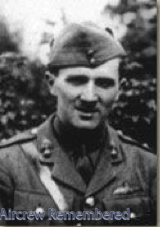 |
|||
| 10 | Scholte | Owen John Frederick | Capt | Great Britain | Allies | Pilot 2 Seater Observer (?) | 8 | (4 kills+4 Lost Control) | 18Sqn (observer), 51Sqn, 48Sqn, 60Sqn | RFC & RAF | 30/07/1918 | Bristol Fighter, 1917; SE5, 1918. | Shores. | |
||
| 11 | Richards | Cecil Roy | Lt | Australia | Allies | Pilot 2 Seater | 12 | (4 kills+8 Lost Control) | 20Sqn | RFC | FE2 ace, 1917. | Shores. | |
|||
| 12 | Ransley | Frank Cecil | Capt | Great Britain | Allies | Pilot 2 Seater | 9 | (5 kills+4 Lost Control) | 48Sqn | RAF | Bristol Fighter ace, 1918. | Shores. | |
|||
| 13 | Powell | Frederick James | Maj | Great Britain | Allies | Pilot | 6 | [5+1] (with observer)(2 kills+4 Lost Control) | 5Sqn, 40Sqn, 41Sqn | RFC | VF5b, FE8, 1915-16; SE5, 1917. POW. | Shores | |
|||
| 14 | Phillipps | Roy Cecil | Maj | Australia | Allies | Pilot | 15 | (14 kills+1 Lost Control) | 68Sqn, 2Sqn AFC | Australian Flying Corps | DH5, 1917; SE5 ace, 1918. | Shores (Other sources 12) |  |
|||
| 15 | Noel | Tom Cecil | Lt | Military Cross and Bar | Great Britain | Allies | Observer | 24 | [22+2] (13 kills+11 Lost Control) | 20Sqn (gunner) | RAF | 22/08/1918 | Bristol Fighter gunner observer ace, 1918. KIA. | Franks-Guest | |
|
| 16 | Murmann | Donald Frederick | 1Lt | Great Britain | Allies | Pilot | 5 | [4+1] (2 kills+3 Lost Control) | 40Sqn, 25Sqn US Air Service | RAF | SE5 ace, 1918. | Shores | |
|||
| 17 | McCloughry (later Kingston-McCloughry) | Edgar James Kingston | Capt | DSO DFC & Bar  MiD  Australia | Allies | Pilot | 21 | (4 balloons)(20 kills+1 Lost Control) | 23 Sqn RFC; 4 Sqn AFC (CO) | RFC & AFC | 15 November 1972 | Camel ace, 1918. Australian WWI fighter ace, Edgar James Kingston McCloughry was born 10/9 1896. He authored 2 books: Direction of War
A Critique of the Political Direction and High Command in War; E.J. Kingston McCloughry / Hardcover / New York: Frederick A. Praeger, 1958
Defense Policy and Strategy
E.J. Kingston McCloughry / Hardcover / New York: Frederick A. Praeger, 1960 More: http://www.theaerodrome.com/aces/australi/mccloughry.php | Citation DFC: Lieut. (T./Capt.) Edgar James McClaughry (Australian Flying Corps). Early one morning this officer left the ground, and, meeting an enemy two-seater ten miles over the lines, he engaged and destroyed it. He was immediately attacked by five scouts; these he out-manoeuvred, destroying one and driving the remainder down. He is a determined and successful scout leader, who in recent operations has accounted for nine enemy machines, in addition to three others and one balloon when serving with another squadron. Citation DFC Bar: Lt. (T./Capt.) Edgar James McClaughry, D.F.C. (Australian Flying Corps). In the short space of one month this officer has destroyed ten enemy aeroplanes and balloons. He has organised and carried out numerous raids on the enemy, frequently at very low altitudes. Altogether he has destroyed fifteen aeroplanes and four balloons. Early one morning he crossed our lines to attack a balloon which he had previously located. As soon as daylight allowed he dived and opened fire on the balloon, which was on the ground, descending to within fifty feet of it. The balloon burst into flames. He then attacked some horse transport, dropping bombs and firing, some 300 rounds at 1,500 feet altitude. Citation DSO: Capt. Edgar James McClaughry, D.F.C. (Australian F.C.). (FRANCE) A bold and fearless officer, who has performed many gallant deeds of daring, notably on 24th September, when, attacking a train at 250 feet altitude, he obtained a direct hit, cutting it in two, the rear portion being derailed. He then fired a number of rounds at the fore portion, which pulled up. Sighting a hostile two-seater he engaged it and drove it down. Proceeding home he observed seven Fokker biplanes; although he had expended the greater part of his ammunition, Captain McClaughry never hesitated, but engaged the leader. During the combat that ensued he was severely wounded by fire from a scout that attacked him from behind; turning, he drove this machine off badly damaged. His ammunition being now expended he endeavoured to drive off two hostile scouts by firing Very lights at them. Exhausted by his exertions, he temporarily lost consciousness, but recovered sufficiently to land his machine safely. This officer has destroyed fourteen machines and four balloons, and has repeatedly displayed an utter disregard for danger in attacking ground targets. Later changed name to Kingston-McCloughry. Brother of Wilfred Ashton McCloughry who changed his name to McClaughry Shores (Other sources 23) | Bio |  | |
| 18 | McCall | Frederick Robert Gordon | Capt | DSO, Military Cross and Bar, DFC | Canada | Allies | Pilot | 35 | [28+7] (21 kills+14 Lost Control) | 13 Sqn, 41 Sqn | RFC, RAF | RE-8, SE5 ace, 1918. Canadian WWI fighter ace, Frederick Robert Gordon McCall was born 4/12 1896. | Shores (Other sources 37) | 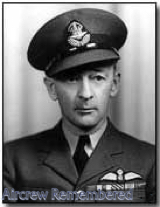 |
||
| 19 | Marchant | Cecil James 'Chips' | Capt | Great Britain | Allies | Pilot | 9 | [3+6] (5 kills+4 Lost Control) | 46Sqn, 78Sqn, 44Sqn | RAF | Camel ace, 1918. | Shores | |
|||
| 20 | Luff | Frederick Ernest | 1stLt | USA | Allies | Pilot | 5 | (2 balloons) | 74Sqn RAF, 25Sqn | RAF & US Air Service | SE5 ace, 1918. | Shores |  |
|||
| 21 | Lord | Frederick Ives | Capt | USA | Allies | Pilot | 12 | (1 balloon)(9 kills+3 Lost Control) | 79 Sqn RAF | RAF | Dolphin ace, 1918. Russia, 1919, Spain. He flew in 7 wars! Lord enlisted in the U.S. Army before WWI, but was instantly discharged when it was learned that he was too young to serve, being only 17. He wanted so badly to enter the service that, with a falsified birth certificate, he traveled to Canada and joined the Royal Flying Corps, eventually ending up in England. He became an accomplished Ace during World War I, winning the Distinguished Flying Cross and Bar to the Distinguished Flying Cross. He was the youngest pilot ever to accomplish this greatest honor among Aces. Lord eventually served in 7 wars, for which he was written up in Ripley’s “Believe It or Not.” These included World War I, the Russian Civil War (1919), the Mexican Revolution (1921), the Sino-Japanese War (1934), the Honduran Revolt (1936), the Spanish Civil War (1936-8), and World War II. Lord Officially Renounces his American Citizenship In order for Lord to join the Royal Flying Corps, he had to renounce his American citizenship and proclaim his intention to become a British subject. This he did to get into the war. Document Signed by Lord and the Clerk of the Peace, May 25, 1917, Dominion of Canada, Province of Ontario, County of York, in which Lord, then only seventeen years old, renounced his U.S. citizenship. “I was born in the town of Manitowoc in the state of Wisconsin, one of the United States of America … I have come to the city of Toronto from Houston, Texas, for the express purpose of enlisting and entering the Royal Flying Corps of the Canadian Army for service overseas. And I do hereby solemnly declare my purpose and intention to become a British subject and I do hereby renounce my citizenship as a Citizen of the United States of America…” May 26, 1918: “Drove one Pfalz down out of control. Formation attacked by 30 scouts. Machine (plane) hit, 12 holes.” May 29, 1918: “Engaged over Armentieres. I shot one down out of control.” June 7, 1918: “4 E.H. attacked by patrol. I shot one down which was seen to crash.” June 16, 1918: “I attacked Pfalz scout, drove it down to 2000 feet but was driven off by 3 more E.H.” September 17, 1918: “Saw five Fokkers…I attacked. One went down in a spin. Fired a burst into another of 25 yds range. It crashed near Comines.” May 28, 1918: “I attacked two balloons, brought one down in flames near Wervicq.” Interestingly, we are able to match incidents recounted in his log with entries made in his diary. For this last date, he wrote: “The balloons were about 3000 feet up when we crossed the trenches…we were directly over them when our formation was broken up by Archie [the pilots’ name for anti-aircraft guns]. I pretended I was hit and coming down out of control…Then suddenly I opened wide my throttle, struck my nose down and made for the nearest balloon…I charged straight for it, both my Vickers machine guns spitting streams of tracer and explosive bullets. As I zoomed over it, I saw it burst into flames. All this time I was being fired on point blank range by Archie…The official communiqué tonight read ‘One balloon destroyed.’ Voila!” Distinguished Flying Cross and Bar For his services, Lord was awarded the Distinguished Flying Cross, a military decoration awarded to personnel of the Royal Air Force for "an act or acts of valour, courage or devotion to duty whilst flying in active operations against the enemy." His citation, which is included, states: "A gallant officer, bold in attack and skillful in manoeuvre…he, single-handed, attacked and destroyed a Fokker biplane. On his return journey he observed one of our formations engaged with a number of Pfalz scouts; joining in the combat he shot down one which crashed." Supplement to the London Gazette, 2 November 1918. A bar is added to the ribbon for holders of the DFC who received a second award, and Lord won this honor. Contained in this archive are Lord’s ribbons showing the DFC and Bar. Also present is the official letter in which the award is conferred upon him, complete with an account of the incident for which it was awarded. The action occurred while he was fighting in Russia during the Russian Civil War. Typed Letter Signed by Major General Edmund Ironside, Commander in Chief, “General Headquarters, Allied Forces, Archangel, 15th July, 1919,” conferring upon Lord the Bar. “Captain Lord…was on June 27th, 1919, attached to H.Q. Pinega Force. At about 2300 hours on that date, patrols having reported the presence of the enemy on the left bank of the Pinega River…Lord went up to reconnoiter. Finding the enemy moving along the road with his transport, this Officer, from a height of two hundred feet, attacked them with M.G. fire and, although, the aeroplane had been hit a number of times and the oil tank shot away, by an explosive bullet, continued to fire at them until the transport had been stampeded and the spirit of the attacking force had been broken. It was entirely due to the courage and enterprise of this Officer and his observer that the enemy attack did not materialize and that we suffered no casualties.” In 1967, he was murdered by a vagrant in Apple Valley, California. (Source: https://www.raabcollection.com/frederic-ives-lord-autograph/frederic-ives-lord-signed-sold-archive-frederic-ives-lord-world-war-i) | Shores | 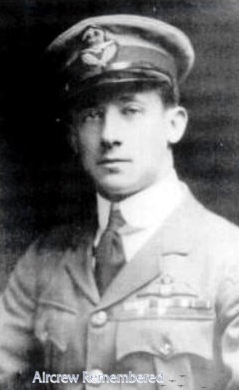 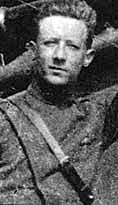 Ives 1914-1918  Lord with Sopwith Dolphin |
|||
| 22 | Libby | Frederick | Capt | USA | Allies | Pilot | 14 | (2 kills+12 Lost Control) [9+5] | 23 Sqn, 11 Sqn (observer), 43 Sqn, 25 Sqn RFC | RFC | 09/01/1970 | FE2b gunner ace, Strutter,DH-4, 1916-17. American WWI observer/gunner ace, Frederick Libby was born 15/7 1892. More [If Broken Link] | Shores | 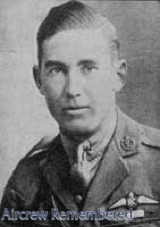 |
||
| 23 | Lewis | Cecil Arthur | Capt | Great Britain | Allies | Pilot | 8 | [6+2] (0 kill, 8 Lost Control) | 3Sqn, 56Sqn, 44(HD)Sqn, 61(HD)Sqn, 152(NF)Sqn | RFC | SE5 ace, 1917. RAF WWII. Founder of BBC, Author of ‘Sagittarius Rising’. Sqn Ldr RAF WW2 | Shores | |
|||
| 24 | Le mesurier | Thomas Frederick | FltCdr | Great Britain | Allies | Pilot 2 Seater | 7 | (with observer)(1 kill+6 Lost Control) | 5NSqn, 11NSqn, 205Sqn (Bomber) | RNAS | 26/05/1918 | DH4 bomber pilot, 1917. | Franks-Guest |  |
||
| 25 | Larsen | Jens Frederick 'Swede' | Lt | USA | Allies | Pilot | 9 | (3 kills+6 Lost Control) [8+1] | 84Sqn RFC RAF | RFC & RAF | SE5 ace, 1917-18. | Shores | |
|||
| 26 | Kydd | Frederick Joseph | Lt | Great Britain | Allies | Observer | 5 | (2 kills+3 Lost Control) | 20Sqn (gunner) | RFC | FE2 gunner ace, 1917. | Franks-Guest | |
|||
| 27 | King | Elwin Roy 'Bow' | Capt | DSO DFC MiD | Australia | Allies | Pilot | 26 | [23+3] (4 balloons)(20 kills+6 Lost Control) | 4 Sqn | Australian Flying Corps | 28 November 1941 | King joined 4 Squadron of the Australian Flying Corps. He scored some 22 of his 26 victories in the final seven months of the war alone. Seven of these were achieved while flying the Sopwith Snipe, making him the highest scoring pilot to use the aircraft. Won DFC September 1918 and mentioned in despatches No. 4 Squadron was operating its Sopwith Camels in hazardous, low-altitude support of Australian ground troops when King arrived in France, and he had little opportunity for air-to-air combat. The burly 6-foot-5-inch (196 cm) King—nicknamed "Bo", "Beau", or "Bow"—also had problems landing the Camel; crammed into its small cockpit, his large frame impeded control stick movement. The resulting rough landings annoyed his commanding officer, Major Wilfred McCloughry, brother of ace Edgar McCloughry. On 16 August 1918, King participated in a major assault against the German airfield at Haubourdin, near Lille, that resulted in thirty-seven enemy aircraft being destroyed on the ground. During the action, described by the official history as a "riot of destruction", King set on fire a hangar housing four or five German planes. He also, according to No. 2 Squadron pilot Charles Copp, flew down Haubourdin's main street, waving as he went, his reason being that "the girls in that village must have had a heck of a time with all that bombing and must have been terribly scared so I thought I'd cheer them up a bit". During October 1918, King converted with the rest of No. 4 Squadron to the upgraded Sopwith Snipe, whose larger cockpit was a better fit for him. He scored with the Snipe on both 28 and 29 October, the latter over Tournai, in what is frequently described as "one of the greatest air battles of the war". At Tournai, amid a confrontation involving over seventy-five Allied and German fighters, King evaded five enemy Fokkers that dived on him, before destroying an LVG in a head-on attack. His tally of seven victories with the Snipe in the closing days of the war made him the highest-scoring pilot in this type. Archive Report | Shores |  |
|
| 28 | King | Cecil Frederick | Capt |  Military Cross DFC  Croix de Guerre | Great Britain | Allies | Pilot | 22 | [15+7] (10 kills+12 Lost Control) | 43 Sqn | RFC & RAF | 24/01/1919 | Camel ace, 1917-18, Snipe. KIFA. Capt. CECIL FREDERICK KING, M.C., D.F.C., Croix de Guerre (avec Palme), RAF, son of Mr. and Mrs. F . H. King, Springfield Dukes, Chelmsford, was killed, the result of a collision in the air at Sedgeford, Norfolk, on January 24th, aged 19 years 11 months. He was educated at Verites, Charterhouse. On leaving school early in 1917 he joined the Royal Flying Corps, and in September of that year went to France, where he served continuously for thirteen months as flying officer and flight commander. He shot down 22 enemy machines, 19 of which were officially confirmed. He also did fine work in attacking enemy troops at low altitudes with his machine-guns and bombs. The French decoration was awarded to him for services rendered to the French Army during the second battle of the Marne, July, 1918. Capt. C. F. King was recently transferred to Sedgeford as a fighting instructor. The funeral took place at Docking (near Sedgeford) on February 4, with full RAF honours.(Flight Magazine 1919) Citation: Military Cross T./2nd Lt. Cecil Frederick King, Gen. List and R.F.C. For conspicuous gallantry and devotion to duty. On five occasions during a period of three months he has sent down four enemy machines completely out of control, and has destroyed one other. Later, under very adverse weather conditions he carried out a low reconnaissance, during which he engaged troops in a station, causing several casualties, fired into a body of the enemy entering a village from a height of 50 feet, attacked four gun limbers, causing the teams to stampede, and finally dived on to a parade of troops, who scattered in all directions. He has displayed exceptional daring and skill, which, combined with a splendid dash and initiative, have set a fine example to his squadron. Citation: DFC 2nd Lt. (temp. Capt.) Cecil Frederick King, M.C. He is a fine leader who at all times shows great gallantry and skill in manoeuvring; his energy and keenness have brought his flight to a high standard of efficiency. He frequently descends to low altitudes to obtain good results from bombing, and shooting, and on several occasions he has brought down enemy aeroplanes. | Shores (Other sources 20 victories) |  |
|
| 29 | King | Leslie Walter | Lt | Great Britain | Allies | Pilot 2 Seater | 9 | (with observer)(3 kills+6 Lost Control) | 22Sqn | RAF | Bristol Fighter ace, 1918. | Shores. | |
|||
| 30 | Hunt | Hubert Cecil | Sgt | Great Britain | Allies | Observer | 8 | (5 kills+3 Lost Control) | 22Sqn (gunner) | RAF | Bristol Fighter gunner, 1918. | Franks-Guest | |
|||
| 31 | Hunt | Frederick John 'Jack' | Lt | Great Britain | Allies | Pilot | 9 | (2 balloons)(7 kills+2 Lost Control) | 74Sqn | RAF | SE5 ace, 1918. | Shores | |
|||
| 32 | Hayne | Edwin Tufnell |  DSC DFC | South Africa | Allies | Pilot | 15 | 3 Sqn, 203 Sqn | RNAS | 28 April 1919 | South African WWI fighter ace, Edwin Tufnell Hayne was born 28/5 1895. A Sopwith Camel pilot, Edwin Tufnell Hayne joined the Royal Naval Air Service in 1916. Posted to 3 Naval Squadron (later 203 Squadron) in 1917, he scored his first victory in August, shooting down an Albatros D.V south of Middelkerke. In 1919, Hayne was killed in a crash while flying a Bristol Fighter.
Living in Johannesburg, South Africa, before the war; attended King Edward VII School, at Johannesburg. Citation DSC: Flt. Sub-Lieut, (now Flt. Lieut.) Edwin Tufnell Hayne, RNAS In recognition of his services with a Wing of the RNAS at Dunkirk between March and September, 1917. He has had numerous engagements with enemy aircraft and on the 16th August, 1917, attacked an enemy aerodrome and placed a whole flight of machines out of action by machine-gun fire. During a flight of over two hours, during which time he attacked transport and railways, he never exceeded a height of 1,000 feet. Citation DFC: Lieut. (Hon. Capt.) Edwin Tufnell Hayne, DSC (late RNAS.). During the recent enemy offensive this officer carried out forty-eight special missions. Flying at extremely low altitudes he has inflicted heavy casualties on massed troops and transport. In addition he has accounted for ten enemy machines, destroying three and driving down seven out of control; in these encounters he has never hesitated to engage the enemy, however superior in numbers. On one occasion he observed ten hostile aeroplanes harassing three Dolphines; he attacked three of the enemy, driving one down in flames. |  |
||||
| 33 | Harvey | William Frederick James | Capt | Military Cross, DFC and Bar | Great Britain | Allies | Pilot 2 Seater | 26 | (3 balloons)(17 kills+9 Lost Control) | 22Sqn | RAF | Bristol Fighter ace, 1918. Some sources 25 victories) | Shores. | |
||
| 34 | Harlock | Frederick George | Lt | Great Britain | Allies | Pilot 2 Seater | 8 | (7 kills+1 Lost Control) | 20Sqn | RAF | Bristol fighter ace, 1918. | Shores. | |
|||
| 35 | Hann | Cecil Collins | 2Lt (1386 Corporal, 2Lt) | 1914-15 Star (1386 Cpl. C. C. Hann, R.F.C.); British War and Victory Medals | Great Britain | Allies | 1 Sqn 3 Sqn  | RFC | 1916-10-22 | Morane Parasol. Born at Beaminster, Dorset, in 1891, the son of Albert and Edith Hann, and enlisted in the Royal Flying Corps soon after the outbreak of hostilities in August 1914, and saw active service out in France as a Corporal in the following year. Commissioned as a 2nd Lieutenant in February 1916, on qualifying as an Observer, he was posted to 1 Sqn, and thence to 3 Sqn, in which latter unit he flew Morane Parasols on the Somme front and completed over 20 artillery spotting patrols prior to his death in action on 22 October 1916. On that date, with 2nd Lieutenant F. W. G. Marchant as his pilot, their Morane was shot down by the German ace Hans Berr, his sixth victory out of a total of ten. Subsequently reported as ‘died of wounds’, Hann and Marchant are buried alongside each other in the Heilly Station Cemetery, Mericourt-L’Abbes, Somme, France | 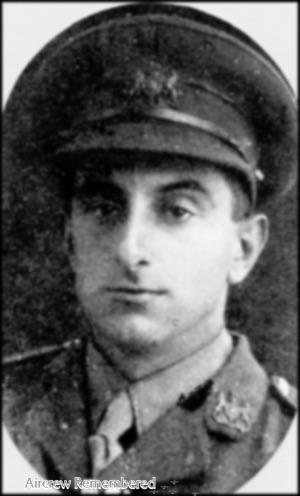 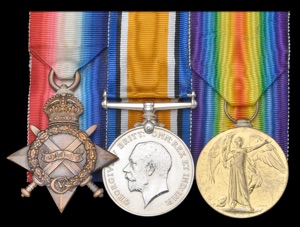 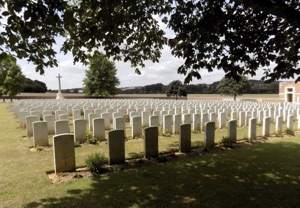 |
|||||
| 36 | Hall | Frederick Vincent | Lt | Great Britain | Allies | Pilot | 7 | [5+2] (5 kills+2 Lost Control) | 4Sqn, 8Sqn, 10Sqn RNAS; 210Sqn RAF | RNAS | 15/05/1918 | Pup, Camel ace, 1917-18. KIA. | Shores | |
||
| 37 | Gordon | Frederick Stanley | Lt | New Zealand | Allies | Pilot | 9 | [6+3] (2 balloons)(6 kills+3 Lost control) | 74Sqn | RAF | SE5 ace, 1918. | Shores | |
|||
| 38 | Goode | Harry King | Lt | Great Britain | Allies | Pilot | 15 | [13+2] (7 balloons)(14 kills+1 Lost Control) | 66Sqn | RAF | 21/08/1942 | Camel ace, Italian front, 1918. KIFA. | Shores | |
||
| 39 | Gleeson | Leslie Frederick | 2nd Lt | Australia | Allies | Pilot | 1917-06-14 Student Pilot. Stalled in low level turn and crashed. | 69 Sqn (Australia) Training | RFC | 1917-06-15 | Avro 504 Gnome Naval Type Died at Northern General Hospital Lincoln the next day. Instructor 2nd Lt Claude Picton Lowry RFC minor injuries | McGuiness RAAF Archive | ||||
| 40 | Gillet | Frederick Warrington | Capt | DFC and Bar, Belgium CdeG | USA | Allies | Pilot | 20 | (3 balloons) | 79Sqn RAF | RAF | Top Dolphin ace, 1918. | Shores (Some sources 16 victories) | |
||
| 41 | Gibbs | Frederick John | Capt | Great Britain | Allies | Pilot | 11 | [8+3] (9 kills+2 Lost Control) | 64Sqn | RFC & RAF | Spad ace, 1917. | Shores | |
|||
| 42 | Gardner | Cecil Vernon | Capt | Great Britain | Allies | Pilot | 10 | [8+2] (6 kills+4 Lost Control) | 19Sqn | RAF | 30/09/1918 | Dolphin ace, 1918. DOW. | Shores | |
||
| 43 | Gardiner | George Cecil | Capt | Great Britain | Allies | Pilot See Note | 6 | [3+3] (2 as gunner)(4 kills+2 Lost Control) | 14Sqn (gunner), 17Sqn, 47Sqn, 150Sqn | RFC & RAF | BE12, DH2, Palestine, Camel, Italy. | Shores | |
|||
| 44 | Falkenberg | Carl Frederick | Capt | Canada Newfoundland | Allies | Pilot | 17 | [13+4] (1 balloon)(9 kills+8 Lost Control) | 84Sqn | RAF | SE5 ace, 1918. | Shores | |
|||
| 45 | Cunninghame | Frederick Joseph | Capt | Great Britain | Allies | Pilot 2 Seater | 5 | (with observer)(3 kills+2 Lost Control) | 48Sqn | RAF | Bristol Fighter ace, 1918. | Shores. | |
|||
| 46 | Crabb | Earl Frederick | Lt | Canada | Allies | Pilot | 6 | [5+1] (4 kills+2 Lost Control) | 92Sqn | RAF | SE5 ace, 1918. | Shores | |
|||
| 47 | Cowper | Andrew King | Capt | Australia | Allies | Pilot | 19 | [12+7] (13 kills+6 Lost Control) | 24Sqn | RFC | DH5 1917, SE5 ace 1918. | Shores (Other sources 18) | |
|||
| 48 | Compston | Robert John Orton | Maj | DSC and 2 Bars DFC | Great Britain | Allies | Pilot | 25 | [13+12] (8 kills+17 Lost Control) | 8 Sqn (N), 40 Sqn | RNAS & RAF | Triplane and Camel ace, 1917-18. Wing Commander Robert John Orton Compston DSC & 2 Bars DFC (9 January 1898 – 28 January 1962) was an English fighter pilot credited with 25 victories during World War I. He was one of only seven airman in this war who won three awards of the Distinguished Service Cross. Robert John Orton Compston was born in Farnham, Surrey the son of Herbert Fuller Bright Compston, a clergyman, and his wife Rose Contance Compston (née Orton). He joined the Royal Naval Air Service in 1915 when he was 17 years old. He originally flew Home Defense missions, but was reassigned to 8 Naval Squadron when it went to France. He was a close friend of ace Robert Little. Compston served in the Royal Air Force in the Second World War. On the 13 August 1940, while based at RAF Detling, the airfield came under attack by the Luftwaffe. It was the first major effort of the Germans during the Battle of Britain. Junkers Ju 87 Stuka dive-bombers devastated the station and Squadron Leader Compston was wounded in action; one of 42 wounded and 24 killed. He retired from the RAFVR in 1954 with the rank of wing commander. More: http://www.theaerodrome.com/aces/england/compston.php If Link Broken Citation DSC: 12 May 1917 Flight Lieutenant Robert John Orton Compston, R.N.A.S. was awarded the Distinguished Service Cross (DSC): "For conspicuous skill and gallantry during the past nine months, in particular when attached to the Royal Flying Corps, when he had numerous engagements with enemy aircraft, and certainly destroyed one." Citation DSC: 11 August 1917 Flight Commander Robert John Orton Compston, D.S.C., R.N.A.S. was awarded a bar to his Distinguished Servrtillery aeroplanes: "On the 12th June, 1917, with three other machines, he attacked six hostile scouts. He got close to one, and shot it down out of control. "On the 16th June, 1917, he attacked and brought down a two-seater Aviatik. "On the 3rd July, 1917, he attacked two Aviatiks, which he drove down and forced to land." Citation DSC: On 16 March 1918 Flight Commander Robert John Orton Compston, D.S.C., R.N.A.S. was awarded a second bar to his Distinguished Service Cross (DSC): "For ability and determination when leading offensive patrols, in which he displays entire disregard of personal danger. "On the 1st January, 1918, he observed a new type twin-tailed two-seater enemy machine, which he attacked, firing a good many rounds at point blank range. The enemy machine dived, but was again attacked and went down vertically with his engine full on. The wings came off, and the machine was observed to crash. Later in the day Flt. Cdr. Compston observed two formations of ten and five Albatross scouts respectively. He attacked one of the enemy machines and sent it down in a flat spin and falling over sideways completely out of control. "On numerous other occasions Flt. Cdr. Compston has destroyed or driven down enemy machines completely out of control, and has frequently had more than one successful engagement in the same day." Citation DFC: 3 June 1918 Captain Robert John Orton, DSC was awarded the Distinguished Flying Cross on the occasion of the King's Birthday for Distinguished Service | Shores |  |
||
| 49 | Cole | Adrian Trevor | Capt | DSO Military Cross DFC CBE  | Australia | Allies | Pilot | 10 | [7+3] (7 kills+3 Lost Control) | 67 Sqn, 1AFShoreSqn, 2AFShoreSqn | Australian Flying Corps | 1966-02-14 | SE5 ace, 1918. Air Vice Marshal Adrian Lindley Trevor Cole, CBE, DSO, MC, DFC (19 June 1895 – 14 February 1966) was a senior commander in the Royal Australian Air Force (RAAF). Joining the army at the outbreak of World War I, he transferred to the Australian Flying Corps in 1916 and flew with No. 1 Squadron in the Middle East and No. 2 Squadron on the Western Front. He became an ace, credited with victories over ten enemy aircraft, and earned the Military Cross and the Distinguished Flying Cross. In 1921, he was a founding member of the RAAF. "King" Cole rose to the position of Air Member for Supply in 1933 and gained promotion to group captain in 1935. The following year he was appointed the first commanding officer of Headquarters RAAF Station Richmond. During World War II, he led North-Western Area Command in Darwin, Northern Territory, and held a series of overseas posts in North Africa, England, Northern Ireland, and Ceylon. As Forward Air Controller during the Dieppe Raid in 1942, he was wounded in action and awarded the Distinguished Service Order. Cole served on corporate boards of directors following his retirement from the RAAF in 1946. He died in 1966 at the age of seventy. | Shores (Other sources 10) | 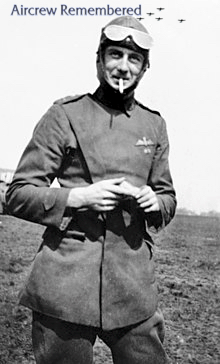 |
|
| 50 | Cobby | Arthur Henry | Capt | DSO DFC & 2 Bars | Australia | Allies | Pilot | 29 | [28+1] (5 balloons) (27 kills+2 Lost Control) | 71 Sqn RFC, 4 Sqn AFC | RFC & AFC | 11/11/1955 | Camel ace, 1918. AFC best scorer. Born on 26 August 1894 in Melbourne Cobby worked as a bank clerk until he signed up with the AFC on 22 December 1916, thereafter serving with 4 and 71 Squadron on the Western Front. Cobby later admitted to being so nervous about the prospect of going into battle that 'if anything could have been done by me to delay that hour, I would have left nothing undone to bring it about'. When he did see combat against the German Luftstreitkräfte for the first time, he had only twelve hours solo flying experience. Cobby claimed an early victory, over a DFW reconnaissance plane, in February 1918, but this was credited only as 'driven down' and not confirmed. Based in the Pas-de-Calais area, No. 4 Squadron supported Allied forces during the German Spring Offensive that commenced the following month. Cobby's aerial opponents included members of Baron von Richthofen's 'Flying Circus'. On 21 March he shot down two of the formation's Albatros D.Vs, which were confirmed as his first official victories. Having proved himself a talented and aggressive pilot, Cobby's leadership abilities were recognised with his appointment as a flight commander on 14 May 1918, and promotion to captain on 25 May. Described as 'an imp of mischief', he personalised his Sopwith Camel by fitting it with aluminium cutouts of comic actor Charlie Chaplin. Cobby again scored two kills in one day on 30 May near Estaires, when he destroyed an Albatros and an observation balloon, and repeated this feat the next day in the same area. He had been responsible for downing No. 4 Squadron's first balloon at Merville earlier in May; although vulnerable to attack with incendiary bullets, these large observation platforms, nicknamed Drachen (Dragons), were generally well protected by enemy fighters and anti-aircraft defences, and were thus considered a dangerous but valuable target. Cobby was recommended for the Military Cross on 3 June 1918 in recognition of his combat success and for being a 'bold and skilful Patrol Leader, who is setting a fine example to his Squadron. The award was changed to a Distinguished Flying Cross (DFC). Cobby shot down three German aircraft on 28 June and was recommended for a bar to his DFC, highlighting his then-current tally of 15 victories. On 15 July 1918, he and another pilot dived on five Pfalz scouts near Armentières, Cobby accounting for two of the enemy aircraft and his companion for one. The Australians were then pursued by four Fokker Triplanes but managed to evade their attackers. This action earned Cobby a recommendation for a second bar to his DFC, the citation noting that he had scored 21 kills to date and had 'succeeded in destroying so many machines by hard work and by using his brains, as well as by courage and brilliant flying'. The two bars to his DFC were gazetted on the same day, 21 September. On 16 August, Cobby led a bombing raid against the German airfield at Haubourdin, near Lille, the largest aerial assault by Allied forces up until then, resulting in 37 enemy aircraft being destroyed. The following day he led a similar attack on Lomme airfield and was recommended for the Distinguished Service Order as a result. Gazetted on 2 November, the citation for the award declared that 'The success of these two raids was largely due to the determined and skilful leadership of this officer'.  Pfalz DX12 By the end of his active service, Cobby was in charge of Allied formations numbering up to 80 aircraft. Fellow No. 4 Squadron ace, George Jones (later Chief of the Air Staff), described him as the unit's 'natural leader in the air and in all off-duty activities'; his exploits made him a national hero. No. 4 Squadron was recognised as the most successful fighter squadron in France, accounting for as many as 220 victories. In September 1918, Cobby was transferred to a training unit in England, where he found the strain of instructing pupils 'much worse than flying in France'. He continued applying for a return to the front until the war ended in November, and was mentioned in despatches by Field Marshal Sir Douglas Haig the same month (gazetted 27 December). Though Cobby's final tally for the war is often given as 29 aircraft and 13 observation balloons destroyed, claim-by-claim analyses of his victories credit him with 24 aircraft and five balloons, for a grand total of 29, making him the highest-scoring member of the AFC, as well as the service's only 'balloon-busting' ace. His proudest boast, however, was that as a flight commander he never lost a pilot over enemy territory. Citation DFC: 'HIS MAJESTY THE KING has been graciously pleased to confer the Distinguished Flying Cross on the undermentioned Officer of the Royal Air Force in recognition of acts of gallantry and distinguished service:- Lieutenant ARTHUR HENRY COBBY.' Citation DFC Bar: London Gazette dated 21st September, 1918. 'HIS MAJESTY THE KING has been graciously pleased to confer a bar to the Distinguished Flying Cross on the undermentioned Officer of the Royal Air Force in recognition of gallantry in flying operations against the enemy:- Lieutenant (temporary Captain) ARTHUR HENRY COBBY, DFC.' An Officer whose success as a leader is due not only to high courage and brilliant flying but salsa to the clear judgment and presence of mind he invariably displays. His example is of great value to other pilots in his squadron. During recent operations he shot down five machines in eleven days, accounting for two in one day.' Citation 2nd Bar DFC: 'One evening this Officer in company with another machine attacked five Pfaltz scouts, destroying two, one fell in flames and one broke up in the air. The Officer who accompanied him brought down a third machine out of control. While engaged in this combat they were attacked from above by five triplanes. Displaying cool judgment and brilliant flying Captain Cobby evaded this attack and returned to our lines in safety, both machines being undamaged. A determined and most skilful leader who has destroyed twenty one hostile machines or balloons, accounting for three machines and two balloons in four days.' Citation DSO: 'HIS MAJESTY THE KING has been graciously pleased to confer the above award on the undermentioned Officer of the Royal Air Force in recognition of gallantry in Flying Operations against the Enemy:- Lieutenant (temporary Captain) ARTHUR HENRY COBBY, DFC. On the 16th August this Officer led an organised raid on an enemy aerodrome. At 200 feet altitude he obtained direct hits with his bombs and set on fire two hangars, he then opened fire on a machine which was standing out on the aerodrome. The machine caught fire. Afterwards he attacked with machine gun fire parties of troops and mechanics, inflicting a number of casualties. On the following day he led another important raid on an aerodrome, setting fire to two hangars and effectively bombing gun detachments, anti aircraft batteries, etc. The success of these two raids was largely due to the determined and skilful leadership of this Officer.' Citation MiD: London Gazette dated 27th December, 1918. MENTIONED IN DESPATCHES 'The following is a continuation of SIR DOUGLS HAIG'S Despatch of the 8th November, 1918 submitting names deserving of special mention:- Lieutenant (temporary Captain) A. H. COBBY, DSO DFC' | Shores |  |
|
| 51 | Clark | Cecil Christian | Capt | Great Britain | Allies | Pilot | 10 | [7+3] (1 balloon)(5 kills+5 Lost Control) | 1Sqn | RFC & RAF | 30/11/1939 | Nieuport 1917, SE5 ace 1918. POW. | Shores | |
||
| 52 | Bullen | Cecil Hugh | 2/Lt | Croix de Guerre (Belgium) | Great Britain | Allies | Observer | 10 Sqn | RAF | Citation: Croix de Guerre (Belgium) London Gazette 15 July 1919, the recommendation states: ‘T. 2/Lt. Cecil Hugh Bullen, R.A.F. has been Capt. [Charles] Sutherland’s observer on all his Contact Patrols, and should be given a large share of credit for the accuracy of his pinpointing of our troops positions, the detail of which is shown on my recommendation of Capt. Sutherland’s work.’ Born in Sefton Park, Liverpool, in January 1899. Bullen joined the RAF in April 1918, and was commissioned Temporary Second Lieutenant (Observer) in May 1918. Service with 10 Sqn (F.K.8’s), Droglandt, France. Paired with Captain C. Sutherland as his pilot, and the latter was awarded the DFC for his gallant service July - October 1918. The commanding officer of 10 Sqn provides the following recommendation, which also gives further details about Bullen: ‘I wish to bring to your notice the name of Captain C. Sutherland., S. Lancs. Regt., attd. RAF for his extremely valuable Contact Patrol work during the past three months, carried out always under heavy enemy machine gun fire from the ground, and often under very bad weather conditions. In addition to his personal work, he has taken the greatest care over the training of the members of his Flight, with the result that continuous contact has been kept with the infantry at all times when flying has been possible. The reports of Captain Sutherland and his observer, 2/Lt. C. H. Bullen, have been characterised by their thoroughness and detail, and they have always been proved correct - though often questioned at the time. On July 14th, on the 6th Div., successful attack on Elzenwalle Chateau, Capt. Sutherland carried out before the attack a close reconnaissance of the enemy line and the communications trenches leading to it. After watching the attack through, he called for flares without reply, so made his contact report from 100 feet noting positions held by our troops. He then again flew low over the enemy communication trenches for signs of counter attack. Aug. 25th. He located our troops of 41st Div., after a local attack, in spite of thick ground mist - height 100 - 1000 feet. Aug. 31st. He made a Special Reconnaissance of the Mont Kemmel district after the enemy’s retirement, and located our troops along the Divisional front. Sept. 1st. He made a special reconnaissance during our attack on the Wytschete Ridge, from 100 - 1000 feet, locating our posts, and tracing the enemy’s line over a front of 5000 yards. Sept. 2nd. On reconnaissance at 200 feet he located under heavy rifle fire several of our posts, and the enemy line along the Wytschaete Ridge. His observer fired 50 rounds at enemy troops in shell holes. Sept. 3rd. He again on the same front located our troops right along the line, and flew low over the Neuve Eglise area being unsuccessful in finding enemy there. Sept. 4th. Under very difficult conditions owing to a heavy smoke barrage, working from 200 to 1200 feet, he succeeded in locating our troops at three points near Wytschaete. Sept. 5th. He located our line along the ridge at fifteen points, and also the enemy between the canal and Wytschaete. Sept. 7th. He located troops at nine points, and made an examination of the country in front of our line. Sept. 28th. He recognised our troops on a line of 15 points carried out at 300 feet under heavy rain storms. Later he made a special reconnaissance to locate our troops in Zandvoorde. Sept. 29th. He made out an excellent report, from 300 - 1000 feet - fired 100 rounds at enemy troops - and located our men at 13 points. Oct. 2nd. Did an excellent C.P. show clearing up a difficult disputed situation after 41st Div., attacked was held up. Our troops were recognised in 16 places along a line in shell holes and ditches - working at 200 feet under heavy A.A. M.G. fire from enemy lines. Oct. 14th. On the early morning of the advance from Gheluwe he carried out a contact patrol, from 100 - 800, locating our troops along the whole corps front at 14 points, working under heavy barrage, the smoke from which made observation difficult. He also located 30 of enemy at whom observer fired, causing casualties, and later dispersed the parties of three lorries. Later on the same day he again placed our line at 18 points, a report which was of considerable value to the Corps. Oct. 15th. He located our line at 14 points, working in thick mist, at times down to 100 feet. Oct. 18th. Made out a good detailed report - 13 locations recognised in posts and shell holes. Heavy A.A.M.G. fire from the enemy, three of these posts being located and observer fired at them dispersing the enemy. In practically every case, location of troops was carried out by actual recognition of the uniform.’ | 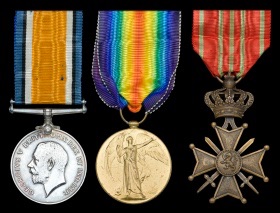 |
|||||
| 53 | Brown | Frederick Elliott | Capt | Canada | Allies | Pilot | 10 | [8+2] (4 kills+6 Lost Control) | 2Sqn, 84Sqn | RFC | SE5 ace, 1917-18. | Shores | |
|||
| 54 | Brown | Edward Cecil | Sqn Ldr | 1914-15 Star (2 Lieut. E. C. Brown, A.S.C.); British War and Victory Medals (Lieut. E. C. Brown, R.A.F.), | Great Britain | Allies | Pilot | Killed by AA fire | 85 Sqn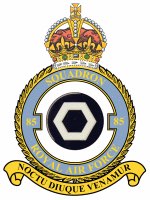 | RFC, RAF | 1918-10-18 | SE5. Born at Mussenden House, Horton Kirby, Kent, in October 1894, the son of William and Margaret Brown (nee Larke), and was educated at Dartford Grammar School. Enlisting in the Royal Engineers in October 1914, he was commissioned as a 2nd Lieutenant in the Army Service Corps in April 1915 and entered the Egypt theatre of war that October. Subsequently actively employed in Salonika in assorted M.T. Companies, he was admitted to hospital in Malta with malaria in September 1916. Having then returned to duty in the U.K. in early 1917, he gained appointment as a 2nd Lieutenant in the Royal West Kent Regiment but by the year’s end was serving as a Flight Cadet in the Royal Flying Corps. Duly gaining his “Wings” he joined 85 Sqn and was embarked for France in May 1918, in which capacity he made a forced landing in his SE5 on 13 July, owing to the fact his propeller had been shot away. He was killed in action when his aircraft was brought down by AA fire on 18 October. He is buried in Busigny Communal Cemetery Extension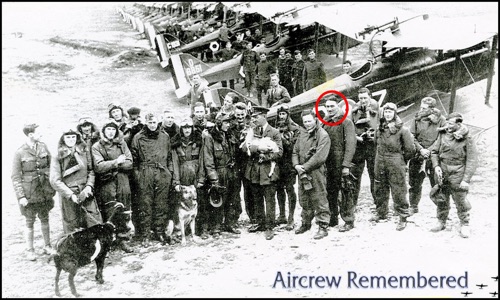 | 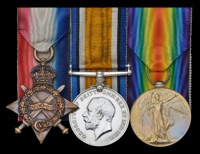 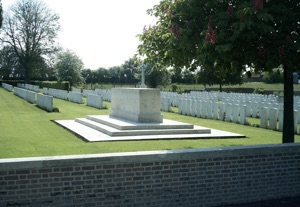 |
|||
| 55 | Brock | Cecil Guelph | Lt | Great Britain | Allies | Pilot | 7 | [3+4 (2 kills+5 Lost Control) | 1(N)Sqn, 9(N)Sqn, 3Sqn, 209Sqn | RNAS & RAF | Triplane 1917, Camel 1918. | Shores | |
|||
| 56 | Britton | Arthur Frederick | Lt | Great Britain | Allies | Observer | 6 | (1 kill+5 Lost Control) | 57Sqn (gunner) | RFC | DH4 bomber gunner, 1917. | Franks-Guest | |
|||
| 57 | Britnell | Frederick John Shaw'Duke' | Capt | Great Britain | Allies | Pilot | 9 | [6+3] (1 balloon)(5 kills+4 Lost Control) | 3(N)Sqn; 203Sqn | RNAS & RAF | Camel ace, 1918. | Shores | |
|||
| 58 | Blizard | Charles Cecil | 2ndLt | Great Britain | Allies | Observer | 5 | (2 kills+3 Lost Control) | 104Sqn (gunner) | RAF | DH9 bomber gunner, 1918. | Franks-Guest | |
|||
| 59 | Beauchamp-Proctor | Andrew 'Proccy' | Flt/Lt |  Victoria Cross DSO Military Cross and Bar DFC | South Africa | Allies | Pilot | 54 | 13 Balloons | RFC, RAF | 21 June 1921, RAF Hendon. Re-interned in South Africa | Top South African ace. SE5. Shot down 3 aircraft in 5 minutes! Andrew Frederick Weatherby Beauchamp-Proctor was born 4/9 1894. Studying engineering at the University of Cape Town in August 1914. He joined the army, serving as a signaller with the Duke of Edinburgh's Own Rifles in German South-West Africa. In March 1917 enlisted with the Royal Flying Corps. Awarded a commission. Just 5' 2", his seat to be raised so he could reach the controls. Assigned to 84 Squadron in late July 1917, with whom he travelled to France two months later. All of his 54 victories were achieved during 1918. Established a reputation as a 'balloon buster': he brought down more than any other pilot in the RFC. Not an especially able pilot, crash-landing his aircraft three times before achieving his first 'kill'. He was, however, a first-rate shot, flying S.E.5a's he won the DSO, MC, DFC and the VC. On a single day (9 August 1918) he shot down nine observation balloons (a record). He was wounded and sent home on 8 October following a reckless solo attack on eight enemy aircraft at once. He died on 21 June 1921 in England aged 26. | Read Story |  |
||
| 60 | Armstrong | Frederick Carr 'Army' | FCdr | Canada | Allies | Pilot | 13 | [8+5] (6 kills+7 Lost Control) | 3(N)Sqn | RNAS | 25/03/1918 | Pup and Camel ace, 1917. | Shores | |
||
| 61 | Alberry | Frank | Lt | DSM | Australia | Allies | Pilot | 7 | (2 kills+5 Lost Control) | 2Sqn | Australian Flying Corps | 1969-01-23, Concord, Sydney, NSW | SE 5 ace, 1918. 'One Legged Ace' .867, 8th Battalion, AIF Born 1892-09-19, Hobart, Tasmania. On the 25 July 1916 whilst serving with the 8th Batallion at the battle of Pozières on the Somme, Sergeant Alberry was wounded after a bullet shattered his kneecap and his right leg was eventually amputated above the knee. Following this action, he was awarded the Distinguished Service Medal. (DSM) After a period of convalescence, he applied for pilot training, only to be told they did not have an authority to accept him with only one leg. He sent a personal request to King George V, who, after hearing Alberry’s story, gave him a letter addressed to the Air Board requesting he be accepted for training in the Air Force.After completing his training with the Royal Flying Corps (R.F.C.) in June 1918, he was posted to No 2 Squadron Australian Flying Corps (AFC) in France, flying the Royal Aircraft Factory SE5a biplane. Always keen to be where the action was, he followed the front-line into Europe and on the 16th September was involved in a dog fight where he shot down a Fokker over France. Alberry’s combat report reads: “As the patrol dived on the formation of enemy aircraft encountered 1 mile NW of Lille, I singled out one and dived on it firing about 50 rounds at close range. The enemy aircraft did a side-slip, left hand turn, and flames and smoke were coming from the cockpit.” Two more victories were achieved on the 17th September with a further successful encounter on the 18th October. This was followed up on the 28th October with two more victories, elevating him to Ace status, with his final conquest occurring on the 4th November 1918, (a week before the end of the war). After the war he returned to Australia and settled as a timber feller and machinist. Courtesy Tasman Aviation History Frank Alberry’s Victories in SE5a (D6995) 16 Sep 1918 0730 Fokker D.VII (Destroyed) NW of Lille 17 Sep 1918 1020 Fokker DR.I (Out Of Control) Lille 17 Sep 1918 1020 Fokker D.VII (O) Lille 18 Oct 1918 1230 Fokker DR.I (O) N of Tournai 28 Oct 1918 1120 Fokker D.VII (O Bandour 28 Oct 1918 1120 Fokker D.VII (D) Bandour 04 Nov 1918 1310 Fokker D.VII (O) Houtaing | Shores/Frank via Tasman Aviation History Society | Paul McGuiness Archive Tasman Aviation History |  |
Results 1 to 61 of 61.


