
- Home
- Maps▾
- FAQ▾
- About/Donate▾
- News▾
- Obits
- Contact/Help▾
- PersonalHistories▾
- Cross Reference Research Lists ▶
- Recent Archive Reports
- Profiles in Courage
- 1914 -1918 WW1 Material
- Royal Air Force + RAFVR ▶
- WAAF/WRAF
- Australia
- Belgium
- Canada
- Site honouring Czechoslovak RAF
- Holland: LOST Rob Philips Memorial Archive
- New Zealand
- Norway, Denmark, Sweden, Finland
- Poland
- South Africa
- Archiwum Mielnika: Polish Air Force Archive
- USAAF & USAF
- USA WASP Flygirls
- USA - Co de Swart Gallery: Baker Crew 95th BG
- USA - Co de Swart Gallery: Geyer Crew 98th BG
- Axis Powers
- Russia/Soviet Union
- RCAF 409 The Nighthawks
- Hore-Kennard RCAF
- Zenon Bartkowiak PAF
- Charles Dills USAAC
- Gerald Schwartz USAAC
- Ralph Malan Memoirs
- Soviet Women 'Night Witches'
- Full Story of Lancaster Z-Zebra
- First Air Raid Victim
- 1914 -1918 WW1 Material
- Databases▾
- Databases Master List
- Consolidated Names: includes 500K+ names from all our databases
- Cross Reference Research Lists
- Research Sources
- MULTI-NATIONAL DATABASES
- Aces and Aviators International WW1 - 3000+
- Vitz Archive: War Crimes Victims of Axis
- NEW! USAAF & Allies Non Combat Incidents and Losses
- ALLIED DATABASES
- Allied Losses and Incidents: all Commands
- Aircrew Deaths & Resting Places Worldwide 1939 - 47 120,000+
- Alamein Allied Air Forces Memorial 3000+
- Allied Non-British Graves in Europe managed by CWGC
- Battle of Britain: Enhanced and Extended
- Glider Pilot Regiment Casualties
- Korean War UN Forces Database
- LOST Rob Philips Memorial Archive Dutch/2TAF Losses
- Malta Memorial Database
- Nordic Allied Database
- Ottawa Allied Air Forces Memorial Database
- Paradie RCAF Archive
- Archiwum: Polish Air Force Archive
- Polish Honour Roll
- RAAF Honour Roll
- RCAF Notes - 9000+
- Royal Navy Fleet Air Arm
- Runnymede Memorial Database
- Soviet Aces Database 1941 - 1945
- US Aces and Aviators WW2
- US Air Service Victories WW1
- USAAF Allies NonCombat Losses
- USAAF Operations WWll
- US Marine Corps Squadrons WWll
- Vitz Memorial Archive: War Crimes Victims of Axis
- AXIS DATABASES
- Kracker Luftwaffe Archive
- Deutsches Kreuz in Gold
- German Graves in UK
- German WW2 Aces
- Luftwaffe Graves Managed by CWGC
- Luftwaffe Victories by Name/Date
- Archives ▾
- Archiwum: Polish Air Force Archive: Data on 17,000
- Kracker Luftwaffe Archive
- LOST Rob Philips Memorial Archive: Holland
- Paradie Canadian Archive
- Paul McGuiness RAAF Archive WW1 & WW2
- Profiles in Courage
- Vitz Memorial Archive: War Crimes Victims of Axis
- USAAF Combat Operations 1941-45 Worldwide
- 409 RCAF: The Nighthawks
- Detailed Personal Archive RCAF Officer
- Charles Dills Archive
- Gerald Schwartz Archive
- Ralph Malan Memoirs
- RAF Coastal Command Patrol Areas
- US Intelligence Analysis German Anti Aircraft
- Allied Mine Laying Map (Gardening)
- Airborne Forces - a short history
- More ▾
- de Swart Gallery: Baker Crew, Geyer Crew
- Guide to Complete Site
- Helpdesk
- Donate
- Lay a Wreath
- Your relative's CWGC grave explained
- CWGC War Graves in USA
- Doing Your Own Research
- Research Sources
- US Assistance to Warsaw Uprising
- Our support for charities
- Axis Awards Descriptions
- Stolperstein: Permanent Remembrance
- Who fought for Britain 1939 - 1945
- Aerotoxic Syndrome
- Bermuda Triangle Mystery
- Cross Reference Research Lists
- Not Many People Know That
- Image Acknowledgements
- Abbreviations Used by Forces
- Poetry of Direct Personal Experience
- Staggering Cost in Lives of WWll
- Animated Map All Allied Bombing WW2
- USAAF Combat Operations 1941-45 Worldwide
- Polish Airmen Fighting (Video)
- Important Links
- Canada Memorial Project
- Remembering Banica
- Book Reviews
- 1 BFTS Texas
- Veterans Appeals
- Korean Conflict
- Vietnam Conflict
- Other Conflicts
- Commercial Aviation
- Bush Flying
- Nose Art
- Military Humour
- Airborne Forces - a short history
-

Allied Air Forces Losses and Incidents Database.
Check the Databases Menu for the extensive list of our databases which represent decades of original research by our Editors
Check the Databases Menu for the extensive list of our databases which represent decades of original research by our Editors
Search Tips •
Researching Your Loved OneContact us via Helpdesk for research on your loved one
Names in Database A -D • Names in Database E - K • Names in Database L - R • Names in Database S -Z
If you are unsure of the spelling of the name you are searching for, you can check all the names in this database
Data derived from many sources. Incorporates 125,000 entries from Aircrew Deaths 39-47 Database. Corrections/Additions welcomed via Helpdesk
NOTE ON DATES: IMPORTANT: For consistency, the Date is given as the date the mission TOOK OFF since the precise time of a loss is not always certain. Take Off date is unambigous and fixed in the official records, but obviously in those cases where the incident occurred before midnight UK time, then the Take Off Date will be the same as the Incident Date. Of course, most Bomber Command missions flew through midnight, therefore a Luftwaffe claim against a plane - or a locally generated crash report - may record the incident as occurring on the day following our Take Off Date. Bear this in mind when cross-referencing to our Luftwaffe Victories by Name/Date Database and other Luftwaffe sources. In some cases other sources may quote the date following our date, using locally generated reports as their source. To add to the potential for confusion, remember to take into account a Luftwaffe recorded date will be in local time, 1 hour ahead of UK time. When we discover a validated Incident Date we change our record if necessary.
3-character searches are now supported.
If you need help, EMAIL us with name and database to search and we will perform the search manually for you.
To search on squadron, append 'Sqn'. Examples: '72Sqn' or '416Sqn'
Names in Database A -D • Names in Database E - K • Names in Database L - R • Names in Database S -Z
If you are unsure of the spelling of the name you are searching for, you can check all the names in this database
Data derived from many sources. Incorporates 125,000 entries from Aircrew Deaths 39-47 Database. Corrections/Additions welcomed via Helpdesk
NOTE ON DATES: IMPORTANT: For consistency, the Date is given as the date the mission TOOK OFF since the precise time of a loss is not always certain. Take Off date is unambigous and fixed in the official records, but obviously in those cases where the incident occurred before midnight UK time, then the Take Off Date will be the same as the Incident Date. Of course, most Bomber Command missions flew through midnight, therefore a Luftwaffe claim against a plane - or a locally generated crash report - may record the incident as occurring on the day following our Take Off Date. Bear this in mind when cross-referencing to our Luftwaffe Victories by Name/Date Database and other Luftwaffe sources. In some cases other sources may quote the date following our date, using locally generated reports as their source. To add to the potential for confusion, remember to take into account a Luftwaffe recorded date will be in local time, 1 hour ahead of UK time. When we discover a validated Incident Date we change our record if necessary.

3-character searches are now supported.
If you need help, EMAIL us with name and database to search and we will perform the search manually for you.
To search on squadron, append 'Sqn'. Examples: '72Sqn' or '416Sqn'
Thanks to Personnel of the Polish Air Force in Great Britain for supplementary data and images (marked with a chequerboard device) related to the Polish Air Force, and many images courtesy of our respected colleagues Wojtek Matusiak and Robert Gretzyngier. Other images from our own archives.
Responding to requests that respects may be paid in this database to a loved one or friend, or someone you want to recognize, an In Memoriam plaque may now be placed next to any entry. See our Donate Page for details. Search for In Memoriam in this database to see examples of plaques which have been placed.
Polish Air Force personnel have a supplementary database containing more information and many more entries. Check the following:
Personel Polskich Sił Powietrznych posiada dodatkową bazę danych zawierającą więcej informacji i wiele innych wpisów. Sprawdź następujące elementy:
Archiwum: PSP 1939 -1947 Database 17,000+ Polish Air Force Entries
ON REQUEST, MORE INFORMATION CAN OFTEN BE RETRIEVED FROM OUR RESEARCH ARCHIVE ON EVERY ENTRY, AND ON NAMES YET TO BE ENTERED.
See a sample search
Responding to requests that respects may be paid in this database to a loved one or friend, or someone you want to recognize, an In Memoriam plaque may now be placed next to any entry. See our Donate Page for details. Search for In Memoriam in this database to see examples of plaques which have been placed.
Polish Air Force personnel have a supplementary database containing more information and many more entries. Check the following:
Personel Polskich Sił Powietrznych posiada dodatkową bazę danych zawierającą więcej informacji i wiele innych wpisów. Sprawdź następujące elementy:
Archiwum: PSP 1939 -1947 Database 17,000+ Polish Air Force Entries
ON REQUEST, MORE INFORMATION CAN OFTEN BE RETRIEVED FROM OUR RESEARCH ARCHIVE ON EVERY ENTRY, AND ON NAMES YET TO BE ENTERED.
See a sample search
If you would like our team to research a family member or friend who appears in this database, contact us via the Helpdesk. We will send you instructions.
These are the results of your search:
You searched for: “"KB267"”
| # | Name* SORT (↑) | First Names | Title | Rank | RAF Equivalent Rank | Service No. | Photo (Click to Expand) | Commemorated | Born | Nationality | Role | Awards | Air Force | Command | Unit | DateofIncident *See Note SORT (↑) | Aircraft | Type | Serial | Code | Victories (Fighters) | Base | Time | Mission | Incident | Fate | Referring Database | Notes | Links/Archive Reports |
|---|---|---|---|---|---|---|---|---|---|---|---|---|---|---|---|---|---|---|---|---|---|---|---|---|---|---|---|---|---|
| 1 | Gibson | Guy Penrose | Wing Commander | 39438 | 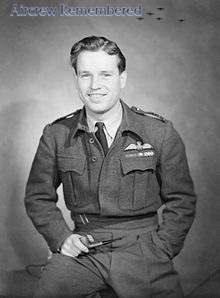 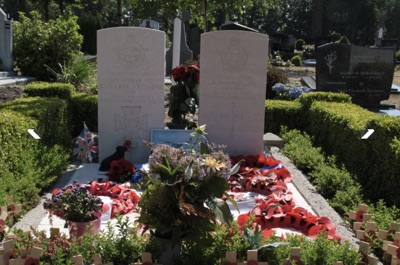 | Steenbergen-en-Kruisland RC Cemetery | Pilot | Victoria Cross DSO  DSO Bar DSO Bar DFC  DFC Bar  Legion of Merit (USA)  | RAF | Bomber Command | 627Sqn  | 1944-09-19 | Mosquito | XX | KB267 | AZ:E | Woodhall Spa | Rheydt | Crashed, homebound, near Steenbergen (Noord-Brabant). Crashed and burned out. The loss of this Mosquito is believed to have been accidental rather than the result of enemy action. Witnesses on the ground reported hearing the engines spluttering before the crash, which would suggest fuel starvation. Neither Wg.Cdr Gibson or Sqn.Ldr Warwick was particularly familiar with the Mosquito and they may have drained a tank (or tanks) dry, and not been able to diagnose and rectify the cause of the power loss in time to prevent a crash. It has also been reported that the airplane was shot down by friendly fire. A Lancaster bomber crew accidently identified the Mosquito as a Junkers Ju-88 Here he was flying as Controller for a large raid on Bremen. In the chaos that followed Gibson headed for home. Gibson's aircraft crashed at Steenbergen in the Netherlands at around 22:30. Witnesses heard an aircraft flying low, saw that its cockpit was illuminated and then it crashed. At first, Gibson's failure to return to Woodhall Spa was not considered out of the ordinary, as it was assumed he had landed at Coningsby. Likewise at Coningsby there was no immediate concern as there was fog and it was assumed he would have landed elsewhere. However, it soon became apparent he had not returned. The rumour spread rapidly around No. 5 Group that he was missing. He was not posted officially as missing until 29 November. | Killed | DFC awarded when a Fg.Off. with 83 Sqn, gazetted 9th July 1940 Bar to DFC awarded when an acting Sqn.Ldr. with 29 Sqn, gazetted 16th September 1941. Citation reads: "Acting Squadron Leader Guy Penrose GIBSON, DFC (39438), Reserve of Air Force Officers, No. 29 Squadron. This officer continues to show the utmost courage and devotion to duty. Since joining his present unit, Squadron Leader Gibson has destroyed three and damaged a fourth enemy aircraft. His skill was notably demonstrated when, one night in July, 1941, he intercepted and destroyed a Heinkel 111." DSO awarded when a acting Wg.Cdr. with 106 Sqn, gazetted 20th November 1942. Citation reads: "Since being awarded a Bar to the Distinguished Flying Cross, this officer has completed many sorties, including a daylight raid on Danzig and an attack at Gdynia. In the recent attack on Le Creusot, Wing Commander Gibson bombed and machine-gunned the transformer station nearby from 500 feet. On 22nd October, 1942, he participated in the attack on Genoa and, two days later, he led his squadron in a daylight sortie against Milan. On both occasions, Wing Commander •Gibson flew with great distinction. He is a most skilful and courageous leader whose keenness has set a most inspiring example." Bar to DSO awarded when a acting Wg.Cdr with 106 sqn, gazetted 2nd April 1943. Citation reads: "This officer has an outstanding operational record, having completed 172 sorties. He has always displayed the greatest keenness and, within the past 2 months, has taken part in 6 attacks against well defended targets, including Berlin. In March, 1943, he captained an aircraft detailed to attack Stuttgart. On the outward flight engine trouble developed but he flew on to his objective and bombed it from a low level. This is typical of his outstanding determination to make every sortie a success. By his skilful leadership and contempt for danger he has set an example which has inspired the squadron he commands." VC awarded to acting Wg.Cdr, whilst with 617 Sqn, gazetted 28th May 1943. Citation reads: "Air Ministry, 28th May, 1943. ROYAL AIR FORCE. The KING has been graciously pleased to confer the VICTORIA CROSS on the undermentioned officer in recognition of most conspicuous bravery: — Acting Wing Commander Guy Penrose GIBSON, DSO DFC (39438), Reserve of Air Force Officers, No. 617 Squadron: — This officer served as a night bomber pilot at the beginning of the war and quickly established a reputation as an outstanding operational pilot. In addition to taking the fullest possible share in all normal operations, he made single-handed attacks during his " rest " nights on such highly defended objectives as the German battleship Tirpitz, then completing in Wilhelmshaven. When his tour of operational duty was concluded, he asked for a further operational posting and went to a night-fighter unit instead of being posted for instructional duties. In the course of his second operational tour, he destroyed at least three enemy bombers and contributed much to the raising and development of new night-fighter formations. After a short period in a training unit, he again volunteered for operational duties and returned to night bombers. Both as an operational pilot and " as leader of his squadron, he achieved outstandingly successful results and his personal courage knew no bounds. Berlin, Cologne, Danzig, Gdynia, Genoa, Le Creusot, Milan, Nuremberg and Stuttgart were among the targets he attacked by day and by night. On the conclusion of his third operational tour, Wing Commander Gibson pressed strongly to be allowed to remain on operations and he was selected to command a squadron then forming for special tasks. Under his inspiring leadership, this squadron has now executed one of the most devastating attacks of the war—the breaching of the Moehne and Eder dams. The task was fraught with danger and difficulty. Wing Commander Gibson personally made the initial attack on the Moehne dam. Descending to within a few feet of the water and taking the full brunt of the antiaircraft defences, he delivered his attack with great accuracy. Afterwards he circled very low for 30 minutes, drawing the enemy fire on himself in order to leave as free a run as possible to the following aircraft which were attacking the dam in turn. Wling Commander Gibson then led the remainder of his force to the Eder dam where, with complete disregard for his own safety, he repeated his tactics and once more drew on himself the enemy fire so that the attack could be successfully developed. Wing Commander Gibson has completed over 170 sorties, involving more than 600 hours operational flying. Throughout his operational career, prolonged exceptionally at his own request, he has shown leadership, determination and valour of the highest order." U.S. Legion of Merit (Commander). Son of Alexander James Gibson and Norah Gibson; husband of Eve Mary Gibson, of Westminster, London. | Bernard McCormack (gunner) Gibson's Dog |
|||||||
| 2 | Warwick | James Brown | Squadron Leader | 156612 | | Steenbergen-en-Kruisland RC Cemetery | Navigator | DFC | RAFVR | Bomber Command | 627 Sqn | 1944-09-19 | Mosquito | XX | KB267 | AZ:E | Woodhall Spa | Rheydt | Crashed, homebound, near Steenbergen (Noord-Brabant). Crashed and burned out. The loss of this Mosquito is believed to have been accidental rather than the result of enemy action. Witnesses on the ground reported hearing the engines spluttering before the crash, which would suggest fuel starvation. Neither W/Cdr Gibson or S/Ldr Warwick was particularly familiar with the Mosquito and they may have drained a tank (or tanks) dry, and not been able to diagnose and rectify the cause of the power loss in time to prevent a crash. It has also been reported that the airplane was shot down by friendly fire. A Lancaster bomber crew accidently identified the Mosquito as a Junkers Ju-88 Here he was flying as Controller for a large raid on Bremen. In the chaos that followed Gibson headed for home. Gibson's aircraft crashed at Steenbergen in the Netherlands at around 22:30. Witnesses heard an aircraft flying low, saw that its cockpit was illuminated and then it crashed. At first, Gibson's failure to return to Woodhall Spa was not considered out of the ordinary, as it was assumed he had landed at Coningsby. Likewise at Coningsby there was no immediate concern as there was fog and it was assumed he would have landed elsewhere. However, it soon became apparent he had not returned. The rumour spread rapidly around No. 5 Group that he was missing. He was not posted officially as missing until 29 November. | Killed | DFC awarded as a Plt.Off with 49 Sqn, gazetted 15th February 1944 Son of William John and Josephine (née Brown) Warwick from Belfast, Ireland. |
Results 1 to 2 of 2.


