
- Home
- Maps▾
- FAQ▾
- About/Donate▾
- News▾
- Obits
- Contact/Help▾
- PersonalHistories▾
- Cross Reference Research Lists ▶
- Recent Archive Reports
- Profiles in Courage
- 1914 -1918 WW1 Material
- Royal Air Force + RAFVR ▶
- WAAF/WRAF
- Australia
- Belgium
- Canada
- Site honouring Czechoslovak RAF
- Holland: LOST Rob Philips Memorial Archive
- New Zealand
- Norway, Denmark, Sweden, Finland
- Poland
- South Africa
- Archiwum Mielnika: Polish Air Force Archive
- USAAF & USAF
- USA WASP Flygirls
- USA - Co de Swart Gallery: Baker Crew 95th BG
- USA - Co de Swart Gallery: Geyer Crew 98th BG
- Axis Powers
- Russia/Soviet Union
- RCAF 409 The Nighthawks
- Hore-Kennard RCAF
- Zenon Bartkowiak PAF
- Charles Dills USAAC
- Gerald Schwartz USAAC
- Ralph Malan Memoirs
- Soviet Women 'Night Witches'
- Full Story of Lancaster Z-Zebra
- First Air Raid Victim
- 1914 -1918 WW1 Material
- Databases▾
- Databases Master List
- Consolidated Names: includes 500K+ names from all our databases
- Cross Reference Research Lists
- Research Sources
- MULTI-NATIONAL DATABASES
- Aces and Aviators International WW1 - 3000+
- Vitz Archive: War Crimes Victims of Axis
- NEW! USAAF & Allies Non Combat Incidents and Losses
- ALLIED DATABASES
- Allied Losses and Incidents: all Commands
- Aircrew Deaths & Resting Places Worldwide 1939 - 47 120,000+
- Alamein Allied Air Forces Memorial 3000+
- Allied Non-British Graves in Europe managed by CWGC
- Battle of Britain: Enhanced and Extended
- Glider Pilot Regiment Casualties
- Korean War UN Forces Database
- LOST Rob Philips Memorial Archive Dutch/2TAF Losses
- Malta Memorial Database
- Nordic Allied Database
- Ottawa Allied Air Forces Memorial Database
- Paradie RCAF Archive
- Archiwum: Polish Air Force Archive
- Polish Honour Roll
- RAAF Honour Roll
- RCAF Notes - 9000+
- Royal Navy Fleet Air Arm
- Runnymede Memorial Database
- Soviet Aces Database 1941 - 1945
- US Aces and Aviators WW2
- US Air Service Victories WW1
- USAAF Allies NonCombat Losses
- USAAF Operations WWll
- US Marine Corps Squadrons WWll
- Vitz Memorial Archive: War Crimes Victims of Axis
- AXIS DATABASES
- Kracker Luftwaffe Archive
- Deutsches Kreuz in Gold
- German Graves in UK
- German WW2 Aces
- Luftwaffe Graves Managed by CWGC
- Luftwaffe Victories by Name/Date
- Archives ▾
- Archiwum: Polish Air Force Archive: Data on 17,000
- Kracker Luftwaffe Archive
- LOST Rob Philips Memorial Archive: Holland
- Paradie Canadian Archive
- Paul McGuiness RAAF Archive WW1 & WW2
- Profiles in Courage
- Vitz Memorial Archive: War Crimes Victims of Axis
- USAAF Combat Operations 1941-45 Worldwide
- 409 RCAF: The Nighthawks
- Detailed Personal Archive RCAF Officer
- Charles Dills Archive
- Gerald Schwartz Archive
- Ralph Malan Memoirs
- RAF Coastal Command Patrol Areas
- US Intelligence Analysis German Anti Aircraft
- Allied Mine Laying Map (Gardening)
- Airborne Forces - a short history
- More ▾
- de Swart Gallery: Baker Crew, Geyer Crew
- Guide to Complete Site
- Helpdesk
- Donate
- Lay a Wreath
- Your relative's CWGC grave explained
- CWGC War Graves in USA
- Doing Your Own Research
- Research Sources
- US Assistance to Warsaw Uprising
- Our support for charities
- Axis Awards Descriptions
- Stolperstein: Permanent Remembrance
- Who fought for Britain 1939 - 1945
- Aerotoxic Syndrome
- Bermuda Triangle Mystery
- Cross Reference Research Lists
- Not Many People Know That
- Image Acknowledgements
- Abbreviations Used by Forces
- Poetry of Direct Personal Experience
- Staggering Cost in Lives of WWll
- Animated Map All Allied Bombing WW2
- USAAF Combat Operations 1941-45 Worldwide
- Polish Airmen Fighting (Video)
- Important Links
- Canada Memorial Project
- Remembering Banica
- Book Reviews
- 1 BFTS Texas
- Veterans Appeals
- Korean Conflict
- Vietnam Conflict
- Other Conflicts
- Commercial Aviation
- Bush Flying
- Nose Art
- Military Humour
- Airborne Forces - a short history
-

Allied Air Forces Losses and Incidents Database.
Check the Databases Menu for the extensive list of our databases which represent decades of original research by our Editors
Search Tips •
Researching Your Loved OneContact us via Helpdesk for research on your loved one
Names in Database A -D • Names in Database E - K • Names in Database L - R • Names in Database S -Z
If you are unsure of the spelling of the name you are searching for, you can check all the names in this database
Data derived from many sources. Incorporates 125,000 entries from Aircrew Deaths 39-47 Database. Corrections/Additions welcomed via Helpdesk
NOTE ON DATES: IMPORTANT: For consistency, the Date is given as the date the mission TOOK OFF since the precise time of a loss is not always certain. Take Off date is unambigous and fixed in the official records, but obviously in those cases where the incident occurred before midnight UK time, then the Take Off Date will be the same as the Incident Date. Of course, most Bomber Command missions flew through midnight, therefore a Luftwaffe claim against a plane - or a locally generated crash report - may record the incident as occurring on the day following our Take Off Date. Bear this in mind when cross-referencing to our Luftwaffe Victories by Name/Date Database and other Luftwaffe sources. In some cases other sources may quote the date following our date, using locally generated reports as their source. To add to the potential for confusion, remember to take into account a Luftwaffe recorded date will be in local time, 1 hour ahead of UK time. When we discover a validated Incident Date we change our record if necessary.
3-character searches are now supported.
If you need help, EMAIL us with name and database to search and we will perform the search manually for you.
To search on squadron, append 'Sqn'. Examples: '72Sqn' or '416Sqn'
Names in Database A -D • Names in Database E - K • Names in Database L - R • Names in Database S -Z
If you are unsure of the spelling of the name you are searching for, you can check all the names in this database
Data derived from many sources. Incorporates 125,000 entries from Aircrew Deaths 39-47 Database. Corrections/Additions welcomed via Helpdesk
NOTE ON DATES: IMPORTANT: For consistency, the Date is given as the date the mission TOOK OFF since the precise time of a loss is not always certain. Take Off date is unambigous and fixed in the official records, but obviously in those cases where the incident occurred before midnight UK time, then the Take Off Date will be the same as the Incident Date. Of course, most Bomber Command missions flew through midnight, therefore a Luftwaffe claim against a plane - or a locally generated crash report - may record the incident as occurring on the day following our Take Off Date. Bear this in mind when cross-referencing to our Luftwaffe Victories by Name/Date Database and other Luftwaffe sources. In some cases other sources may quote the date following our date, using locally generated reports as their source. To add to the potential for confusion, remember to take into account a Luftwaffe recorded date will be in local time, 1 hour ahead of UK time. When we discover a validated Incident Date we change our record if necessary.

3-character searches are now supported.
If you need help, EMAIL us with name and database to search and we will perform the search manually for you.
To search on squadron, append 'Sqn'. Examples: '72Sqn' or '416Sqn'
Thanks to Personnel of the Polish Air Force in Great Britain for supplementary data and images (marked with a chequerboard device) related to the Polish Air Force, and many images courtesy of our respected colleagues Wojtek Matusiak and Robert Gretzyngier. Other images from our own archives.
Responding to requests that respects may be paid in this database to a loved one or friend, or someone you want to recognize, an In Memoriam plaque may now be placed next to any entry. See our Donate Page for details. Search for In Memoriam in this database to see examples of plaques which have been placed.
Polish Air Force personnel have a supplementary database containing more information and many more entries. Check the following:
Personel Polskich Sił Powietrznych posiada dodatkową bazę danych zawierającą więcej informacji i wiele innych wpisów. Sprawdź następujące elementy:
Archiwum: PSP 1939 -1947 Database 17,000+ Polish Air Force Entries
ON REQUEST, MORE INFORMATION CAN OFTEN BE RETRIEVED FROM OUR RESEARCH ARCHIVE ON EVERY ENTRY, AND ON NAMES YET TO BE ENTERED.
See a sample search
Responding to requests that respects may be paid in this database to a loved one or friend, or someone you want to recognize, an In Memoriam plaque may now be placed next to any entry. See our Donate Page for details. Search for In Memoriam in this database to see examples of plaques which have been placed.
Polish Air Force personnel have a supplementary database containing more information and many more entries. Check the following:
Personel Polskich Sił Powietrznych posiada dodatkową bazę danych zawierającą więcej informacji i wiele innych wpisów. Sprawdź następujące elementy:
Archiwum: PSP 1939 -1947 Database 17,000+ Polish Air Force Entries
ON REQUEST, MORE INFORMATION CAN OFTEN BE RETRIEVED FROM OUR RESEARCH ARCHIVE ON EVERY ENTRY, AND ON NAMES YET TO BE ENTERED.
See a sample search
If you would like our team to research a family member or friend who appears in this database, contact us via the Helpdesk. We will send you instructions.
These are the results of your search:
You searched for: “ND411”
| # | Name* SORT (↑) | First Names | Title | Rank | RAF Equivalent Rank | Service No. | Photo (Click to Expand) | Commemorated | Born | Nationality | Role | Awards | Air Force | Command | Unit | DateofIncident *See Note SORT (↑) | Aircraft | Type | Serial | Code | Victories (Fighters) | Base | Time | Mission | Incident | Fate | Referring Database | Notes | Links/Archive Reports |
|---|---|---|---|---|---|---|---|---|---|---|---|---|---|---|---|---|---|---|---|---|---|---|---|---|---|---|---|---|---|
| 1 | Gay | Clifford Samuel | Flight Sergeant | 418938 |  | Beauchery-St-Martin Communal Cemetery | Australia | Bomb Aimer | RAAF | Bomber Command | 103 Sqn | 1944-05-03 | Lancaster | III | ND411 | PM:J | Elsham Wolds | 22:08 | Mailly-le-Camp | Hit by 1-4/gem Flak Abt 593. Crashed Beauchert at 01:05. (Nachtjagd Combat Archives 1944 Part 2 - Theo Boiten) | Killed | Lancaster ND411, piloted by Pilot Officer J. E. Holden, was shot down and crashed over Beauchery-St-Martin, whilst on a bombing raid to the German military base at Mailly-Le-Camp, on 3-4 May 1944. All the crew were killed. The Bomber Command War Diaries by Martin Middlebrook states: ‘Late on 3 May 1944, 346 Lancasters of 1 and 5 Groups along with pathfinder Mosquitoes attacked the large German military base at Mailly-Le-Camp. The control of this raid in the target area failed to operate according to plan. The initial low level markers were accurate and well backed up by Lancaster marker aircraft. The Marker leader (Wing Commander G. L. Cheshire) ordered the main force to come in and bomb but the main force Controller (Wing Commander L. C. Deane) could not transmit the order to do so to the waiting Lancasters because his VHF set was being drowned by an American Forces Broadcast and his transmitter was wrongly tuned. German fighters arrived during the delay and bomber casualties were heavy. The main attack eventually started when Deputy Controller (Squadron Leader E. N. M. Sparks) took over. Approximately 1500 tons of bombs were dropped with great accuracy. 114 barrack buildings, 47 transport sheds and some ammunition buildings in the camp were hit; 102 vehicles including 37 tanks were destroyed 218 German soldiers were killed and 156 were injured. Most of the casualties were Panzer NCO’s. There were no French casualties but some were killed when Lancaster ND411 was shot down and crashed on their house.’ This aircraft was homeward after the raid but North of its tracked course. There has been some dispute over French soldier deaths held in the barracks. The Australian Government publication, Invasion to Victory April 1944 to May 1945, states: ‘The people of Beauchery-St-Martin, a little village to the South East of Paris, also had good reason to remember the night of 4-5 May 1944. Rachel De Boisgelin, the American born wife of a local landowner, was woken up by the noise: “Many of us living near were awakened by a tremendous roar of motors, by firing and then the sky was lighted up for miles around by explosions. But at that time the Germans were masters here and anyone who stepped out of a house before five in the morning risked being shot. By the noise and the glow in the sky, when the planes came down the Germans knew what had happened and they were looking at everything before anyone else. It gives me grief to tell these painful details but the planes caught fire which made identification of those who were in them extremely difficult” RAAF Flight Sergeant Clifford Gay was in one of the planes, Lancaster ND411 of 103 Squadron. Two Lancasters came down very near to each other and of the 15 crew only one survived. The remains of the others were placed in five coffins and were buried by the villagers in a collective grave in the Beauchery Communal Cemetery.’ A local teacher, Simone Rustang wrote to the sister of Sergeant James Moore, the flight engineer in ND411: ‘Never has our village seen such a big crowd - 1800 to 2000 people. At that lovely time of the year there were plenty of lilacs and lilies of the valley also tulips and rarer flowers. The five coffins disappeared under the tulips and whilst they were all being taken to their last resting place in this peaceful corner of the cemetery where the grass often grows, we were thinking of their families who might be thinking of them alive somewhere in Europe.’ gayx | |||||||
| 2 | Holden | John Edgar | Pilot Officer | 173327 | | Beauchery-St-Martin Communal Cemetery Coll. Grave 1-3. | Pilot | RAFVR | Bomber Command | 103 Sqn | 1944-05-03 | Lancaster | III | ND411 | PM:J | Elsham Wolds | 22:08 | Mailly-le-Camp | Hit by 1-4/gem Flak Abt 593. Crashed Beauchert at 01:05. (Nachtjagd Combat Archives 1944 Part 2 - Theo Boiten) | Killed Age 20 | Lancaster ND411, piloted by Pilot Officer J. E. Holden, was shot down and crashed over Beauchery-St-Martin, whilst on a bombing raid to the German military base at Mailly-Le-Camp, on 3-4 May 1944. All the crew were killed. The Bomber Command War Diaries by Martin Middlebrook states: ‘Late on 3 May 1944, 346 Lancasters of 1 and 5 Groups along with pathfinder Mosquitoes attacked the large German military base at Mailly-Le-Camp. The control of this raid in the target area failed to operate according to plan. The initial low level markers were accurate and well backed up by Lancaster marker aircraft. The Marker leader (Wing Commander G. L. Cheshire) ordered the main force to come in and bomb but the main force Controller (Wing Commander L. C. Deane) could not transmit the order to do so to the waiting Lancasters because his VHF set was being drowned by an American Forces Broadcast and his transmitter was wrongly tuned. German fighters arrived during the delay and bomber casualties were heavy. The main attack eventually started when Deputy Controller (Squadron Leader E. N. M. Sparks) took over. Approximately 1500 tons of bombs were dropped with great accuracy. 114 barrack buildings, 47 transport sheds and some ammunition buildings in the camp were hit; 102 vehicles including 37 tanks were destroyed 218 German soldiers were killed and 156 were injured. Most of the casualties were Panzer NCO’s. There were no French casualties but some were killed when Lancaster ND411 was shot down and crashed on their house.’ This aircraft was homeward after the raid but North of its tracked course. There has been some dispute over French soldier deaths held in the barracks. The Australian Government publication, Invasion to Victory April 1944 to May 1945, states: ‘The people of Beauchery-St-Martin, a little village to the South East of Paris, also had good reason to remember the night of 4-5 May 1944. Rachel De Boisgelin, the American born wife of a local landowner, was woken up by the noise: “Many of us living near were awakened by a tremendous roar of motors, by firing and then the sky was lighted up for miles around by explosions. But at that time the Germans were masters here and anyone who stepped out of a house before five in the morning risked being shot. By the noise and the glow in the sky, when the planes came down the Germans knew what had happened and they were looking at everything before anyone else. It gives me grief to tell these painful details but the planes caught fire which made identification of those who were in them extremely difficult” RAAF Flight Sergeant Clifford Gay was in one of the planes, Lancaster ND411 of 103 Squadron. Two Lancasters came down very near to each other and of the 15 crew only one survived. The remains of the others were placed in five coffins and were buried by the villagers in a collective grave in the Beauchery Communal Cemetery.’ A local teacher, Simone Rustang wrote to the sister of Sergeant James Moore, the flight engineer in ND411: ‘Never has our village seen such a big crowd - 1800 to 2000 people. At that lovely time of the year there were plenty of lilacs and lilies of the valley also tulips and rarer flowers. The five coffins disappeared under the tulips and whilst they were all being taken to their last resting place in this peaceful corner of the cemetery where the grass often grows, we were thinking of their families who might be thinking of them alive somewhere in Europe.’ | ||||||||
| 3 | Hoxford | Fred Carson | Sergeant | R219997 |  | Beauchery-St-Martin Communal Cemetery Coll. Grave 1-3. | 3rd March 1925, Toronto, Ontario | Canada | Air Gunner | RCAF | Bomber Command | 103 Sqn | 1944-05-03 | Lancaster | III | ND411 | PM:J | Elsham Wolds | 22:08 | Mailly-le-Camp | Hit by 1-4/gem Flak Abt 593. Crashed Beauchert at 01:05. (Nachtjagd Combat Archives 1944 Part 2 - Theo Boiten) | Killed | Paradie Archive Database | Lancaster ND411, piloted by Pilot Officer J. E. Holden, was shot down and crashed over Beauchery-St-Martin, whilst on a bombing raid to the German military base at Mailly-Le-Camp, on 3-4 May 1944. All the crew were killed. The Bomber Command War Diaries by Martin Middlebrook states: ‘Late on 3 May 1944, 346 Lancasters of 1 and 5 Groups along with pathfinder Mosquitoes attacked the large German military base at Mailly-Le-Camp. The control of this raid in the target area failed to operate according to plan. The initial low level markers were accurate and well backed up by Lancaster marker aircraft. The Marker leader (Wing Commander G. L. Cheshire) ordered the main force to come in and bomb but the main force Controller (Wing Commander L. C. Deane) could not transmit the order to do so to the waiting Lancasters because his VHF set was being drowned by an American Forces Broadcast and his transmitter was wrongly tuned. German fighters arrived during the delay and bomber casualties were heavy. The main attack eventually started when Deputy Controller (Squadron Leader E. N. M. Sparks) took over. Approximately 1500 tons of bombs were dropped with great accuracy. 114 barrack buildings, 47 transport sheds and some ammunition buildings in the camp were hit; 102 vehicles including 37 tanks were destroyed 218 German soldiers were killed and 156 were injured. Most of the casualties were Panzer NCO’s. There were no French casualties but some were killed when Lancaster ND411 was shot down and crashed on their house.’ This aircraft was homeward after the raid but North of its tracked course. There has been some dispute over French soldier deaths held in the barracks. The Australian Government publication, Invasion to Victory April 1944 to May 1945, states: ‘The people of Beauchery-St-Martin, a little village to the South East of Paris, also had good reason to remember the night of 4-5 May 1944. Rachel De Boisgelin, the American born wife of a local landowner, was woken up by the noise: “Many of us living near were awakened by a tremendous roar of motors, by firing and then the sky was lighted up for miles around by explosions. But at that time the Germans were masters here and anyone who stepped out of a house before five in the morning risked being shot. By the noise and the glow in the sky, when the planes came down the Germans knew what had happened and they were looking at everything before anyone else. It gives me grief to tell these painful details but the planes caught fire which made identification of those who were in them extremely difficult” RAAF Flight Sergeant Clifford Gay was in one of the planes, Lancaster ND411 of 103 Squadron. Two Lancasters came down very near to each other and of the 15 crew only one survived. The remains of the others were placed in five coffins and were buried by the villagers in a collective grave in the Beauchery Communal Cemetery.’ A local teacher, Simone Rustang wrote to the sister of Sergeant James Moore, the flight engineer in ND411: ‘Never has our village seen such a big crowd - 1800 to 2000 people. At that lovely time of the year there were plenty of lilacs and lilies of the valley also tulips and rarer flowers. The five coffins disappeared under the tulips and whilst they were all being taken to their last resting place in this peaceful corner of the cemetery where the grass often grows, we were thinking of their families who might be thinking of them alive somewhere in Europe.’ | |||||
| 4 | McCallum | Arthur Arnold | Sergeant | R214657 | 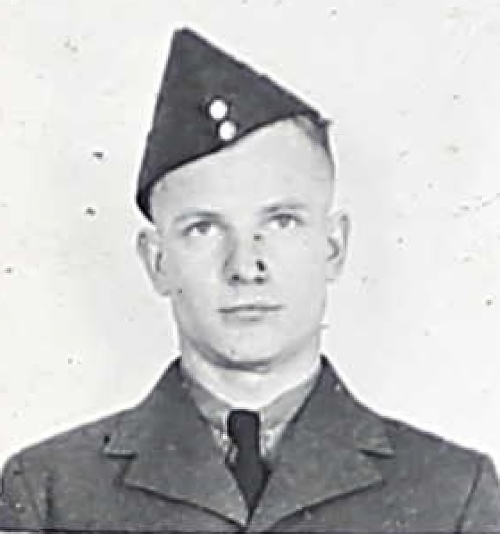 | Beauchery-St-Martin Communal Cemetery | 23rd September 1919, Ontario | Canada | Air Gunner | RCAF | Bomber Command | 103 Sqn | 1944-05-03 | Lancaster | III | ND411 | PM:J | Elsham Wolds | 22:08 | Mailly-le-Camp | Hit by 1-4/gem Flak Abt 593. Crashed Beauchert at 01:05. (Nachtjagd Combat Archives 1944 Part 2 - Theo Boiten) | Killed | Paradie Archive Database | Lancaster ND411, piloted by Pilot Officer J. E. Holden, was shot down and crashed over Beauchery-St-Martin, whilst on a bombing raid to the German military base at Mailly-Le-Camp, on 3-4 May 1944. All the crew were killed. The Bomber Command War Diaries by Martin Middlebrook states: ‘Late on 3 May 1944, 346 Lancasters of 1 and 5 Groups along with pathfinder Mosquitoes attacked the large German military base at Mailly-Le-Camp. The control of this raid in the target area failed to operate according to plan. The initial low level markers were accurate and well backed up by Lancaster marker aircraft. The Marker leader (Wing Commander G. L. Cheshire) ordered the main force to come in and bomb but the main force Controller (Wing Commander L. C. Deane) could not transmit the order to do so to the waiting Lancasters because his VHF set was being drowned by an American Forces Broadcast and his transmitter was wrongly tuned. German fighters arrived during the delay and bomber casualties were heavy. The main attack eventually started when Deputy Controller (Squadron Leader E. N. M. Sparks) took over. Approximately 1500 tons of bombs were dropped with great accuracy. 114 barrack buildings, 47 transport sheds and some ammunition buildings in the camp were hit; 102 vehicles including 37 tanks were destroyed 218 German soldiers were killed and 156 were injured. Most of the casualties were Panzer NCO’s. There were no French casualties but some were killed when Lancaster ND411 was shot down and crashed on their house.’ This aircraft was homeward after the raid but North of its tracked course. There has been some dispute over French soldier deaths held in the barracks. The Australian Government publication, Invasion to Victory April 1944 to May 1945, states: ‘The people of Beauchery-St-Martin, a little village to the South East of Paris, also had good reason to remember the night of 4-5 May 1944. Rachel De Boisgelin, the American born wife of a local landowner, was woken up by the noise: “Many of us living near were awakened by a tremendous roar of motors, by firing and then the sky was lighted up for miles around by explosions. But at that time the Germans were masters here and anyone who stepped out of a house before five in the morning risked being shot. By the noise and the glow in the sky, when the planes came down the Germans knew what had happened and they were looking at everything before anyone else. It gives me grief to tell these painful details but the planes caught fire which made identification of those who were in them extremely difficult” RAAF Flight Sergeant Clifford Gay was in one of the planes, Lancaster ND411 of 103 Squadron. Two Lancasters came down very near to each other and of the 15 crew only one survived. The remains of the others were placed in five coffins and were buried by the villagers in a collective grave in the Beauchery Communal Cemetery.’ A local teacher, Simone Rustang wrote to the sister of Sergeant James Moore, the flight engineer in ND411: ‘Never has our village seen such a big crowd - 1800 to 2000 people. At that lovely time of the year there were plenty of lilacs and lilies of the valley also tulips and rarer flowers. The five coffins disappeared under the tulips and whilst they were all being taken to their last resting place in this peaceful corner of the cemetery where the grass often grows, we were thinking of their families who might be thinking of them alive somewhere in Europe.’ | |||||
| 5 | Moore | James Ernest | Sergeant | 1605107 | | Beauchery-St-Martin Communal Cemetery Coll. Grave 1-3. | Flight Engineer | RAFVR | Bomber Command | 103 Sqn | 1944-05-03 | Lancaster | III | ND411 | PM:J | Elsham Wolds | 22:08 | Mailly-le-Camp | Hit by 1-4/gem Flak Abt 593. Crashed Beauchert at 01:05. (Nachtjagd Combat Archives 1944 Part 2 - Theo Boiten) | Killed | Lancaster ND411, piloted by Pilot Officer J. E. Holden, was shot down and crashed over Beauchery-St-Martin, whilst on a bombing raid to the German military base at Mailly-Le-Camp, on 3-4 May 1944. All the crew were killed. The Bomber Command War Diaries by Martin Middlebrook states: ‘Late on 3 May 1944, 346 Lancasters of 1 and 5 Groups along with pathfinder Mosquitoes attacked the large German military base at Mailly-Le-Camp. The control of this raid in the target area failed to operate according to plan. The initial low level markers were accurate and well backed up by Lancaster marker aircraft. The Marker leader (Wing Commander G. L. Cheshire) ordered the main force to come in and bomb but the main force Controller (Wing Commander L. C. Deane) could not transmit the order to do so to the waiting Lancasters because his VHF set was being drowned by an American Forces Broadcast and his transmitter was wrongly tuned. German fighters arrived during the delay and bomber casualties were heavy. The main attack eventually started when Deputy Controller (Squadron Leader E. N. M. Sparks) took over. Approximately 1500 tons of bombs were dropped with great accuracy. 114 barrack buildings, 47 transport sheds and some ammunition buildings in the camp were hit; 102 vehicles including 37 tanks were destroyed 218 German soldiers were killed and 156 were injured. Most of the casualties were Panzer NCO’s. There were no French casualties but some were killed when Lancaster ND411 was shot down and crashed on their house.’ This aircraft was homeward after the raid but North of its tracked course. There has been some dispute over French soldier deaths held in the barracks. The Australian Government publication, Invasion to Victory April 1944 to May 1945, states: ‘The people of Beauchery-St-Martin, a little village to the South East of Paris, also had good reason to remember the night of 4-5 May 1944. Rachel De Boisgelin, the American born wife of a local landowner, was woken up by the noise: “Many of us living near were awakened by a tremendous roar of motors, by firing and then the sky was lighted up for miles around by explosions. But at that time the Germans were masters here and anyone who stepped out of a house before five in the morning risked being shot. By the noise and the glow in the sky, when the planes came down the Germans knew what had happened and they were looking at everything before anyone else. It gives me grief to tell these painful details but the planes caught fire which made identification of those who were in them extremely difficult” RAAF Flight Sergeant Clifford Gay was in one of the planes, Lancaster ND411 of 103 Squadron. Two Lancasters came down very near to each other and of the 15 crew only one survived. The remains of the others were placed in five coffins and were buried by the villagers in a collective grave in the Beauchery Communal Cemetery.’ A local teacher, Simone Rustang wrote to the sister of Sergeant James Moore, the flight engineer in ND411: ‘Never has our village seen such a big crowd - 1800 to 2000 people. At that lovely time of the year there were plenty of lilacs and lilies of the valley also tulips and rarer flowers. The five coffins disappeared under the tulips and whilst they were all being taken to their last resting place in this peaceful corner of the cemetery where the grass often grows, we were thinking of their families who might be thinking of them alive somewhere in Europe.’ | ||||||||
| 6 | Sykes | Terence William | Sergeant | 1576517 |  | Beauchery-St-Martin Communal Cemetery Coll. Grave 1-3. | Navigator | 1939-45 Star; Air Crew Europe Star; War Medal 1939-45 | RAFVR | Bomber Command | 103 Sqn | 1944-05-03 | Lancaster | III | ND411 | PM:J | Elsham Wolds | 22:08 | Mailly-le-Camp | Hit by 1-4/gem Flak Abt 593. Crashed Beauchert at 01:05. (Nachtjagd Combat Archives 1944 Part 2 - Theo Boiten) | Killed | Navigator with 103 Squadron, joining with his crew directly from 11 Base on 13 April 1944, and was killed in action on his first operational sortie when Lancaster ND411, piloted by Pilot Officer J. E. Holden, was shot down and crashed over Beauchery-St-Martin, whilst on a bombing raid to the German military base at Mailly-Le-Camp, on 3-4 May 1944. All the crew were killed. The Bomber Command War Diaries by Martin Middlebrook states: ‘Late on 3 May 1944, 346 Lancasters of 1 and 5 Groups along with pathfinder Mosquitoes attacked the large German military base at Mailly-Le-Camp. The control of this raid in the target area failed to operate according to plan. The initial low level markers were accurate and well backed up by Lancaster marker aircraft. The Marker leader (Wing Commander G. L. Cheshire) ordered the main force to come in and bomb but the main force Controller (Wing Commander L. C. Deane) could not transmit the order to do so to the waiting Lancasters because his VHF set was being drowned by an American Forces Broadcast and his transmitter was wrongly tuned. German fighters arrived during the delay and bomber casualties were heavy. The main attack eventually started when Deputy Controller (Squadron Leader E. N. M. Sparks) took over. Approximately 1500 tons of bombs were dropped with great accuracy. 114 barrack buildings, 47 transport sheds and some ammunition buildings in the camp were hit; 102 vehicles including 37 tanks were destroyed 218 German soldiers were killed and 156 were injured. Most of the casualties were Panzer NCO’s. There were no French casualties but some were killed when Lancaster ND411 was shot down and crashed on their house.’ This was Sykes’ aircraft which was homeward after the raid but North of its tracked course. There has been some dispute over French soldier deaths held in the barracks. The Australian Government publication, Invasion to Victory April 1944 to May 1945, states: ‘The people of Beauchery-St-Martin, a little village to the South East of Paris, also had good reason to remember the night of 4-5 May 1944. Rachel De Boisgelin, the American born wife of a local landowner, was woken up by the noise: “Many of us living near were awakened by a tremendous roar of motors, by firing and then the sky was lighted up for miles around by explosions. But at that time the Germans were masters here and anyone who stepped out of a house before five in the morning risked being shot. By the noise and the glow in the sky, when the planes came down the Germans knew what had happened and they were looking at everything before anyone else. It gives me grief to tell these painful details but the planes caught fire which made identification of those who were in them extremely difficult” RAAF Flight Sergeant Clifford Gay was in one of the planes, Lancaster ND411 of 103 Squadron. Two Lancasters came down very near to each other and of the 15 crew only one survived. The remains of the others were placed in five coffins and were buried by the villagers in a collective grave in the Beauchery Communal Cemetery.’ A local teacher, Simone Rustang wrote to the sister of Sergeant James Moore, the flight engineer in Sykes’ aircraft: ‘Never has our village seen such a big crowd - 1800 to 2000 people. At that lovely time of the year there were plenty of lilacs and lilies of the valley also tulips and rarer flowers. The five coffins disappeared under the tulips and whilst they were all being taken to their last resting place in this peaceful corner of the cemetery where the grass often grows, we were thinking of their families who might be thinking of them alive somewhere in Europe.’ Sykes is buried alongside his crew in Beauchery Communal Cemetery, France. His medals were sent to his father, William Sykes. 24 Cartwright Road, Northampton | |||||||
| 7 | Wilson | Robert Arthur | Sergeant | 1602530 | | Beauchery-St-Martin Communal Cemetery Grave 4. | Wireless Operator/Air Gunner | RAFVR | Bomber Command | 103 Sqn | 1944-05-03 | Lancaster | III | ND411 | PM:J | Elsham Wolds | 22:08 | Mailly-le-Camp | Hit by 1-4/gem Flak Abt 593. Crashed Beauchert at 01:05. (Nachtjagd Combat Archives 1944 Part 2 - Theo Boiten) | Killed | Lancaster ND411, piloted by Pilot Officer J. E. Holden, was shot down and crashed over Beauchery-St-Martin, whilst on a bombing raid to the German military base at Mailly-Le-Camp, on 3-4 May 1944. All the crew were killed. The Bomber Command War Diaries by Martin Middlebrook states: ‘Late on 3 May 1944, 346 Lancasters of 1 and 5 Groups along with pathfinder Mosquitoes attacked the large German military base at Mailly-Le-Camp. The control of this raid in the target area failed to operate according to plan. The initial low level markers were accurate and well backed up by Lancaster marker aircraft. The Marker leader (Wing Commander G. L. Cheshire) ordered the main force to come in and bomb but the main force Controller (Wing Commander L. C. Deane) could not transmit the order to do so to the waiting Lancasters because his VHF set was being drowned by an American Forces Broadcast and his transmitter was wrongly tuned. German fighters arrived during the delay and bomber casualties were heavy. The main attack eventually started when Deputy Controller (Squadron Leader E. N. M. Sparks) took over. Approximately 1500 tons of bombs were dropped with great accuracy. 114 barrack buildings, 47 transport sheds and some ammunition buildings in the camp were hit; 102 vehicles including 37 tanks were destroyed 218 German soldiers were killed and 156 were injured. Most of the casualties were Panzer NCO’s. There were no French casualties but some were killed when Lancaster ND411 was shot down and crashed on their house.’ This aircraft was homeward after the raid but North of its tracked course. There has been some dispute over French soldier deaths held in the barracks. The Australian Government publication, Invasion to Victory April 1944 to May 1945, states: ‘The people of Beauchery-St-Martin, a little village to the South East of Paris, also had good reason to remember the night of 4-5 May 1944. Rachel De Boisgelin, the American born wife of a local landowner, was woken up by the noise: “Many of us living near were awakened by a tremendous roar of motors, by firing and then the sky was lighted up for miles around by explosions. But at that time the Germans were masters here and anyone who stepped out of a house before five in the morning risked being shot. By the noise and the glow in the sky, when the planes came down the Germans knew what had happened and they were looking at everything before anyone else. It gives me grief to tell these painful details but the planes caught fire which made identification of those who were in them extremely difficult” RAAF Flight Sergeant Clifford Gay was in one of the planes, Lancaster ND411 of 103 Squadron. Two Lancasters came down very near to each other and of the 15 crew only one survived. The remains of the others were placed in five coffins and were buried by the villagers in a collective grave in the Beauchery Communal Cemetery.’ A local teacher, Simone Rustang wrote to the sister of Sergeant James Moore, the flight engineer in ND411: ‘Never has our village seen such a big crowd - 1800 to 2000 people. At that lovely time of the year there were plenty of lilacs and lilies of the valley also tulips and rarer flowers. The five coffins disappeared under the tulips and whilst they were all being taken to their last resting place in this peaceful corner of the cemetery where the grass often grows, we were thinking of their families who might be thinking of them alive somewhere in Europe.’ |
Results 1 to 7 of 7.


