
- Home
- Maps▾
- FAQ▾
- About/Donate▾
- News▾
- Obits
- Contact/Help▾
- PersonalHistories▾
- Cross Reference Research Lists ▶
- Recent Archive Reports
- Profiles in Courage
- 1914 -1918 WW1 Material
- Royal Air Force + RAFVR ▶
- WAAF/WRAF
- Australia
- Belgium
- Canada
- Site honouring Czechoslovak RAF
- Holland: LOST Rob Philips Memorial Archive
- New Zealand
- Norway, Denmark, Sweden, Finland
- Poland
- South Africa
- Archiwum Mielnika: Polish Air Force Archive
- USAAF & USAF
- USA WASP Flygirls
- USA - Co de Swart Gallery: Baker Crew 95th BG
- USA - Co de Swart Gallery: Geyer Crew 98th BG
- Axis Powers
- Russia/Soviet Union
- RCAF 409 The Nighthawks
- Hore-Kennard RCAF
- Zenon Bartkowiak PAF
- Charles Dills USAAC
- Gerald Schwartz USAAC
- Ralph Malan Memoirs
- Soviet Women 'Night Witches'
- Full Story of Lancaster Z-Zebra
- First Air Raid Victim
- 1914 -1918 WW1 Material
- Databases▾
- Databases Master List
- Consolidated Names: includes 500K+ names from all our databases
- Cross Reference Research Lists
- Research Sources
- MULTI-NATIONAL DATABASES
- Aces and Aviators International WW1 - 3000+
- Vitz Archive: War Crimes Victims of Axis
- NEW! USAAF & Allies Non Combat Incidents and Losses
- ALLIED DATABASES
- Allied Losses and Incidents: all Commands
- Aircrew Deaths & Resting Places Worldwide 1939 - 47 120,000+
- Alamein Allied Air Forces Memorial 3000+
- Allied Non-British Graves in Europe managed by CWGC
- Battle of Britain: Enhanced and Extended
- Glider Pilot Regiment Casualties
- Korean War UN Forces Database
- LOST Rob Philips Memorial Archive Dutch/2TAF Losses
- Malta Memorial Database
- Nordic Allied Database
- Ottawa Allied Air Forces Memorial Database
- Paradie RCAF Archive
- Archiwum: Polish Air Force Archive
- Polish Honour Roll
- RAAF Honour Roll
- RCAF Notes - 9000+
- Royal Navy Fleet Air Arm
- Runnymede Memorial Database
- Soviet Aces Database 1941 - 1945
- US Aces and Aviators WW2
- US Air Service Victories WW1
- USAAF Allies NonCombat Losses
- USAAF Operations WWll
- US Marine Corps Squadrons WWll
- Vitz Memorial Archive: War Crimes Victims of Axis
- AXIS DATABASES
- Kracker Luftwaffe Archive
- Deutsches Kreuz in Gold
- German Graves in UK
- German WW2 Aces
- Luftwaffe Graves Managed by CWGC
- Luftwaffe Victories by Name/Date
- Archives ▾
- Archiwum: Polish Air Force Archive: Data on 17,000
- Kracker Luftwaffe Archive
- LOST Rob Philips Memorial Archive: Holland
- Paradie Canadian Archive
- Paul McGuiness RAAF Archive WW1 & WW2
- Profiles in Courage
- Vitz Memorial Archive: War Crimes Victims of Axis
- USAAF Combat Operations 1941-45 Worldwide
- 409 RCAF: The Nighthawks
- Detailed Personal Archive RCAF Officer
- Charles Dills Archive
- Gerald Schwartz Archive
- Ralph Malan Memoirs
- RAF Coastal Command Patrol Areas
- US Intelligence Analysis German Anti Aircraft
- Allied Mine Laying Map (Gardening)
- Airborne Forces - a short history
- More ▾
- de Swart Gallery: Baker Crew, Geyer Crew
- Guide to Complete Site
- Helpdesk
- Donate
- Lay a Wreath
- Your relative's CWGC grave explained
- CWGC War Graves in USA
- Doing Your Own Research
- Research Sources
- US Assistance to Warsaw Uprising
- Our support for charities
- Axis Awards Descriptions
- Stolperstein: Permanent Remembrance
- Who fought for Britain 1939 - 1945
- Aerotoxic Syndrome
- Bermuda Triangle Mystery
- Cross Reference Research Lists
- Not Many People Know That
- Image Acknowledgements
- Abbreviations Used by Forces
- Poetry of Direct Personal Experience
- Staggering Cost in Lives of WWll
- Animated Map All Allied Bombing WW2
- USAAF Combat Operations 1941-45 Worldwide
- Polish Airmen Fighting (Video)
- Important Links
- Canada Memorial Project
- Remembering Banica
- Book Reviews
- 1 BFTS Texas
- Veterans Appeals
- Korean Conflict
- Vietnam Conflict
- Other Conflicts
- Commercial Aviation
- Bush Flying
- Nose Art
- Military Humour
- Airborne Forces - a short history
-

RAF Battle of Britain Consolidated Database
3094+ Entries in Database
Check the Databases Menu for the extensive list of our databases which represent decades of original research by our Editors
Read Search Tips. Corrections and Additions via Helpdesk please
NOTE: KIA = Killed In Action. WIA = Wounded In Action. KIFA = Killed in Flying Accident.
 = Jewish as per jewishvirtuallibrary.orgFate In Battle is date of incident between July 10 1940 and October 31 1940. Fate After Battle is date of death after the Battle
of RAF Fighter Command, Coastal Command or the Fleet Air Arm, who flew at least one operational sortie between 00:01 July 10 1940 and 23:59 October 31 1940.
To see a larger database covering the entirety of WWll, refer to our Allied Losses and Incidents database. This database is the result of research into all known sources of information on the crews which fought the Battle of Britain on the Allied side. It is surprising that for the most significant air battle of WW2, and even after 80+ years, there remains any uncertainty at all about who took part and in some cases, what they did. We have made it our objective to develop this database into a most comprehensive and accurate record which brings to life those heroic deeds. You can help: send corrections and additional information via our Helpdesk.
We believe this database to be among the most useful records extant in terms of its searchability: for example, it is easy to determine all Blenheim crews, or losses on a specific date or the members of a particular squadron.
Readers are referred to the following sites which we have used to cross-check information and we acknowledge and thank them as respected sources for some of the material in this database:
VintageWings.ca: comprehensive listing of artworks
bbm.org: Comprehensive listing of RAF personnel and service records
Wikipedia: Life stories of leading pilots and crew
AircrewRemembered Paradie Canadian Archive Database: 45,000 Service Records of RCAF personnel
AircrewRemembered Allied Losses and Incidents Database: Covering 120,000+ Allied aircrew 1939 - 1945
AircrewRemembered Archiwum: specialist database with details of Polish personnel (in Polish)
AircrewRemembered Kracker Luftwaffe Archive: 31,000 Luftwaffe pilot and crew details
AircrewRemembered LOST: Rob Philips Memorial Archive: Dutch losses in Europe
bel-memorial.org: Comprehensive site on Belgian aircrew
3-character searches are now supported.
If you need help, EMAIL us with name and database to search and we will perform the search manually for you.
To search on squadron, append 'Sqn'. Examples: '72Sqn' or '416Sqn'
These are the results of your search:
You searched for: “"lock"”
| # | Name SORT (↑) | First Names | Rank | Service No. | Photo | Air Force | Country of Origin* | Squadrons | Awards | Aircraft | Victories | Fate in Battle | Fate After Battle | DateOfDeath | **************Notes************** |
|---|---|---|---|---|---|---|---|---|---|---|---|---|---|---|---|
| 1 | Keymer | Michael | Sgt | 748504 | 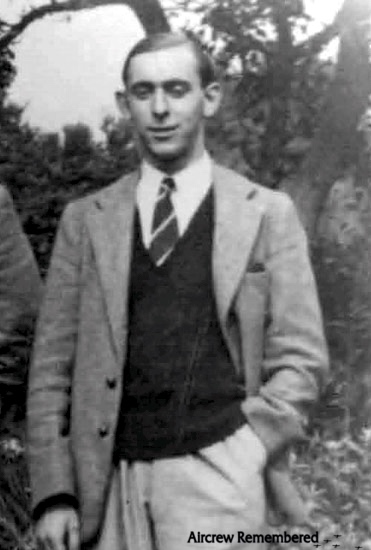 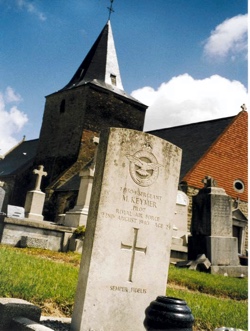  | RAFVR | British | 65Sqn | Spitfire | 0.5 | Murdered after parachuting from aircraft | 1940-08-22 | 18 August at around 13:30hrs helped to shoot down a He 111 flown by R.Ahrens from I Gruppe of KG 1. Shot down in Spitfire I (K9909) 22 August 1940 off Dover at 19:35hrs. Attacked by Bf 109 of JG 26. Murdered by German officer. Bazinghen Churchyard France Age 24 Sergeant Michael Keymer, 24, British pilot of 65 Sqd, Spitfire Mk.Ia registration number K9909, coded FZ-O, is shot down by a Messerschmitt Bf-109 of Jagdgeschwader JG 26. He parachuted, and broke both legs when he arrived on the ground near Bazinghen, in Pas-de-Calais. Murdered by a German officer. Called up 1st September 1939. To 65 Squadron at Hornchurch 7th August 1940. Share in Me109. 22nd August shot down in Spitfire K9909 YT-O. and it had been assumed until 2004 that he came down in the sea, his body being washed ashore and buried in Bazinghen churchyard, NE of Ambleteuse. However it now seems that Keymer had engaged Me109s in fighting over the convoy 'Totem', the battle drifting inland over Ambleteuse. In 2004 Jacques Mahieu bought a home in Bazinghen. He was intrigued to find a wooden memorial to Michael Keymer nearby. He met Mme. Colette Dorer who had been an eye-witness of the loss of Keymer and who gave him in 2006 the following account (translated from French): "On the 22nd August 1940 at about 5 or 6pm, I had gone to milk the cows with my mother and Mme Noel when suddenly we saw two aircraft quite close together. They were flying in circles at low altitude, firing their guns. They were so low that for a moment I could see the helmeted head of the British pilot with his thick goggles. The German aircraft was a little higher and in the end had the upper hand on his opponent. Within seconds the British plane disintegrated. We saw a part of it go down by the river in a marsh that we called ‘Ledquent meadows’. We sheltered under a tree. Once it was quiet again we did not run straight home but towards the river where we saw the propeller. Then we went home to find the aircraft tail 50 metres away from our house". A part of the engine had fallen a little further down the meadow on a path to the Grande Maison. The main wreckage and wings were further on in the same direction followed by the pilot who came down close to the farm of Mme. Caron. The spot was very close to the camouflaged railway used to bring ammuntion to the big cross-Channel guns on the coast. The main part of the engine came down near the village of Colincthun. Keymer had been seen to bale out but his parachute was only partially developed, due to the low altitude, when he hit the ground. "The house of my grandparents had been requisitioned by the Germans to set up a hospital. The German commander, an officer by the name of Damberger, had set off with other men to find the pilot. I saw him come back with a string of bullets (presumably a belt of ammunition from the Spitfire’s wings). He then tied up his dog and shot him. He was a strange man, an evil man, I was scared of him since he had tried to lock me in a cupboard when I was 7 years old, I had failed to salute him in the street. My father saw that the unfortunate pilot was still alive but with two broken legs, his parachute lay opened around him. Damberger shot and killed him. My father and other men wrapped the pilot in his parachute and buried him on the spot. A few days later my father made a coffin and the pilot was exhumed and then reburied in it. A fence was made to keep animals away and I would go back often to lay flowers". The following year, 1941, Keymer was reburied in the churchyard. Son of Bernard William Keymer, and of Ellen Constance Keymer, of Farnham, Surrey. His brother John Gilbert Keymer also fell. |
||
| 2 | Lock | Eric Stanley 'Sawn Off' 'Lockie' | Plt Off (later Flt Lt) | 81642 |
| RAFVR | British | 41Sqn | DSO DFC & Bar  MiD
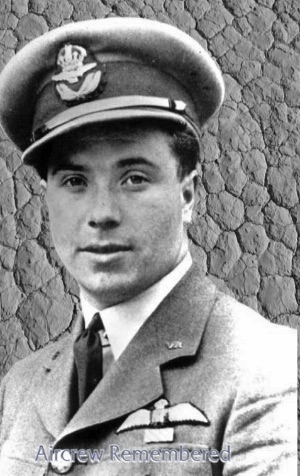
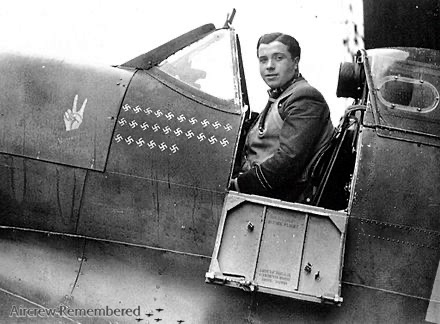
| Spitfire V W3257 FY-E | 26 | MIA | 1941-08-03 | Born in Bayston Hill near Shrewsbury 1920. In 1939 joined the RAFVR, called up on the outbreak of the war. Posted to 41 Sqd August 1940 flying Spitfires. RAF nickname as he was short in stature. DFC 1 October 1940 and Bar to this on the 22nd of October 1940. His score was 26. KIA on 3 August 1941 in a low level attack on gun positions at Calais with 611 Sqd in Spitfire V(W3257). Runnymede DFC. Citation: 'This officer has destroyed nine enemy aircraft, eight of these within a period of one week. He has displayed great vigour and determination in pressing home his attacks'. DFC. Bar: 'In September, 1940, whilst engaged on a patrol over the Dover area, Pilot Officer Lock engaged three Heinkel 113's one of which he shot down into the sea. Immediately afterwards he engaged a Henschel 126 and destroyed it. He has displayed great courage in the face of heavy odds, and his skill and coolness in combat have enabled him to destroy fifteen enemy aircraft within a period of nineteen days'. DSO. Citation: 'This officer has shown exceptional keenness and courage in his attacks against the enemy. In November, 1940, whilst engaged with his squadron in attacking a superior number of enemy forces, he destroyed two Messerschmitt 109's, thus bringing his total to at least twenty-two. His magnificent fighting spirit and personal example have been in the highest traditions of the service'. MiD in March 1941.
Married his fiancee Peggy Meyers, a former Miss Shrewsbury |


Results 1 to 2 of 2.


