
- Home
- Maps▾
- FAQ▾
- About/Donate▾
- News▾
- Obits
- Contact/Help▾
- PersonalHistories▾
- Cross Reference Research Lists ▶
- Recent Archive Reports
- Profiles in Courage
- 1914 -1918 WW1 Material
- Royal Air Force + RAFVR ▶
- WAAF/WRAF
- Australia
- Belgium
- Canada
- Site honouring Czechoslovak RAF
- Holland: LOST Rob Philips Memorial Archive
- New Zealand
- Norway, Denmark, Sweden, Finland
- Poland
- South Africa
- Archiwum Mielnika: Polish Air Force Archive
- USAAF & USAF
- USA WASP Flygirls
- USA - Co de Swart Gallery: Baker Crew 95th BG
- USA - Co de Swart Gallery: Geyer Crew 98th BG
- Axis Powers
- Russia/Soviet Union
- RCAF 409 The Nighthawks
- Hore-Kennard RCAF
- Zenon Bartkowiak PAF
- Charles Dills USAAC
- Gerald Schwartz USAAC
- Ralph Malan Memoirs
- Soviet Women 'Night Witches'
- Full Story of Lancaster Z-Zebra
- First Air Raid Victim
- 1914 -1918 WW1 Material
- Databases▾
- Databases Master List
- Consolidated Names: includes 500K+ names from all our databases
- Cross Reference Research Lists
- Research Sources
- MULTI-NATIONAL DATABASES
- Aces and Aviators International WW1 - 3000+
- Vitz Archive: War Crimes Victims of Axis
- NEW! USAAF & Allies Non Combat Incidents and Losses
- ALLIED DATABASES
- Allied Losses and Incidents: all Commands
- Aircrew Deaths & Resting Places Worldwide 1939 - 47 120,000+
- Alamein Allied Air Forces Memorial 3000+
- Allied Non-British Graves in Europe managed by CWGC
- Battle of Britain: Enhanced and Extended
- Glider Pilot Regiment Casualties
- Korean War UN Forces Database
- LOST Rob Philips Memorial Archive Dutch/2TAF Losses
- Malta Memorial Database
- Nordic Allied Database
- Ottawa Allied Air Forces Memorial Database
- Paradie RCAF Archive
- Archiwum: Polish Air Force Archive
- Polish Honour Roll
- RAAF Honour Roll
- RCAF Notes - 9000+
- Royal Navy Fleet Air Arm
- Runnymede Memorial Database
- Soviet Aces Database 1941 - 1945
- US Aces and Aviators WW2
- US Air Service Victories WW1
- USAAF Allies NonCombat Losses
- USAAF Operations WWll
- US Marine Corps Squadrons WWll
- Vitz Memorial Archive: War Crimes Victims of Axis
- AXIS DATABASES
- Kracker Luftwaffe Archive
- Deutsches Kreuz in Gold
- German Graves in UK
- German WW2 Aces
- Luftwaffe Graves Managed by CWGC
- Luftwaffe Victories by Name/Date
- Archives ▾
- Archiwum: Polish Air Force Archive: Data on 17,000
- Kracker Luftwaffe Archive
- LOST Rob Philips Memorial Archive: Holland
- Paradie Canadian Archive
- Paul McGuiness RAAF Archive WW1 & WW2
- Profiles in Courage
- Vitz Memorial Archive: War Crimes Victims of Axis
- USAAF Combat Operations 1941-45 Worldwide
- 409 RCAF: The Nighthawks
- Detailed Personal Archive RCAF Officer
- Charles Dills Archive
- Gerald Schwartz Archive
- Ralph Malan Memoirs
- RAF Coastal Command Patrol Areas
- US Intelligence Analysis German Anti Aircraft
- Allied Mine Laying Map (Gardening)
- Airborne Forces - a short history
- More ▾
- de Swart Gallery: Baker Crew, Geyer Crew
- Guide to Complete Site
- Helpdesk
- Donate
- Lay a Wreath
- Your relative's CWGC grave explained
- CWGC War Graves in USA
- Doing Your Own Research
- Research Sources
- US Assistance to Warsaw Uprising
- Our support for charities
- Axis Awards Descriptions
- Stolperstein: Permanent Remembrance
- Who fought for Britain 1939 - 1945
- Aerotoxic Syndrome
- Bermuda Triangle Mystery
- Cross Reference Research Lists
- Not Many People Know That
- Image Acknowledgements
- Abbreviations Used by Forces
- Poetry of Direct Personal Experience
- Staggering Cost in Lives of WWll
- Animated Map All Allied Bombing WW2
- USAAF Combat Operations 1941-45 Worldwide
- Polish Airmen Fighting (Video)
- Important Links
- Canada Memorial Project
- Remembering Banica
- Book Reviews
- 1 BFTS Texas
- Veterans Appeals
- Korean Conflict
- Vietnam Conflict
- Other Conflicts
- Commercial Aviation
- Bush Flying
- Nose Art
- Military Humour
- Airborne Forces - a short history
-

RAF Battle of Britain Consolidated Database
3094+ Entries in Database
Check the Databases Menu for the extensive list of our databases which represent decades of original research by our Editors
Read Search Tips. Corrections and Additions via Helpdesk please
NOTE: KIA = Killed In Action. WIA = Wounded In Action. KIFA = Killed in Flying Accident.
 = Jewish as per jewishvirtuallibrary.orgFate In Battle is date of incident between July 10 1940 and October 31 1940. Fate After Battle is date of death after the Battle
of RAF Fighter Command, Coastal Command or the Fleet Air Arm, who flew at least one operational sortie between 00:01 July 10 1940 and 23:59 October 31 1940.
To see a larger database covering the entirety of WWll, refer to our Allied Losses and Incidents database. This database is the result of research into all known sources of information on the crews which fought the Battle of Britain on the Allied side. It is surprising that for the most significant air battle of WW2, and even after 80+ years, there remains any uncertainty at all about who took part and in some cases, what they did. We have made it our objective to develop this database into a most comprehensive and accurate record which brings to life those heroic deeds. You can help: send corrections and additional information via our Helpdesk.
We believe this database to be among the most useful records extant in terms of its searchability: for example, it is easy to determine all Blenheim crews, or losses on a specific date or the members of a particular squadron.
Readers are referred to the following sites which we have used to cross-check information and we acknowledge and thank them as respected sources for some of the material in this database:
VintageWings.ca: comprehensive listing of artworks
bbm.org: Comprehensive listing of RAF personnel and service records
Wikipedia: Life stories of leading pilots and crew
AircrewRemembered Paradie Canadian Archive Database: 45,000 Service Records of RCAF personnel
AircrewRemembered Allied Losses and Incidents Database: Covering 120,000+ Allied aircrew 1939 - 1945
AircrewRemembered Archiwum: specialist database with details of Polish personnel (in Polish)
AircrewRemembered Kracker Luftwaffe Archive: 31,000 Luftwaffe pilot and crew details
AircrewRemembered LOST: Rob Philips Memorial Archive: Dutch losses in Europe
bel-memorial.org: Comprehensive site on Belgian aircrew
3-character searches are now supported.
If you need help, EMAIL us with name and database to search and we will perform the search manually for you.
To search on squadron, append 'Sqn'. Examples: '72Sqn' or '416Sqn'
These are the results of your search:
You searched for: “signature”
| # | Name SORT (↑) | First Names | Rank | Service No. | Air Force | Country of Origin* | Squadrons | Awards | Aircraft | Victories | Fate in Battle | Fate After Battle | DateOfDeath | **************Notes************** | Photo |
|---|---|---|---|---|---|---|---|---|---|---|---|---|---|---|---|
| 1 | Yapp | Derek Sydney | Sqd Ldr | 41975 | RAF | British | 245Sqn 253Sqn (CO)  68Sqn  | DFC | Hurricane | 0.5 | Survived war | 14th June 2012 Devon Age 93 | Survived War, Captain for British Airways. Born 15 June 1919 in Bath, Somerset England. Joined the RAF on a short service commission in February 1939. Initial training at 9 E&RFTS Ansty, moved to 6 FTS Little Rissington on 30th April. Joined 245 Sqd at Leconfield on 6 November 1939. To Belgium on 16 May 1940, when 'A' Flight was attached to 615 Sqd, returning to Drem on the 21 May. Posted to 253 Sqd at Kenley on 1st October 1940. 4 March 1941 he shared a Ju88, A6+LH of 1.(F)120 which was shot down off Westray in the Orkneys. 10 May 1941 posted to 124 Sqd at Castletown. Tour-expired, to 54 OTU at Church Fenton on 27th October 1941. Rejoined 253 Sqd at Hibaldstow on 23 December as a Flight Commander. Damaged a He111 at night on 1st May 1942 whilst co-operating with a 1459 Flight Turbinlite Havoc. Took command of 253 later in the month and led it with distinction during the Dieppe operation on 19th August for which he was awarded the DFC 29 September 1942. To 59 OTU Milfield on 15th September 1942. CFI at 57 OTU Eshott on 7 November. Night-fighter course at 54 OTU Charter Hall on 20th April 1943 and then joined 68 Sqd at Coltishall on 15th July. 1st March 1944 posted to HQ 12 Group Watnall. From 24th April until 4th July 1944 Yapp served with 4 ADF York. To to SHQ Church Fenton until 6th November 1944, when he was released from the RAF as a Squadron Leader.  Signed by Pete Brothers, John Ellacombe, Anthony Russell, Derek Yapp |  |
|
| 2 | Wright | Allan Richard | Fg Off | 33499 | British | 92Sqn | DFC | Spitfire | 11 | WIA | Survived war | Born 1920. Wounded 30 September 1940. Force landed Spitfire I (X4069) near Shoreham after combat with a Bf 109 at 17:00hrs. Born in Teignmouth, Devon England 12 February 1920. Educated at St. Edmunds College. RAF College Cranwell in April 1938 as a Flight Cadet. After the outbreak of war Cranwell cadets who had not completed their courses were enlisted in the regular RAF on 7th September 1939 as Airmen u/t Pilots and each given an Airman number. Air gunnery and bombing training at B&GS West Freugh, graduated on 23rd October with a permanent commission. He arrived at 11 Group Pool St. Athan on the 24 October, converted to Blenheims and joined 92 Sqd at Tangmere on 30 October. Recently reformed with Blenheim IV night fighters but in early March 1940, re-equipped with Spitfires at Croydon. Over Dunkirk on 23rd May 1940 Wright destroyed a Me110, possibly another and damaged a third, on the 24th he got a possible He111 and on 2nd June he destroyed a Me109. On 14th August Wright shared a He111, on the 29th he shot down a He111 at night over Bristol, on 11th September destroyed a He111 and probably a Me109, on the 14th damaged another, on the 15th probably destroyed a Me109, on the 19th got a probable Ju88 and on the 26th destroyed a Do17. Appointed 'B' Flight Commander on 27th September as an Acting Flight Lieutenant. Destroyed a Ju88, shared a He111 and damaged a Do17 and two Ju88's. On the 30th he shot down two Me109s. In action on this day, his Spitfire, X4069, was damaged by a Me109 off Brighton. Wright made a forced-landing at Shoreham, slightly wounded by cannon shell splinters in the thigh and was admitted to Southlands Hospital. DFC 22nd October 1940. On 6th December he shot down a Me109 near Dover. On 16th May 1941 he shared a Me109, on 17th and 25th June he probably destroyed two more and on the 26th shot down another. Bar to DFC 15th July 1941. To 59 OTU Crosby-on-Eden to be OC 'B' Flight. In September went to HQ 9 Group, working on air tactics, moving in October to HQ Fighter Command. February 1942 Wright appointed Chief Instructor at the Pilot Gunnery Instructor Schoo at CGS Sutton Bridge. In October 1942 he was sent as one of a group of four experienced fighter pilots to train USAF squadrons about to be posted to the UK ro prepare them for operations. Back to the UK he went on a night fighter refresher course at 54 OTU Charter Hall in December. Posted to 29 Sqd at West Malling in March 1943 as 'A' Flight Commander. Destroyed a Ju88 on 3rd April. After a short spell as Fighter Tactics Officer at HQ 92 Group, Wright was appointed OC Demonstration Squadron at AFDU Wittering in November 1943 and took command of the unit in December. Army Staff College Camberley in August 1944, was awarded the AFC 1st September 1944 and in December he was appointed Wing Commander Single Engine Training at HQ 12 Group Watnall. February 1945 he was posted to Egypt, to command the Fighter Wing of the Advanced Bombing and Gunnery School at El Ballah. Wright stayed in the RAF postwar and held a number of fighter-related appointments including four years at the Air Ministry responsible for air defence planning. After converting to jet fighters he became Wing Commander Flying at Waterbeach near Cambridge with Hunter and Javelin squadrons under his command. After two years in the Far East and a further two at HQ Fighter Command he was appointed to command the Ballistic Missile Early Warning Station at Fylingdales, near Whitby. Retired on 12th February 1967 as a Wing Commander, retaining the rank of Group Captain. 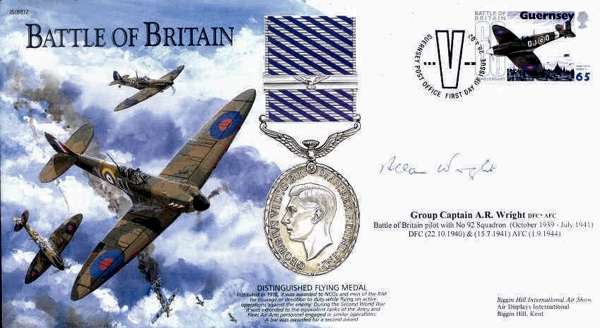 Allan Wight Interview by James Holland Daily Telegraph Obituary Obituary: The Independent | 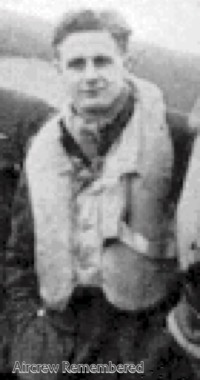 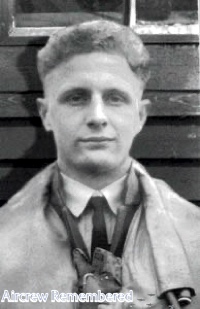 |
||
| 3 | Wolton | Ralph | Sgt | 45487 | RAF | British | 152Sqn 153Sqn  96Sqn  239Sqn  | Spitfire | 2 | Survived war | 1993 | Born on 26th July 1914 in Rottingdean, Sussex. Joined RAF in July 1932 for ground duties as an Aircrafthand. Posted to 58 Sqd at Worthy Down and became a WOp/Air Gunner. In September 1935 he went to 142 Sqd, which was sent out to Mersa Matruh at the time of the Abyssinian crisis. The squadron returned to the UK but Wolton was posted to 45 Sqd at Helwan, Egypt. Volunteered for pilot training. Initial training at 9 E&RFTS Ansty. He moved on to 10 FTS Tern Hill, completing his training in October 1939 and joining 152 Sqd at Acklington. The squadron moved south to Warmwell on 7th July 1940. On 25th July shot down a Do17, which crashed and burned out at East Fleet Farm, Dorset. On 15th August Wolton was shot down into the sea off Chesil Beach. He claimed a Ju88 destroyed on 26th September. Wolton was thrown out of his aircraft when a wing fell off at 15,000 feet on 11th October. His parachute was damaged and he was unable to open it until he was down to 1,000 feet. Injuries from these bailouts left him with a lifelong limp. 16th December 1940 Wolton to CFS Upavon for an instructor's course. He was afterwards posted to 16 FTS Newton, instructing Polish pupils. Commissioned in March 1941, moved to 51 OTU Cranfield on 8th April 1942 to instruct on night fighters. He joined 153 Sqd at Ballyhalbert, Northern Ireland on 20th January 1943. Then to 96 Sqd at Honiley. 18th May to 6th August 1943 Wolton attached to 417 Sqd (USAAF) to convert its crews to Beaufighters. 63 OTU at Honiley until 27th October when he rejoined 96 Squadron, then at Drem. To 239 Sqd at West Raynham, flying Mosquitos on radio countermeasures.
 Signed envelope | 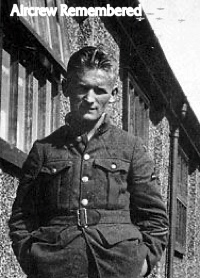 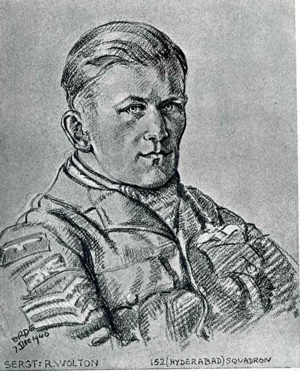 |
||
| 4 | Winskill | Archibald Little 'Archie' | Plt Off | 84702 | RAFVR | British | 72Sqn 603Sqn  41Sqn  165Sqn (CO)br>  222Sqn (CO)br>  232Sqn (CO)br>  | KCVO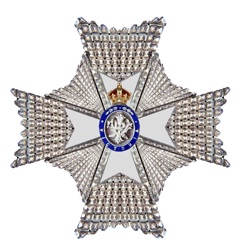 CBE DFC & Bar Air Efficiency  | Spitfire | 5.5 | Survived war | 9 August 2005, aged 88 | Winskill was born on 24 January 1917 in Penrith, Cumberland, England. Educated at Penrith and Carlisle Grammar Schools. 1937 Winskill joined the RAFVR and trained as a pilot. Mobilised in September 1939. Between September 1939 and June 1940, he served as a staff pilot at RAF Catfoss. Commissioned on 25 August 1940 as a pilot officer. Posted to 72 Sqd 4 October 1940. To 603 Squadron RAF based at RAF Hornchurch on 17 October. Shot down a Messerschmitt Bf 109 over Dungeness, Kent on 29 October 1940. In November, he shared in the destruction of a Heinkel He 111 with two other pilots from his squadron. 23 November, he shot down two Fiat CR.42 fighters. In January 1941, Winskill was appointed a flight commander of 41 Sqd. Fighter sweeps and bomber escort sorties over Nazi occupied France. 14 August 1941 over France escorting bombers whose target was the St Omer railyards near Lille. One of the Blenheim bombers was attacked by two Messerschmitt 109 fighters. He went to its aid, shooting down one of the Messerschmitts. However, in the dogfight with the remaining Nazi fighter, his Spitfire sustained damage and burst into flames. He was forced to bale out at a low altitude from his out of control aircraft. He landed safely and a French farmer hid him until nightfall. The farmer' son, Felix Caron brought him to the safety of their farm in Saint-Folquin. After two weeks in a French Resistance safe house, the French speaking Winskill was moved down the Pat Line,mover the Pyrennes then, via Andorra, Barcelona and Madrid, to British Gibraltar. He arrived back in England in December 1941; it had taken him three months to arrive back in England after being shot down. As flying over Europe was forbidden to those who had used a Resistance escape route for fear that if captured they would divulge the information, he was posted to an air defence squadron in Scotland. On 6 April 1942, he formed 165 Squadron RAF. Then appointed officer commanding 222 Sqd. November 1942 CO 232 Sqd. To North Africa in December 1942 for close air support for the First Army in Algeria and Tunisia as part of the Desert Air Force. On 18 January 1943, he was shot down off the Tunisian coast and baled out into the sea. Rescued by Arabs and taken to the shore. From there, he made his way back to his squadron through German controlled positions. This made him one of the very few men who had evaded capture twice during World War II. In April 1943, he shot down a Junkers Ju 87 and shared in the destruction of a second one. He also destroyed two aircraft on the La Sebala Airfield. Returned to UK June 1943. Instructor at the Central Gunnery School based at RAF Catfoss. Commandant of the Fighting Wing of the school.[3] He served in that post between September 1943 and December 1944. On 15 February 1968, Winskill was appointed Captain of the Queen's Flight. In that role he did not fly the aircraft but was responsible for the safety and comfort of the Royal passengers in addition to commanding the flight. Wikipedia Bio |  Photograph of Archie Winskill which was used for his forged passes whilst he was evading. Photograph shows Archie dressed as French Civilian after being shot down and being helped to evade by the French Resistance. |
|
| 5 | Wilkinson | Kenneth Astill | Sgt (later FO) | 172142 | British | 611Sqn 616Sqn  19Sqn  234Sqn  165Sqn | Spitfire | Survived war | 31st July 2017 aged 99. | Born on 29 June 1918 at Barrow-in-Furness England. Educated at Cheltenham Grammar School. Joined RAFVR in March 1939 as an Airman u/t Pilot (745210). Called up on 1 September 1939, went to ITW and did not reach 5 EFTS, Hanworth until 26 March 1940. He was at 10 (Advanced) EFTS, Yatesbury from 25 May to 7 June, moving then to 8 FTS, Montrose. Arrived at 7 OTU, Hawarden on 1 September 1940. Converting to Spitfires, he joined 611 Sqd at Tern Hill, moved to 616 Sqd at Kirton-in-Lindsey on 1 October and then to 19 Squadron at Fowlmere on the 17 October. Posted away to 56 OTU, Sutton Bridge on 27 January 1941, as an instructor. On 23 October joined 1488 Flight at Shoreham. He was sent on a course to CGS, Sutton Bridge on 10 May 1942 to become a pilot gunnery instructor, after which he was posted to II Group Practice Camp at Martlesham Heath. To 61 OTU, Rednal on 23 February 1943 for a refresher course on Spitfires before joining 234 Sqd on 23 April at Skeabrae. He moved to 165 Sqd at Ibsley on 8 July 1943. To 53 OTU, Hibaldstow on 27 December 1943. Commissioned February 1944 and remained there until 7 June. He went to 24 OTU, Honeybourne on 28 August and moved on to 10 OTU, Abingdon on 27 May 1945. Released from RAF in November 1945, as a Flying Officer. He served in the RAFVR from 1947. Signed by Ken Wilkinson (616 Sqd), Vivian Snell (501 Sqd), Ken Mackenzie (501 Sqd), Les Harvey (54 Sqd)  Commemorating the 60th Anniversary of the Spitfire in RAF Squadron Service in July 1938. The cover artwork is by respected aviation artist Brian Petch and shows a Spitfire Mk 1 of 19 Sqd in 1938 and a Mk XXIV (24) of 80 Sqd in 1952. 19 Sqd was the first RAF squadron to receive Supermarine Spitfires replacing their Gloster Gauntlet biplanes at RAF Duxford in July 1938. 80 Sqd was the last RAF squadron to operate Spitfires flying from RAF Kai Tak in Hong Kong through until January 1952. | 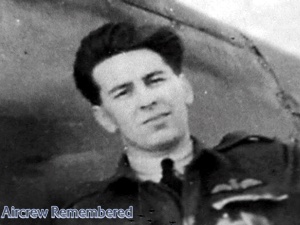 |
||||
| 6 | Wilkinson | Royce Clifford 'Wilkie' | Fg Off | 44125 | RAF | British | 3Sqn 71Sqn (Eagle)  121Sqn (Eagle)  174Sqn  1Sqn  | OBE DFM & Bar  Croix de Guerre (France)  | Hurricane | 9 | Survived war | Sheerness, Kent 1990 | Born in Mexborough, Yorkshire on 26th November 1913 and educated at the secondary school there. Joined the RAF at Halton in January 1930 as an Aircraft Apprentice and passed out in December 1932 as a Fitter, Aero Engines. He was posted to RAF Aboukir in 1933. Applied for pilot training. Joined 3 Sqd at Kenley in May 1937.On 10th May 1940 the squadron went to France, attached to 63 Wing. Wilkinson shared in destroying a Hs126 on the 12th, destroyed a He111 and a Hs126 on the 13th, two Me109's on the14th, a Me110 on the16th, two He111's on the 19th and he shared in the destruction of two He111's on the 20th. The squadron withdrew to Kenley on the same day. Received the double award of DFM and Bar 31st May 1940. Commissioned 15 May, whilst he was in France, appointed 'A' Flight Commander on that day, with the rank of Acting Flight Lieutenant. Destroyed 9 2/3 enemy aircraft in one week.
He helped form two American 'Eagle' Squadrons. 71 Sqd was formed on 21st October 1940, of which he was a founder member as 'B' Flight Commander. To Kirton-in-Lindsey on 14 May 1941 to form 121 Sqd (Eagle) on its formation on 14th May 1941. Posted away on 3 March 1942 to form and command 174 Sqd at Manston, the first Hurricane fighter/bomber squadron which he commanded. 3rd May 1942 shot down in Hurricane IIc BE674 by flak during an attack on Abbeville airfield and baled out at a very low level. With the aid of a French woman, Madame Duhamel of the French Resistance, who later became his daughter's Godmother, he evaded capture and arrived back in England through France and Spain to Gibraltar, going almost everywhere by train and car in broad daylight, and in his own words 'I had a lovely time'. He eventually reached Marseilles and crossed into Spain. Wilkinson flew back to England in a Sunderland from Gibraltar. Commanded 1 Sqd at Acklington and Biggin Hill from 1st August 1942 to 30th May 1943, when he was appointed to lead the Gravesend Wing. In March 1944 he was given command of HQ 149 Airfield, in 11 Group. He formed one of the Mobile Airfields of 2nd. TAF for the invasion of Europe in 1944 and in the Pacific he led the longest Spitfire raid of the war, a four-hour-fifty-minute flight from Darwin, Australia to Timor Island and back, without loss. He always led from the front and was highly decorated being awarded the OBE, DFM and Bar, Croix de Guerre. In August 1944 Wilkinson was sent to Australia on special duties. After return to the UK he went to a staff appointment at the Air Ministry in December 1945. Wilkinson was released in April 1946, as a Wing Commander. Biography 'Spitfire RCW' by Nelson Kenneth James |    Plaque on Eagle Memorial, US Embassy London  US Embassy London |
|
| 7 | Widdows | Stanley Charles | Sqd Ldr | 26218 | RAF | British | 43Sqn 29Sqn (CO) 45Sqn  47Sqn  | Order of the Bath DFC | Blenheim | 1 | Survived war | 20th January 2010 Age 101 | Born at Bradfield, Berkshire England 4 October 1909. Educated at St. Bartolomew's School, Newbury. Joined the RAF in September 1926 as an Aircraft Apprentice and passed out in August 1929 as a Fitter. Cadetship at the RAF College, Cranwell and entered as a Flight Cadet there on 20th September 1929. 24 July 1931 posted to 43 Squadron at Tangmere. In 1932 he served with 29 Squadron at North Weald. 28 February 1933 to 45 Squadron at Helwan, Egypt. November to 47 Squadron at Khartoum. Then posted to RAF Ramleh, Palestine on 14th August 1936. To UK in 1937. 1 September test pilot to A&AEE, Martlesham Heath, for extensive performance tests on the first production Hurricane, L1547, and the first production Spitfire, K9787. To 6 OTU Sutton Bridge on 6th July 1940 from A&AEE for a refresher course. He moved to 5 OTU, Aston Down on the 14 July, converted to Blenheims and was posted to 29 Squadron at Digby on the 15, taking command next day. Destroyed a Ju88 at night on 13th March 1941 which crashed at Smiths Farm, Dovedale near Louth, Lincolnshire. DFC 4th April 1941. 7 May 1941 Widdows found a Ju88 over the English Channel. His Beaufighter was badly damaged by return fire and Widdows ordered his radar operator, Sgt. B Ryall, to bale out. He managed to get the aircraft back to base. A search found no trace of Ryall. Posted away in June 1941 to command RAF West Malling. In 1942 he became Group Captain Night Ops at HQ 11 Group and 12 Group. He was SASO 85 Group in 1943/44 and Group Captain Organisation at Supreme HQ Allied Expeditionary Forces later in 1944. Retired from the RAF on 29th December 1958, as an Air Commodore. | 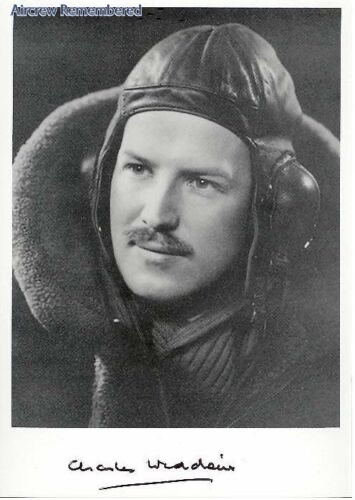 |
|
| 8 | White | John William | Plt Off | 43833 | RAF | British | 35Sqn 32Sqn  3Sqn FIU | MBE | Hurricane, Blenheim | 1 | Survived war | August 1996 in Hendon | Born 20 January 1914 in Nottingham England. Joined RAF at Halton in September 1929 as an Aircraft Apprentice. Posted a Fitter Airframes/ Engines to 35 Sqd on Fairey Gordons at Bircham Newton. Later to the Sudan, retrained as an air gunner. Selected for pilot, Airman u/t Pilot in December 1935 at 6 FTS Netheravon. Sergeant-Pilot in December 1936, posted to 32 Squadron at Biggin Hill in January 1937. Operations over the Low Countries, France and Dunkirk, destroying a Do17 on 19th May 1940 over Cambrai and possibly a Me109. Commissioned on 15th June, posted to 3 Squadron at Wick on 26 June. He joined the Fighter Interception Unit at Tangmere on 10th September 1940. 7 October in a Blenheim making a photographic record of AI responses for use in instructing AI Operators. The aircraft was flown by P/O DL Ryalls, with Sgt. EF Le Conte as gunner. They were attacked by three Me110s, which Ryalls managed to evade after Le Conte had fired at one attacker and possibly damaged it. White was attacked and damaged by a German raider at night on 15th October. On landing, he overshot the runway and the undercarriage of his Blenheim collapsed. January 1941 to hospital and was subsequently declared unfit for further flying because of lung damage. From April to August 1941 he was a student at the Officers Engineering College and transferred to the Engineer Branch. Engineer Officer with 264 Sqd from September to December 1941, Flight Commander of the Repair Section at 58 MU until April 1943, and OC of 235 (Mobile) MU at Netheravon until February 1944. March 1944 promoted to Wing Commander and took command of No. 1 Heavy Glider Servicing Unit at Netheravon. Station Comander RAF Netheravon till October 1945. MBE 1st January 1945. Retiring from the RAF on 12th November 1966 as a Group Captain. | 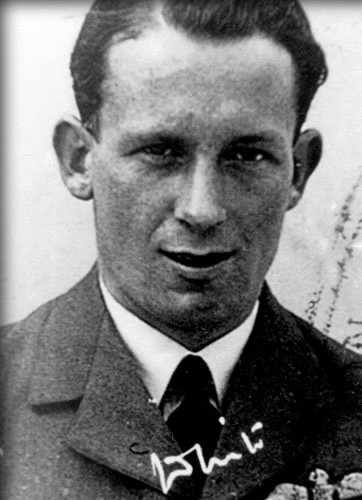 |
|
| 9 | Westlake | George Herbert | Plt Off | 84019 | RAFVR | British | 43Sqn 213Sqn  80Sqn  No. 4 Stormo  | DSO DFC | Hurricane | 10 | Survived war | 18th January 2006 Age 87 | Born April 21 1918 Rangoon Burma (now Myanmar). Educated at Shoreham School and de Havilland Aeronautical Technical School. 1937 joined the RAFVR and began training as a pilot. Joined 213 Sqd, flying Hurricanes during the closing stages of the Battle of Britain. Shot down a Messerschmitt Bf 109 south of Selsey Bill on November 15 1940. Six months later 213 embarked in the aircraft carrier HMS Furious and headed for the Mediterranean. On May 21 his squadron took off from the ship and set off for Malta, 800 miles away. After a hasty lunch, Westlake and his fellow pilots were airborne again, and three hours later landed at Mersah Matruh, in Egypt. In their single-engine aircraft, they had been airborne for almost eight hours, all entirely over the sea. Within a few days Westlake was detached to 80 Sqd, operating in Syria. He was soon in action against the Vichy-French Air Force, and in the space of a few days had shot down a bomber and shared in the destruction of two fighters. Once the air threat had been reduced, Westlake attacked airfields and road convoys as the Vichy forces retreated. At the end of the brief campaign he left for Nicosia, where he rejoined 213 Sqd. On July 18 1941 Junkers 88 bombers appeared over the airfield, and Westlake was scrambled to intercept them. He caught one 80 miles off the coast and, in full view of a small Cypriot fishing fleet, he chased it at very low level and shot it down. The Governor of the island gave him a bottle of whisky with the promise of a crate if he repeated his success. In August Westlake shot down an Italian bomber, which crashed near Capo Greco, the first enemy aircraft to fall on the island. Unfortunately for Westlake, the Governor had left the island the day before - but he did receive a tankard. In December 213 left for the Western Desert, where it was involved in fierce fighting. Westlake was made flight commander and, during the next few months, he shot down five more aircraft and damaged three others. After almost two years of continuous action (during which his aircraft was never hit by the enemy) he left the squadron in the autumn of 1942, when he was awarded the DFC. Westlake joined No 211 Group of the Desert Air Force as a fighter operations controller and moved forward with the advance to Tunisia. He was involved in planning air support for the invasions of Sicily and Italy before taking command of a mobile operations room as a wing commander, landing in Sicily two days after the troops had gone ashore. Anxious to return to flying, he dropped a rank in order to command one of the first Italian squadrons to fight alongside the Allies, No 4 Stormo, flying the Airacobra on ground attack operations. That month he was appointed to lead 239 Wing. Westlake remained in the RAF after the war. He specialised in fighter operations, serving at HQ 12 Group before filling an exchange posting with the USAF at HQ Air Defence Command, Colorado Springs. After commanding the Southern Sector of the UK Air Defence Region, he spent two years at RAF Geilenkirchen in Germany as the wing commander in charge of flying. In 1961 he was promoted to group captain and commanded the RAF's northern fighter control station at Buchan, near Peterhead. During the Indonesia Confrontation campaign, Westlake co-ordinated air defence operations at HQ Far East Air Force. At the end of 1967 he returned to Britain responsible for flying activities at Signals Command before retiring from the RAF in July 1969. Westlake spent a number of years in Kuwait, which he much enjoyed, working as the aviation consultant, then manager, of Abdulla Al Rifai and Sons, agents for numerous large British aerospace and engineering companies. He retired to Cyprus, but returned to England in 1994. Leader of the brilliantly executed Operation Bowler, the bombing of shipping in the docks at Venice and the only authorised wartime air attack against the Italian city. With the destruction of the rail and road network in northern Italy by early 1945, the Germans resorted to transporting desperately needed supplies by ship to Venice for onward distribution by canal and river craft. In March that year authority was given to attack the port of Venice - there were strict instructions that there must be no damage to the historic buildings and fabric of the city, which lay just outside the dock's boundary. The operation's codename was the idea of the Air Officer Commanding, Air Vice Marshal "Pussy" Foster, who anticipated being 'bowler-hatted' (dismissed from the service) should the city suffer any damage. Westlake was leader of No 239 Wing, a mixture of Kittyhawk and Mustang squadrons specialising in dive-bombing operations. During the afternoon of March 21, flying a Kittyhawk of No 250 Squadron, he led 64 aircraft on the attack. Twenty-four fighters of the USAAF were also attached to his formation, with a Spitfire squadron providing an escort. Within a few yards of the dock area were churches and housing; beyond lay a large population and centuries worth of noble buildings and works of art. Once over the target, Westlake assessed that the weather was suitable and he ordered some of the Mustangs and the American fighters to attack the gun defences as he dived almost vertically from 10,000 ft with his four squadrons following him into the attack. The results were spectacular: a large cargo ship was seriously damaged and left listing, and a number of smaller vessels and naval escorts destroyed. As the last of the Mustangs pulled away there was a huge explosion as a store of sea mines was hit. The local Italian population stood on nearby rooftops just outside the target area watching the specttacolo with great enthusiasm and admiration. The AOC was equally impressed, and sent a signal of congratulation, relieved that he had avoided a bowler hat. Westlake was awarded the DSO for his 'excellent leadership, great tactical ability and exceptional determination'.  Depicts 87 squadron pilots running to their Hawker Hurricanes during a 'Scramble'. 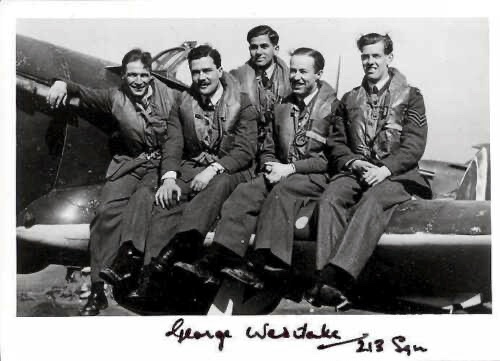 'B' Flight of 213 Sqd. The photograph shows Joe Lynch, George Westlake, Hank Hancock, Peter Crowther and Freddie Wilson (RCAF) sitting on the wing of a Hurricane. Hand signed by George Westlake second from left in the picture.  Plate from 'Men Of The Battle Of Britain' by Ken Wynne |   |
|
| 10 | Wellum | Geoffrey Harris Augustus 'Boy' | Plt Off | 42925 | British | 92Sqn 65Sqn  | DFC | Spitfire | 2.25 | Survived war | 18 July 2018 | Born 4 August 192. Educated at Forest School, Snaresbrook before serving in the RAF. Aged eighteen, Wellum signed up on a short-service commission with the RAF in August 1939. Wellum's first solo flight was on 1 September 1939. Two days later Britain declared war on Germany. After successfully completing the course he then went on to fly the North American Harvard at RAF Little Rissington with 6FTS. In May 1940, before his flight training was complete, posted to 92 Sqd on Spitfires. It was at 92 Squadron that he first encountered a Spitfire, and flew the aircraft for the first time. Later, in First Light, he wrote of the experience: 'I experienced an exhilaration that I cannot recall ever having felt before. It was like one of those wonderful dreams, a Peter Pan sort of dream'. His first commanding officer was Roger Bushell. He was shot down and captured almost immediately after Wellum's arrival, and was later murdered by the Gestapo in the aftermath of the 'Great Escape'. Wellum recalled: 'After I joined the squadron they went to Dunkirk and by the end of that day we'd lost five people, four of whom I'd met the night before in the officers’ mess. I thought, ‘Hold on a minute, this is bloody dangerous!’ He saw extensive action during the Battle of Britain. At just 18, he was the youngest pilot to fight in the battle, and was nicknamed 'Boy' by his colleagues. On 9 September 1940 92 Squadron was posted to RAF Biggin Hill in Kent, in the centre of the fighting. Of the numerous Bf 109 fighters which escorted the German bombers, Wellum wrote 'God, is there no end to them? The sun glints on their wings and bellies as they roll like trout in a stream streaking over smooth round pebbles. Trout streams, water meadows, waders, fast-flowing water, the pretty barmaid at the inn. Dear Jesus why this? Wellum claimed a Heinkel He 111 shot down on 11 September, and a quarter share in a Junkers Ju 88 downed on 27 September 1940. Two (and one shared) Messerschmitt Bf 109s were claimed 'damaged' during November 1940. In the summer of 1941 Wellum participated in more than 50 sweeps over occupied France (also known as Circus offensives) flying escort for Blenheim and Stirling bomber formations, taking the war to the enemy. He claimed a Bf 109 shot down on 9 July 1941 over France, DFC August 1941. By this time most of Wellum's original colleagues at 92 Sqd had been killed or captured; he survived owing to a combination of luck and skill. Later, he recalled: 'You make yourself a difficult target. Never stay still, never fly straight and level, chuck it around. Quite often you'd find yourself surrounded by aeroplanes and then the sky would be empty. ‘Where's everybody gone?’ It was then that you were in danger. It was the German you didn't see who shot you down.' In the summer of 1941 Wellum was taken off active duty, and assigned to a training squadron: No 52 Operational Training Unit at Aston Down, flying Hawker Hurricanes. Disappointed to be leaving frontline service, Wellum initially found the experience to be almost unbearable. Eventually, Wellum relaxed: "I found a new peace and...gradually I seemed to unwind. I even began to enjoy [teaching] pupils". In February 1942 he was re-assigned to combat duties in 65 Sqd based at Debden, where he was appointed a Flight Commander in March 1942. By now, the Luftwaffe was flying a new fighter aircraft, the Focke-Wulf Fw 190, superior in all but turn radius to the Spitfire V, and the squadron took heavy losses. 'Quite simply, the FW190 outclasses our Spitfire 5Bs. It is 40mph faster, has very good armament and a very high rate of roll'. In air combat over France, Wellum's number two, Freddie Haskett, was killed by a Fw 190, and Wellum himself survived only by 'throwing the Spit all over the sky without really looking round'. At this time he began to develop severe headaches, 'a splitting headache pain across my eyes'. In July 1942 he participated in Operation Pedestal, a convoy mission to carry supplies for the relief of the besieged garrison at Malta. Wellum led a flight of eight Spitfires to be carried on aircraft carrier HMS Furious, sailing from the Clyde to the Mediterranean, and then land them on the island. On 11 August 1942, Wellum led his flight of eight Spitfires, flying without ammunition to save weight (the bullets were replaced with cigarettes), and landed at Luqa airfield on Malta, joining 145 Sqd on air defence duties. On Malta, Wellum was diagnosed with severe sinusitis and battle fatigue, after three years' of intensive frontline flying. After surgery, he returned from Malta to Britain via Gibraltar, and later became a test pilot for new aircraft, such as the new Hawker Typhoon fighter-bomber, based at Gloster Aircraft. After his return to England, Wellum did not return to combat duties, instead finishing the war as a gunnery instructor. Life for Wellum at the end of his career as a fighter pilot would never be quite the same. I am certain that my time came with my three years as an operational fighter pilot in our nation's finest hour. My only regret is that it had to happen so early in life'.  Signed envelope His brilliant biography is First Light Excellent Interview | 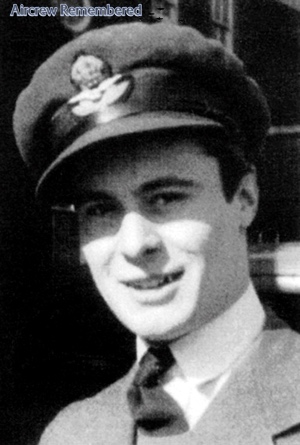 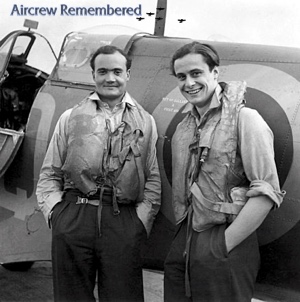 L-R: Brian Kingcome, Geoffrey Wellum. Biggin Hill 1941 |
||
| 11 | Wells | Edward Preston 'Hawkeye' | Plt Off | RNZAF | New Zealander | 266Sqn 41Sqn 485Sqn  | DSO DFC | Spitfire | 11 | Survived war | 1st November 2005 | Born in Cambridge, New Zealand on 26 July 1916. Educated at the High School. October 1938 Wells applied for a short service commission in the RNZAF. Provisionally accepted in mid-April 1939 but was not called forward until 26th October when he reported to the Ground Training School at Weraroa. 20 November to 2 EFTS New Plymouth before moving to 2 FTS Woodbourne on 15 January 1940. Sailed for the UK on 7 June in the RMS Rangitata. He had been a champion 12-bore shot during his schooldays in New Zealand, and his outstanding marksmanship earned him the nickname 'Hawkeye'. On arrival Wells went to No. 1 RAF Depot Uxbridge to await a posting. To 7 OTU Hawarden on 4 August 1940 and after converting to Spitfires joined 266 Sqd at Wittering on the 26 August. To 41 Sqd at Hornchurch on 2nd October. Me109 destroyed on 17 October, he probably destroyed a Me109 and damaged another on the 25th and he destroyed a Me109 on 2 November. He became the first British-based fighter pilot to engage the Italians, when he chanced on some CR42's over the Channel on 11 November. He damaged a CR42 and probably destroyed a Hs126. On 27 November he destroyed another Me109 and on 22 January 1941 he damaged a He111. Wells joined 485 Sqd at Driffield on the 15 March 1941. He scored the squadron's first victory on 5th July, a Me109 shot down during a close-cover escort for Stirlings to Lille. On the 24th Wells destroyed another Me109. DFC 7 August 1941.16 August damaged a Me109, on the 19th he destroyed a Me109 and damaged another, on 7th September he probably destroyed a Me109, on the 18th destroyed another, on the 21st destroyed two more and on 2nd October probably another. Bar to the DFC 6th November 1941. He took command of 485 Sqd on 22nd November. He led the squadron in the operations against the Scharnhorst and Gneisenau on 12th February 1942. Wells destroyed a Fw190 on 24th April and damaged another on the 25th. He was promoted to Acting Wing Commander on 5th May and appointed Wing Leader at Kenley. On 24th May he damaged a Me109 and on 20th June he destroyed a Fw190. DSO 28th July 1942 and posted back to New Zealand, on loan to the Government. Returned to the UK on 4 April 1943 and in late May was sent for a course at RAF Staff College, after which he again took over the Kenley Wing, leading it until mid-November, when he went to HQ 11 Group, as Wing Commander Training. Posted to lead the Tangmere Wing on 20 March 1944 and he destroyed a Me410 on the ground on the 28th. During the next few months he led both the Detling and West Malling Wings. On 1st November 1944 to CFE Wittering to command the Day Fighter Leaders School. Released from the RNZAF in the UK on 13th February 1947 to take up a permanent commission in the RAF. In 1954 he took command of the air defence radar station at Bawdsey, on the Suffolk coast, where he was able to indulge his love of wildfowling. After serving with the Joint Planning Staff he retired from the RAF as a group captain in June 1960. | 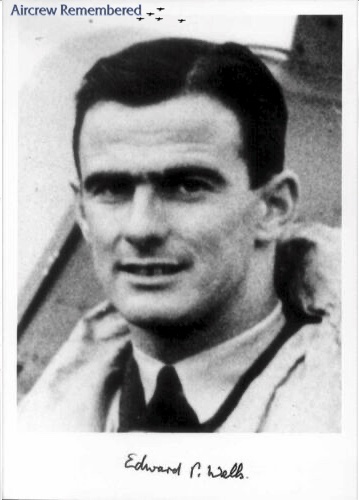 |
||
| 12 | Unwin | George Cecil 'Grumpy' | Flt Sgt | 46298 | RAF | British | 19Sqn 613Sqn  608Sqn  | DSO DFM & Bar | Spitfire | 14 | Survived war | 28 June 2006 Age 93 | One of the first pilots to fly the Spitfire I in 1938. Shot down 14 enemy aircraft during the War. He later became a Wing Commander. His dog's name is 'Flash'. An exceptional pilot. Called 'Grumpy' because he complained at the noise Douglas Bader made adjusting his tin legs. Retired as Wg Cdr in 1961. Born in Bolton upon Dearne, near Barnsley, Yorkshire England on 18 January 1913. Enlisted in RAF in 1929 as an administrative apprentice and, in 1935, was selected for pilot training. Posted to 19 Sqd as a sergeant pilot. 19 Sqd was the first unit to receive the Supermarine Spitfire in 1938, and Unwin was one of the first to fly the machine (K9792) on 16 August 1938. Carried out intensive trials in the type, flying 15 different Spitfires. During these trials, on 9 March 1939, Unwin deliberately crashed a Spitfire (K9797) following an engine failure to avoid a children's playground at Acton, Suffolk. His first combat experience came during the final phase of the French Campaign during the Battle of Dunkirk. During a nine-day period of patrols between 26 May and 4 June he claimed three kills and a probable during Operation Dynamo. Unwin described his first combat as stage fright: 'I could see this aircraft diving down in an arc towards me, with what looked sparks lighting up his wings – I then realised he was shooting at me, all I could was sit there in the cockpit and watch him. I was so fascinated! I was shaken from this stupor when two shells hit my aircraft behind the cockpit and I took evasive action. I survived this moment of stage fright and never hesitated again.' In July 1941 he was commissioned and then served with 16 EFTS and 2 CIS until October 1943. In April 1944 he began flying DeHavilland Mosquito fighter-bombers with 613 Sqd Second Tactical Air Force (2TAF) until October 1944. He then served at the Central Gunnery School at RAF Catfoss, and subsequently RAF Leconfield until January 1946, when he became Chief Instructor at 608 Squadron RAuxAF.Unwin remained in the RAF after the war and transitioned to Bristol Brigand aircraft in 1948. He flew this type during the Malaya conflict in 1952 and was awarded the DSO for his efforts. He retired from the RAF in 1961 as a wing commander. | 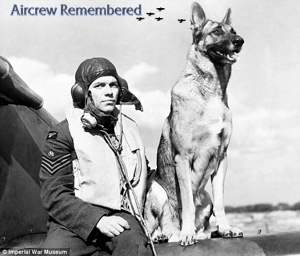  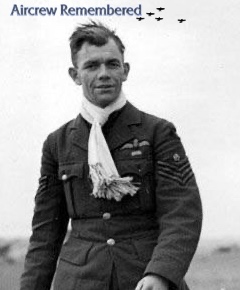 Fowlmere 1940 |
|
| 13 | Tuck | Robert Stanford 'Bob' | Flt Lt | 37306 | British | 92Sqn 257Sqn (CO)  | DSO DFC & 2 BarsDFC AFC  | Spitfire Hurricane | 29 | Died | 1987-05-05 | Tuck led his first combat patrol on 23 May 1940, over Dunkirk, claiming three German fighters shot down. The following day he shot down two German bombers and as aerial fighting intensified over the next two weeks his score rapidly mounted. DFC 11 June 1940 and received it from King George VI at RAF Hornchurch on 28 June. His combat successes continued into July and August as the Battle of Britain gathered pace, although he himself was forced to bail out on 18 August. While attacking a formation of Junkers Ju 88s over Kent, he shot one down and damaged another. However, during the head on attack at Ju 88, when he overtook it, cannon shells hit his Spitfire and he was forced to bail out near Tunbridge Wells. He fell at Tucks Cottage, near Park Farm, Horsmonden. In another incident on 25 August Tuck's Spitfire was badly damaged during combat with a Dornier Do 17 bomber, which he destroyed 15 miles off the coast. His aircraft had a dead engine, but he glided it back to dry land and made a forced landing. On 11 September, during the height of the Battle of Britain, Tuck was promoted to acting squadron leader and posted to command the Hawker Hurricane-equipped 257 Squadron RAF, based at RAF Coltishall. He led his squadron into combat through September and continued to claim further victories. His last two official victories of the Battle were on 28 October, where he claimed two 'probable' Bf 109s. He received a Bar to his DFC on 25 October. A victory on 23 September 1940, is believed by one source to be the future German ace Hans-Joachim Marseille. Flying Bf 109 E-7, Werknummer (W.Nr) 5094, Marseille was pursued to the Cap Gris Nez area near Calais, France, and forced to take to his parachute. He was later rescued by a Heinkel He 59 float plane. Tuck was credited with the destruction of W.Nr. 5094, whose pilot, Marseille, was the only recorded German airmen rescued in the location on that date. Tuck's official claim was for a Bf 109 destroyed off Griz Nez at 09:45—the only pilot to submit a claim in that location. Another states that Pilot Officer George Bennions from No. 41 Squadron RAF dispatched Marseille. This same source credits Tuck with a victory over Oberleutnant Walter Radlick of III. Gruppe of Jagdgeschwader 53.Flew with 92 Sqd Spitfires and 257 Sqd Hurricanes in Battle. Shot down 10 during the Battle. On patrol 18 August 1940 with 92 Sqd. Baled out safely after combat with a Ju 88, at 14:15hrs. Spitfire I (N3040) crashed near Horsmonden, Kent. On 25 August 1940 wounded in the leg when he force landed Spitfire I (N3268) after combat with a Do 215 over St. Gowans Head, Pembroke, at 18:20hrs. 21 June 1941 with 257 Squadron, flying Hurricane II (Z3152) shot down by a Bf 109. Rescued from the North Sea by a coal barge. DSO DFC. Died Age 70  |   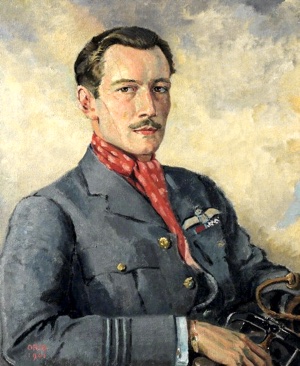 Portrait by Cuthbert Orde |
||
| 14 | Thompson | Anthony Robert Fletcher 'Tommy' | Fg Off | 84965 | RAFVR | British | 85Sqn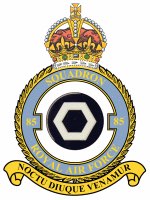 249Sqn 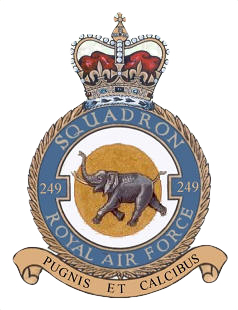 1435 Flight  73Sqn  | DFC | Hurricane | 1.5 | Survived war | 9th March 2008 | Born 14 October 1920. Joined the RAFVR July 1939 as an Airman u/t Pilot. Called up 1 September 1939. Training at 15 EFTS and 5 FTS Sealand and arrived at 6 OTU on 10 September 1940. Converting to Hurricanes, joined 85 Sqd at Church Fenton on the 29 September and moved to 249 Sqd at North Weald on 17 October. Shared a Ju88 on 28 October and destroyed a Me109 on the 30th. In May 1941 249 went to Malta and flew off HMS Ark Royal in two groups on the 21st. On 5th August Thompson joined the Malta Night Fighting Unit, then being formed at Ta Kali. He damaged a BR20 at night on 11th November. The unit became 1435 (Night Fighter) Flight on 2nd December. Posted to 71 OTU at Gordon's Tree, Sudan on 3rd March 1942. Returned to operations on 1st October with 73 Sqd in the Western Desert. In mid-November he was appointed 'A' Flight Commander. At the end of December posted to Cairo and in February he went to 206 Group, as a test pilot. DFC 23 March 1943. 10 March 1944 Thompson seconded to BOAC and released from the RAF in Cairo on 26 January 1946 as a Flight Lieutenant. Following his move to 249 Sqd RAF at RAF North Weald on 17 October 1940, P/O Anthony RF "Tommy" Thompson opened his score with a Ju 99 shared on 28 October, followed by an Me 109 destroyed and another damaged 2 days later, a Ju 87 damaged on 7 November and a Do 17 on 21 November.  Depicting Nicolson VC in the action that he won the Victoria Cross August 1940. Cover also depicts Nicolson's Hurricane of 249 Squadron engaging a BF110. Cover depicts the Victoria Cross which was introduced as the premier award for gallantry available for all ranks during wartime for conspicuous bravery or devotion to the country in the presence of the enemy which covered all actions since the outbreak of the Crimean War. Nicolson was the only Victoria Cross holder of Fighter Command | 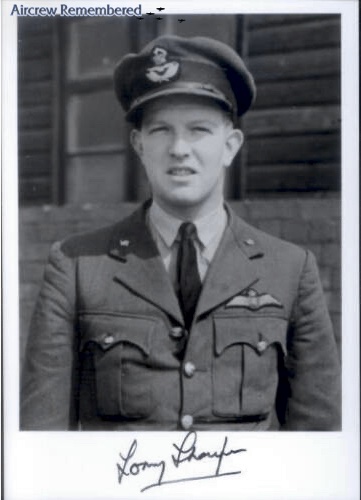 |
|
| 15 | Sykes | John Humphrey Charlesworth | Sub Lt (FAA) (later Lieutenant Commander) | FAA | British | 64Sqn | Spitfire | Survived war | 1st November 2007 Sherborne, Dorset England | Born on 20th May 1919. He was a Fleet Air Arm pilot attached to the RAF on 29 June 1940. He arrived at 5 OTU 6 days earlier. Crashed in Spitfire R6684 at the aerodrome 1 July, unhurt. Joined 64 Sqd ay Kenley on 8 July, served till 15 Septemeber 1950, w2hen posted to 807 Naval Air Sqd. To Dekhelia Egypt in November 1940, operations in Western desert. Moved to 806 NAS in Ceylon. Took part in Madagascar landings in HMS Indomitable. Air Gunnery Officer in Coimbatore India in 1944, at RNAS Nowra in 1948, at RAN Carrier School at HMS Albatross in 1949, at Yeovilton in 1952 and finally at HMS Centaur. Retired at Lt Commander in July 1958 |    |
||||
| 16 | Summers | Richard Gordon Battensby | Sgt | 49629 | RAF | British | 242Sqn 219Sqn  48Sqn  109Sqn  | OBE Order St. James 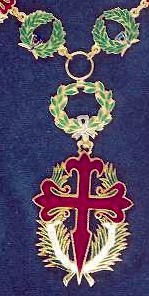 AFM  | Blenheim | Survived war | 7th May 2017 | Born 18 October 1921 in Beverley, East Yorkshire England. Educated at Ermysteds Grammar School at Skipton. Joined the RAF in April 1939 as a direct-entry Airman u/t Observer. 26 June to the Bristol Flying School, Yatesbury for basic navigation training. To B&GS Warmwell on 30th September and then completed his training with an astro-navigation course at St. Athan in November. 4 December 1939 posted to Church Fenton to join 242 Sqd on Blenheims. To 219 Sqd at Catterick on 16 April 1940. 28 September to Ferry Pool and Defence Flight Takoradi, in West Africa. In early July 1941 Summers aircraft made a wheels-up forced-landing on a beach in Liberia. To escape internment he walked 48 miles in bare feet before putting out to sea and being picked up by a British merchantman on the 5th. For this incident, Summers was awarded the AFM 1st January 1942. Commissioned in May 1942, posted back to the UK as Bombing Leader on Hudsons at No. 1 (Coastal) OTU Silloth on 12th October. To 48 Sqd at Gibraltar on 22 May 1943 as Bombing Leader. Back in UK on 1 March 1944 became Bombing Leader at No. 1 APC Aldergrove. Specialist Armament Course on 19 April 1944 at 2 School of Technical Training Cosford and later at the Empire Air Armament School at Manby. Appointed Armament Staff Officer at HQ 15 Group Liverpool on 17th November 1944 and he moved to RAF Lossiemouth on 7th August 1945 as Station Armament Officer. Postwar RAF, in October 1946 Summers was posted to the staff of ACAS (Training) at the Air Ministry as an Acting Squadron Leader. From August 1953 until January 1956 Summers was Deputy Station Commander at RAF East Leigh, Kenya during the Mau-Mau Emergency. He was made an OBE 6 March 1956 for 'gallant and distinguished services in Kenya'. Back in the UK, Summers returned to flying and commanded 109 Squadron at Binbrook. In December 1956 he was promoted to Acting Wing Commander and took command of No. 2 Wing RAF Cosford. In July 1959 he did a RAF Flying College Course at RAF Manby. In January/March 1960 Summers did a conversion course on Vulcans and was then appointed Wing Commander Operations at RAF Finningley, a Vulcan station. In December 1962 he was posted to the staff of SHAPE in Europe, for 'nuclear activities'. He returned to the UK in December 1966 and became a staff officer in the Department of the Chief of Defence Staff. Retired from the RAF on 18 October 1968 as a Wing Commander. | 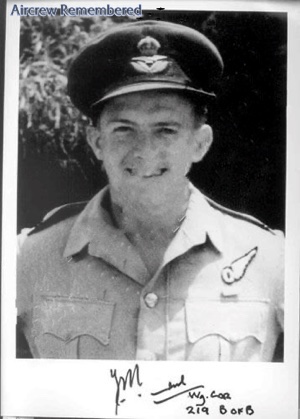 |
||
| 17 | Stephen | Harbourne Mackay 'Steve' | Plt Off | 78851 | RAFVR | British | 605Sqn 74Sqn  130Sqn  234Sqn (CO) | CBE DSO DFC & Bar | Spitfire | 9 | Survived war | 22nd August 2001 | Joined RAFVR in 1937. Joined 605 Sqd first but moved to 74 Sqd on 1 March 1939. Flew Spitfires with the Tigers during the Battle. Claimed a Bf 109 on 28 July 1940 and another on the 20 October 1940. Total score was 9 confirmed and 8 shared. ,br>Born in Elgin, Scotland 18 April 1916. Educated at Shrewsbury. Joined RAFVR April 1937 as an Airman u/t Pilot. Trained at 13 E&RFTS White Waltham. He began training at 11 Group Fighter Pool at St. Athan in early September 1939 and after converting to Hurricanes was posted to 605 Sqd at Tangmere on the 20 September 1939 as a Sergeant-Pilot. On 28th March 1940 he was flying in Yellow Section when a He111 was sighted, 605’s first encounter with the Luftwaffe. The section leader damaged the bomber and 43 Sqd later shot it down. Commissioned in April, posted to 74 Sqd at Hornchurch on the 7th and joined it on the 10th. Over Dunkirk on 24th May shared a Hs126 and a Do17, on the 26th shared another Hs126 and on the 27th destroyed a Me109 and shared a Do17. On 28th July Stephen damaged a Me109, on 11th August he destroyed a Me109, probably destroyed two Me109s and two Me110s and damaged a Me109 and a Me110, on the 13th he probably destroyed a Do17, on 11th September destroyed a Ju88 and damaged a Me109, on 1st October damaged a He111 and on the 5th shared a Do17. Me109 destroyed and probably another on 20th October, a Me109 destroyed on the 27th, three Ju87s destroyed on 14th November, a Me109 damaged on the 15th, two Me109s shared on the 17th and 30th, a Me109 probably destroyed on 2nd December and two Me109s destroyed and another shared on the 5th. DFC 27 August 1940. Bar to DFC 15th November 1940. DSO 24th December 1940. On 30th November 1940 Stephen and F/Lt. JC Mungo-Park shared the shooting down of the 600th German plane credited to RAF Biggin Hill. The combat occurred at 34,000 ft. which was at that time a record altitude for air combat.11th January 1941 posted away to 59 OTU Turnhouse as CFI, but this was altered to secondment to the RAE Farnborough. June 1941 posted to Portreath to form 130 Sqd. Took command of 234 Sqd at Warmwell in late July. On 12 August 1941 damaged a Ju88 and on 15 October shared a Me109. He led 234 until early 1942, when he was posted to the Far East. Baled out of an aircraft which caught fire at 4000 feet. He landed safely at Karapara, twelve miles NE of Barapore, near Calcutta. He was Wing Leader at Dum Dum and then Jessore, he later commanded 166 Fighter Wing, went to HQ 224 Group, Fighter Ops and then to Air Command South East Asia, as Ops A. Released from the RAF in 1945 as a Wing Commander. CBE in 1985. | 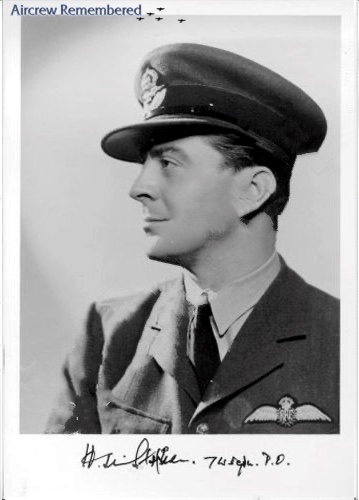 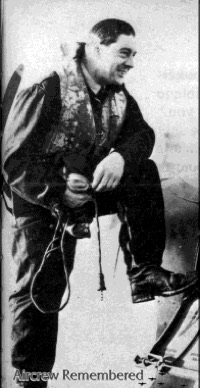 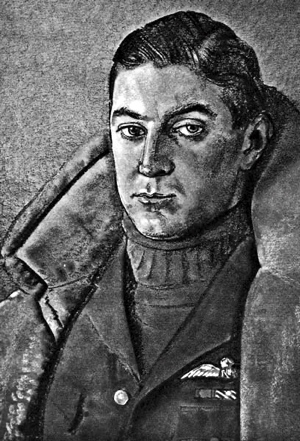 Portrait by Eric Kennington |
|
| 18 | Snell | Vivian Robert | Plt Off | 41485 | British | 88Sqn 98Sqn  103Sqn  151Sqn  501Sqn 308Sqn (Polish)  125Sqn (CO)  | Hurricane | 0.5 | Survived war | 14th August 2007 | Born in Swansea Wales in June 1918. Joined the RAF as a short service commission candidate and began his initial training course on 6th October 1938. 6 FTS Little Rissington for No. 11 Course, running from 2nd January to 5th August 1939. Joined 88 Sqd at Boscombe Down, direct from 6 FTS. Joined 98 Sqd and went with it to France on 16th April 1940 where it served as a pool, providing pilots and aircrew for other Fairey Battle squadrons. Later with 103 Sqd on Fairey Battles. Volunteered for Fighter Command in August and on 4th September he joined 151 Sqd at Digby. To 501 Sqd at Kenley on 26 September. Shared a Me109 on 25th October but was then himself shot down over Cranbrook in Hurricane N2438 at 15:15hrs on the 25th of October 1940. Not injured. On 11th December 1940 Snell joined 308 Sqd at Baginton. No further details until he was given command of 125 Sqd at Church Fenton from October 1945 until it was disbanded there on 20th November 1945. Released from the RAF in 1946 as a Wing Commander. Signed by Ken Wilkinson (616 Sqd), Vivian Snell (501 Sqd), Ken Mackenzie (501 Sqd), Les Harvey (54 Sqd)  Drawing by Nicolas Trudgian...Depicting the very likeable Basil 'Stampme' Stapleton scoring one of his many victories during the Battle of Britain.. 24 RAF Battle of Britain Fighter Pilots : Basil G ' Stampme ' Stapleton , Albert Gregory , William Walker , Tony Iveson , J.R. Tombs , Tom Dalton-Morgan , Vivian Snell , Iain Hutchinson , Ken Wilkinson , Bill Green , John Milne , Peter Brown , Tom Ford , Billy Drake , Terence Kane , Geoffrey Wellum , Ken Lusty , J.G. Millard , John Keatings , Tony Pickering , Ken ' Mac ' Mackenzie , Terry Clark , Bob Innes and Herbert Edward Green. | 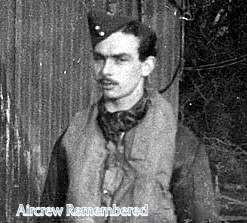 |
|||
| 19 | Smith | Arthur Joseph | Plt Off | 42657 | British | 74Sqn| Spitfire | WIFA. Survived war | 22nd December 2004 | Born 8 November 1920 in New Barnet England. His father was 'Joey' Smith, British and European Lightweight Boxing Champion. Educated at Denmead School, Woking and King Edward VI Grammar School, Guildford. RAF on a short service commission on the 15 June 1939. Posted to 6 OTU Sutton Bridge on 28 April 1940 for Hurricane conversion. To RAF Uxbridge on 15 May to await a posting to France. In France his train was bombed by Stukas and he was evacuated by ship to UK. 7 OTU Hawarden for Spitfire conversion. Joined 74 Sqd at Coltishall on 30 September 1940. At the end of October posted to ferrying duties for a few months and was then allocated to flight testing duties. On 9th April 1942 he had just taken off from a Scottish airfield when his engine cut, almost certainly due to water contaminated fuel. He crashed into the trees that bordered the airfield. Smith was taken to hospital, so badly injured that his family was sent for. He endured months of operations, resulting in him losing two inches in height due to the removal of leg bone. Ground duties for the rest of his service and was released in 1946 as a Flight Lieutenant. | 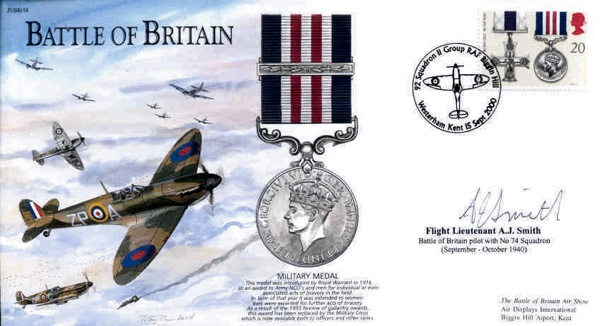 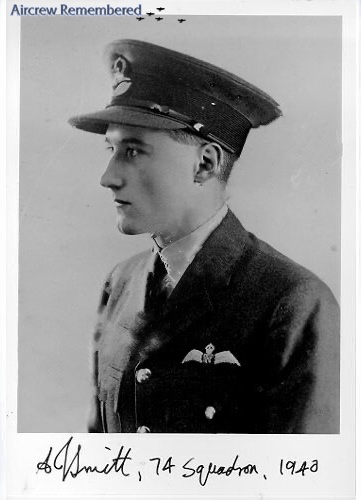 | |||||
| 20 | Skinner | Wilfred Malcom | Sgt (later P/O) | 68722 | RAFVR | British | 74Sqn | DFC DFM | Spitfire Vb W3208 ZP-U | 8 | PoW. Survived war | June 2003 | Archive report on the later loss
Joined 74 Sqd 10 June 1939 from No 5 E & R.F.T.S. at Hanworth. Scored over 8 victories during the Battle of Britain. Baled out of Spitfire I (X4022) after a collision while on patrol on 30 August 1940. Unhurt. Promoted to Pilot Officer and awarded DFC. At the time he was shot down and taken POW in July 1941 he was 74 Squadron's longest serving member. Made a PoW on the 6 July 1941 when shot down over France in Spitfire V (W3208). |
|
|
| 21 | Sinclair | Gordon Leonard | Fg Off | 39644 | British | 19Sqn 310Sqn Czechoslovakia  | OBE DFC | Hurricane | Survived war | 26th June 2005 | In the confused air duels of 26 May 1940, in which 19 Sqd RAF lost 5 pilots including S/L Geoffrey D Stephenson, F/O Gordon L Sinclair destroyed an Me 109 over Dunkirk, and another unconfirmed on a successive sortie. By the end of the evacuation, the 23-year-old pilot was listed among the first Spitfire aces, but felt exhausted, not returning to flying duties until 3 July, with a DFC awarded on 25 June. Baled out safely 9 September 1940 at 17:35hrs. Hurricane I (R4084) collided with Hurricane I (P3888) flown by J.F.Boulton whilst in combat over Croydon. His aircraft crashed at Purley Way, Wallington in Surrey. Baled out of Hurricane I (V6608) on 27 September 1940 after combat over Thanet with a Bf 109 at 12:20hrs. Unhurt.  Pencil drawing by Steve Teasdale of Brian Lane has been signed by 3 Battle of Britain Spitfire pilots from 19 Squadron. The signatures are : Gordon Sinclair, James Coward and David Cox. This image has become synonymous with the tired state of our brave pilots as they battled in the skies over England in 1940. | 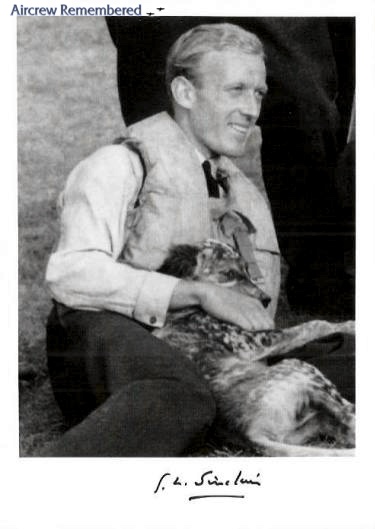 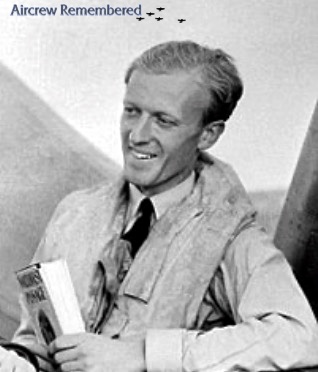 |
|||
| 22 | Sellers | Raymond Frederick | Sgt (later Flt Lt) | 111224 | RAFVR | British | 111Sqn 46Sqn  | AFC | Hurricane | 0.5 | Survived war | 16th May 2010. | Born London 9 October 1919. Joined RAFVR in August 1939 as an Airman u/t Pilot. To 3 ITW Hastings on 18 September, to 6 EFTS Sywell 26 November and then to 8 FTS Montrose on 9 April 1940. Posted to 6 OTU Sutton Bridge. Converted to Hurricanes joined 111 Squadron at Croydon on 17th August. Following combat over Essex on the 26 August, crashed near Brightwell Church, Martlesham Heath in Hurricane R4096. Hospital with slight injuries and shock. On 15 September 1940 joined 46 Sqd at Stapleford and claimed a share in the destruction of a Me110 on 27 September. Posted to 2 CFS Cranwell on 13 January 1941 for an instructors course. Then to 5 EFTS Meir on 23 March 1941. Instructing for the rest of the war. Posted to Church Lawford and served with three different units there; with 2 CFS from 12th September 1941 to 28th June 1942, with No. 1 FIS from 5th July to 26th October 1942 and with 18(P) AFU from 27th October to 6th December 1942. Sellers then went to 3 FIS, serving with it from 7th December 1942 until 15th July 1944. Commissioned in October 1942 AFC 8 June 1944). 7 FIS Upavon from 15th July 1944 to 9th December 1945. Released from the RAF on the 10th December as a Flight Lieutenant. Joined 111 Sqd 17 August 1940 with just 34 hrs logged on Hurricanes. He amassed 122 flying hours during the Battle of Britain. Shot down 26 August 1940 during combat with a couple of Bf 110s over Essex. Transferred to 46 Sqd at Stapelford Tawney (satellite for North Weald ) on 18 September after recovering in hospital. That day the Squadron lost Sgt.G.W.Jeffries. | 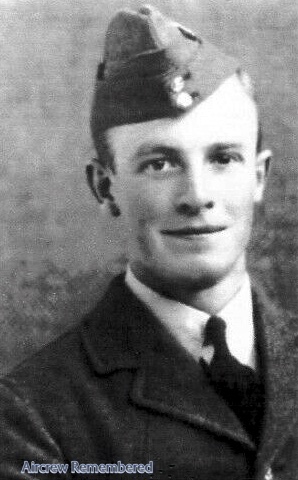  |
|
| 23 | Seabourne | Eric William | Sgt (later Sqd Ldr) | 105162 | RAF AAF | British | 238Sqn | DFC | Hurricane | 3.5 | KIA | Survived war | 21st March 2005 | Born 26th August 1919. Joined 601 Squadron Auxiliary Air Force June 1935 as an Aircrafthand/Air Gunner. In 1938 applied to RAFVR for pilot training. August 1938 to 15 E&RFTS Redhill, training on DH60s, Magisters, Harts and Audaxes. Posted to 9 FTS Hullavington in December 1939 to repeat his flying training course. Posted direct from 9 FTS to 151 Sqd at Martlesham Heath in May 1940. With no experience in Hurricanes he did not fly with the squadron. To 238 Sqd at Tangmere in June. After 3 hours on Masters went solo on the Hurricane. After 7 hours he was declared operational, without even having fired the guns. On 13th July shared a Me110 and damaged two more in his first encounter with the Luftwaffe. 8th August got a Me109 and on the 13th two more. He was shot down himself in Hurricane I P3764, engine seized up after a cannon shell in radiator. Then attacked by three Me109's and set on fire. Tried to bale out but his hood jammed, then the aircraft turned on its back and he fell out, taking the hood with him. After a delayed drop of 16,000 feet he opened his parachute, blew up his Mae West and went into the sea about seven miles south of the Isle of Wight. Picked up by the destroyer HMS Bulldog and taken to the Royal Naval Hospital at Haslar. After a week, moved to Park Prewitt Hospital at Basingstoke, where he remained for seven months undergoing plastic surgery by Harold Gillies. (Some reports he was shot down in flames 13 August 1940 in Hurricane I (P3764) by a Bf 109 at 07:30hrs and body was recovered from the sea. This report of his death was exaggerated!) In May 1941 posted to 2 Delivery Flight at Colerne. Commissioned in August and in October joined 276 (ASR) Squadron as a Flight Commander. DFC 23rd June 1942. December 1942 was given command of 275 (ASR) Squadron at RAF Valley and led it until February 1945, when it was disbanded. From then to June 1945 he was at HQ 10 Group as Ops 1. Seabourne stayed in the RAF postwar and retired on 2nd December 1960 as a Squadron Leader. |  |
| 24 | Saunders | Cecil Henry 'Fishy' | Plt Off | 42893 | British | 92Sqn 74Sqn 145Sqn  154Sqn (CO)  145Sqn (CO) | Spitfire | 5.5 | WIA | Survived war | 1st September 1992 | Wounded 9 September 1940 at 17:30hrs. Crash landed Spitfire I (L1077) near Rye after attacked by Bf 109. Born 7 July 1911 in Forest Hill, London England. Joined the RAF, initial training at the Civil Training School at Derby on 24 August 1939. Then to 14 FTS Kinloss for No. 3 Course to 20th April 1940. Joined 92 Sqd at Croydon on 20 April 1940, direct from 14 FTS. Probable He111 and shared another on 4 July. On 11 July a probable Ju88. 9 September combat over Biggin Hill, crash-landed at Midley, near Rye, in Spitfire L1077. RAMC Hospital at Brookland, with shrapnel wounds in the leg. 11 October rejoined 92 Sqd. 26 October damaged Me109, on the 29th shared a Me110 and on 1st November he shot down a Ju87 and damaged a Me110. In this action his Spitfire, X4555, was damaged and he made a crash-landing three miles east of Eastchurch, unhurt. On 1st December destroyed a Me109 and on 5th February 1941 shared a Ju87. May 1941 posted to 74 Sqd at Gravesend as a Flight Commander. 27 June he got a probable Me109. Squadron went to the Middle East in April 1942. Joined 145 Sqd in the Western Desert in late July 1942 as a Flight Commander. On 3rd August he probably destroyed a Me109, on 11th September destroyed a Mc202, on 22nd October damaged a Me109 and on the 25th claimed another Me109 destroyed. Left 145 in November 1942. DFC 4th December 1942). Posted to 71 OTU Port Sudan, which later moved up to Abu Sueir, Egypt. For the invasion of Sicily on 10th July 1943 Saunders was on a Fighter Direction ship. He took command of 154 Sqd at Lentini East in August. The squadron moved on to Italy and in February 1944 went to Corsica, to cover the American invasion of Southern France. Saunders commanded the squadron until October 1944. He also commanded 145 Squadron in July/August 1945. Retired from the RAF on 5 May 1958 as a Wing Commander.  CH Saunders: TEJ Ream: Hugh Bowen-Morris: RH Fokes examining wreckage of Ju87 when Stuka J9 + BK of 2./StG1 was shot down just outside Manston airfield on 5th February 1941. Lt. E Schimmelpfennig and OberGf. H Kaden were killed. (see Kracker Luftwaffe Archive on this site)  Signed By: Wg Cdr Cecil Henry Saunders 92 Sqd: John Booth 600 & 23 Sqd Blenheim Air Gunner: Avis Hearn awarded M M for Bravery during Battle of Britain whilst under Stuka attack on Poling Radar Station Aug 1940: John Keatings 219 Sqd Air Gunner: Peter Ayerst confirmed victories in the Battle of Britain yet not eligible for the Battle of Britain Clasp! Alan W Gear 32 Sqd Hurricane pilot . |   |
||
| 25 | Sanders | James Gilbert 'Sandy' | Flt Lt | 37510 | British | 111Sqn 615Sqn  253Sqn | DFC | Hurricane | 16 | Survived war | August 2002. | Wing Commander James Sanders DFC was the third RAF pilot to fly the Hurricane while with 111 Sqd, the first RAF unit to get the Hawker Hurricane. By the end of May 1940 he had over 1,000 hours on Hurricanes. A gifted pilot he amassed 16 victories and gained the DFC during the Battle of France. Born in Richmond, Surrey England 19 June 1914. Educated in Genoa, Italy until the age of 19. Joined the RAF on a short service commission, beginning his training on 25th November 1935. Posted to 10 FTS Ternhill on 1st February 1936 and after completing his training joined 111 Squadron on 10th August. 4 October 1939 joined 615 Sqd at Croydon as 'B' Flight Commander. On 15 November led his flight of Gladiators to Merville France in company with those of 607 Sqd. On 29 December 1939 during a weather test chased He 111 up to 23,000 feet and used up all his ammunition, but lost it in cloud. Hit by return fire, he crash-landed near Valenciennes, badly concussed. On 17 May 1940 destroyed a Ju88 of 7/LG1 near Lille, one of three enemy aircraft he claimed whilst in France. However again return fire caused a forced-landing. Returned to Kenley on the 20 May. 'G' Flight Commander on 23rd May with up of six Gladiators. Attached to 604 Squadron at Manston for operations. DFC 4th June 1940. Destroyed a Me110 and damaged another on 22nd June in Hurricane P2487. Probable Me109 on the 30 June. Damaged two He111s on 16 August, destroyed a He111 and a Ju88 and shared another Ju88 on the 18, shot down a Ju88 and damaged a He111 during the night of 24th/25th August. During the Battle of Britain he refused to leave 11 Group when 615 Sqd was rested, so he borrowed a Hurricane from 253 Sqd, flew three night sorties with it, on 9th, 13th and 25th September. In the early hours of the 25th he destroyed a He111. The attachment to 253 ceased on 28th September and Sanders was then attached to 66 Squadron at Gravesend, to help form 421 Flight. In 421's ORB he is listed as one of 421's original pilots. Specifically asked to lead a special Fighter Interception Unit. After a few days he was attached to the Fighter Interception Unit. On 14th October 1940 Sanders was given command of 422 Flight, which was attached to the FIU at Shoreham. The Flight formed the nucleus of 96 Sqd on its formation at Cranage on 18th December 1940. Sanders was made a Flight Commander in the new squadron. In January 1941 moved to 255 Squadron at Kirton-in-Lindsey in February. During the nights of 11th and 13th March probably destroyed He111s and on 7th April he damaged a Ju88. On 23rd June 1941 he was posted away to 60 OTU East Fortune and in September he became Squadron Leader Flying there. June 1942 he was made Wing Commander Flying at 53 OTU Llandow and later at 61 OTU Rednal. Later Station Commander at Hunsdon, Zeals and Hutton Cranswick.  RAF Kenley being attacked on 18 August 1940 by Dornier Do 17 bombers. 'Sandy' Sanders DFC about to give chase in Hawker Hurricane KW-R while in the background Supermarine Spitfires of 64 Sqd engage Messerschmidt Bf 109s. |   |
||
| 26 | Russell | Anthony Gerald | Sgt | 120491 | RAFVR | British | 43Sqn 145Sqn | Hurricane | Survived war | April 2010 | Born 18 September 1920 in Coulsdon, Surrey England. Joined the Royal Navy in 1938. Under age and discharged. Joined RAFVR in February 1939 as an Airman u/t Pilot. 5 OTU Aston Down on 1 September 1940. Converting to Hurricanes, joined 43 Sqd, with Sergeants Stoodley and Toogood, at Usworth on 28 September 1940. Stoodley died in a night-flying accident on 24 October and Toogood died on the 27, probably through oxygen failure. Russell sent on leave by CO. 10 November posted to Tangmere to join 145 Sqd. Commissioned in April 1942. No further details till released from the RAF in 1946 as a Flight Lieutenant. Signed by Pete Brothers, John Ellacombe, Anthony Russell, Derek Yapp | ||||
| 27 | Rose | Jack | Fg Off | 41472 | British | 3Sqn 32Sqn 232Sqn | CMG MBE DFC | Hurricane | 3 | Died | Born in London on 1917-11-18, attended Shooters Hill School, University at UCL (studying Science). Joined the RAF in 1938. Flying Officer/ Wing Commander. From Biggin Hill sent to France. Shot down 3 enemy aircraft in May 1940. He was shot down in Hurricane V6547 at 1900 hrs. on August 25 1940 by a Bf109 over the Channel and rescued. DFC 1942-10-09. Commanded 113 Sqd in Burma from November 1944. MBE and CGM in 1946. His DFC citation says 'He has been on operational flying since September 1939. During May 1940 whilst serving with fighters over France, he destroyed three enemy aircraft. Posted to his present unit, he has led squadrons in 15 sweeps over France. He has displayed courage and devotion to duty and rendered valuable assistance to allied wing commanders'. |  |
|||
| 28 | Rose | Stuart Nigel 'Rosebud' | Plt Off | 81920 | British | 602Sqn | MiD Air Efficiency | Spitfire | 2 | 2017 | Born in 1918. Felsted School in Essex from 1932 to 1935. Joined RAFVR at Southampton in December 1938. Logged 87 flying hours before being called up at the outbreak of war. Training completed on 17 June 1940. Commissioned on the 18th and he joined 602 Sqd flying Spitfires from Drem on the 20th. Claimed a Bf 110 destroyed on 25 August and on 7 September he shared a Bf 110. Wounded on the 11th September. Sick until 6 October 1940. Probably destroyed a Bf 109 on the 29th and on 6 November he shared a Ju 88. Promoted to Flying Officer in June 1941, posted to 54 Sqd in September. Instructor and later served in the Middle East. He was released from the RAF in February 1946, as a Squadron Leader. |    |
|||
| 29 | Robinson | Denis Norman | Sgt | 60515 | RAFVR | British | 152Sqn | Spitfire | 5 | Survived war | 28th July 2015 | Crashed Spitfire I (R6811) at Bestwell after combat with Bf 109s off Swanage 8 August 1940 at16:15hrs. The aircraft burned up but he escaped injury. Born 24 June 1918 at Christchurch, Dorset England. Educated at the Stationers Company School at Hornsey, London. Joined RAFVR in March 1938 as an Airman u/t Pilot. Training at 21 E&RFTS Stapleford, 26 E&RFTS Oxford and 22 E&RFTS Cambridge. Posted to 152 Sqd at Acklington on 21 June 1940. He destroyed a Me109 on 25 July and destroyed another on 5th August. 15th August 1940 Me109 destroyed, on the 17 August a Ju87 and on 4 September a Ju88. On 26 September posted to CFS Upavon. 7 October instructing at 6 FTS Little Rissington. Commissioned in January 1941. On 17 November 1941 sent to instruct in Canada at 39 SFTS Swift Current then briefly at 35 SFTS North Battleford and finally at 32 OTU Patricia Bay until 19 June 1944 when he returned to the UK. Went to 109 OTU, Crosby on 27 August 1944 to convert to transport aircraft and on 1 March 1945 he was seconded to BOAC at Whitechurch. Released from the RAF in 1946, as a Flight Lieutenant. Joined BOAC, later British Caledonian and British Island Airways before retiring in 1978. Denis Robinson: A Spitfire Pilot's Story
|   |
||
| 30 | Rich | Peter Godfrey | Sgt | 939496 | RAF | British | 25Sqn | Blenheim | Survived war | Joined the RAF in October 1939 as an Aircrafthand. Volunteered for air crew duties. Posted to 25 Sqd as an air gunner in June 1940. He served throughout the Battle. When the squadron's Blenheims were replaced by Beaufighters he was posted with the other gunners to Bomber Command and served at OTUs at Kinloss and Whitby. August 1941 posted to join the newly formed 458 Sqd RAAF at Holme-on-Spalding Moor, operating Wellingtons. In early 1942 he was posted away from 458 when it left for the Middle East and sent on a gunnery instructors course. He then instructed at Dalcross near Inverness followed by postings to Castle Kennedy and later Bishops Court in Northern Ireland. He was released from the RAF in early 1946 as a Warrant Officer. He later settled in South Africa. Signed by Peter Rich, Noel Corry, Kenneth Lusty |  |
||||
| 31 | Quill | Jeffery Kindersley | FO | British | 65Sqn | OBE AFC | Spitfire | 0.5 | 1996-02-20 | Born 1913. Joined RAF 1931 on a short service commission. Test pilot for Supermarine. Joined 65 Sqd 5 August 1940 during the Battle to see how to improve the Spitfire in combat. Very active member of the Squadron. At around 13:30hrs on 18 August he helped Ernest Glaser to shoot down a He 111 flown by Rudolf Ahrens from I Gruppe of Kg 1. Left Squadron 24th August 1940 to return to Supermarine. Flew a captured Bf 109 and commented in his book ('Spitfire a Test Pilot's Story') that had he flown one sooner, he would not have had so much respect for them.  | 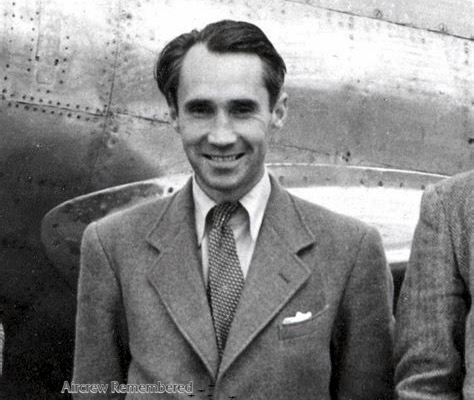 |
||||
| 32 | Pinfold | Herbert Moreton | Flt Lt | 37021 | RAF | British | 56Sqn (CO) | Hurricane | 1 | Survived war | 19th October 2009 | A colourful character! Born 5th February 1913. Joined the RAF September 1934. Posted to 5 FTS Sealand. To 6 Sqd at Ismailia, Egypt 5th September 1935. Posted to 64 Sqd at Martlesham Heath 19th March 1936. Joined 502 Sqd, Auxiliary Air Force at Aldergrove as Flying Instructor and Adjutant. To 3 FTS South Cerney 2nd July 1940 as an instructor followed by a refresher course at 5 OTU Aston Down on 11th August, converting to Hurricanes. Commanded 56 Sqd at North Weald 24th August 1940. He flew 14 operational sorties in the next five days, three in one day. The squadron only had nine operational pilots. On 1st September 56 was sent to Boscombe Down for replacements while remaining operational. On 30th September led the squadron to intercept a large raid heading for the aircraft factory at Yeovil. Destroyed a Do17 but hit by return fire, a glycol leak led to a forced landing at Warmwell. October 1940 Pinfold needed an annual medical examination at RAF Hospital, Halton. His Adjutant, F/O Hudson, drove him there for the appointment. This trip was planned to get a long overdue squadron mascot, a dog. Having imbibed a fair amount of beer, the pair returned with a monkey, immediately named 109. Visiting dignitaries were told the monkey was trained to sit behind a pilot, looking backwards, to tap the pilot on the shoulder when a German Me109 fighter appeared on his tail. The monkey never did get airborne and one day disappeared into the woods at dispersal. In mid-December 1940 the squadron returned to North Weald to take part in sweeps over France. Left the squadron on 17th January 1941 for instructor duties at 10 FTS Ternhill. From 2nd January to 16th July 1945 at RAF Staff College, then on the staff at Air HQ Kandy, Ceylon and later Singapore. Involved in examining a Soviet MiG-21 that had been flown to Sweden by a defecting Soviet pilot and handed over to the RAF. During a later thaw in the 'Cold War' Pinfold was able to meet his Russian counterparts, who asked for the return of the aircraft as a goodwill gesture. The RAF was happy to do this but by then the MiG had been dismantled with various areas sawn up to measure the qualities of the various metals. The components were loaded into a container and shipped to Russia, together with a bottle of whisky with a label tied to the neck saying 'Sorry !'. Signed envelope |  |
||
| 33 | Pickering | Tony Garforth 'Pick' | Sgt | 114471 | RAFVR | British | 32Sqn 501Sqn 601Sqn  131Sqn  | MiD Air Efficiency | Hurricane | 1 | Survived war | 24th March 2016 | Shot down 11 September 1940 at 15:45 in his Hurricane X (P5200) over Maidstone in Kent. No injuries. True, genuine and a modest hero to Britain. Died Aged 70 years. Born at Foxton, Leicestershire England 25 August 1920. Educated at Market Harborough Grammar School. April 1939 joined RAFVR at Coventry as an Airman u/t Pilo. Flying training at 9 E&RFTS Ansty. Called up on 1 September 1939. 3 ITW Hastings. To 15 EFTS Redhill on 23 November and then to 5 FTS Sealand on 27th April 1940. Posted from Sealand direct to 32 Sqd at Biggin Hill on 27 July and arrived there with two other newly-trained pilots, Sergeants RJK Gent and SAH Whitehouse. The CO, S/Ldr. J Worrall, concerned at their inexperience, sent them to 6 OTU on 3rd August. Having converted to Hurricanes they rejoined 32 later in August. Squadron was ordered north to Acklington for a rest. The CO, now S/Ldr. Crossley, said that Pickering, Gent and Whitehouse were not in need of a rest and they were posted to 501 Sqd at Gravesend on 27 August. In an action with Me109s over Caterham on 1st September Pickering was shot down in Hurricane P5200. He baled out, unhurt, and landed in the Guards Depot there, where he was initially suspected of being German. His aircraft crashed at Happy Valley, Old Coulsdon. 29 October a Me109 destroyed. Posted to 601 Sqd at Northolt on 20 December. On 14 February 1941 to 57 OTU Hawarden to be a test pilot at the MU there. Commissioned December 1941, Pickering became an instructor at 57 OTU on the 20th of the month. Returned to operations on 19 February 1943 joined 131 Sqd at Castletown as a Flight Commander. 7th January 1944 various appointments in the Exeter Sector, as Controller and Gunnery Officer among other things. On 11 February 1945 P posted to the Middle East and became a Squadron Commander at the B&GS, El Ballah. Returned to the UK in December 1945 and was released from the RAF later in the month as a Squadron Leader. |   To celebrate the 70th anniversary of the Battle of Britain, HRH The Prince of Wales, patron of the Battle of Britain Fighter Association, commissioned the series of drawings by alumni and faculty of the Royal Drawing School. Drawing by Susan Wilson |
|
| 34 | Patten | Hubert Paul Frederick | Fg Off | 40423 | RAFVR | British | 64Sqn 307Sqn Polish  604Sqn  276Sqn  108Sqn  1435 Flight 255Sqn  | Spitfire | 4 | Survived war | 24th December 2002 | Born 15 October 1917. Joined the RAF. Initial training at No. 1 E&RFTS Hatfield on 25 October 1937. Posted to 2 FTS Brize Norton on 9 January 1938. Joined 79 Sqd at Biggin Hill on 20 August 1938. In October 1938 to CFS Upavon for an instructors course but became ill and did not graduate. Joined 64 Sqd at Church Fenton on 1 April 1939. Over Dunkirk on 31 May 1940 Patten destroyed a Me110 and, flying from Kenley on 10 July, he destroyed another and damaged two. On 1st September 1940 he joined the newly-formed 307 Sqd (Polish) at Kirton-in-Lindsey, a night-fighter unit on Defiants, as 'B' Flight Commander with the rank of Acting Flight Lieutenant. May 1941 Patten moved to 604 Sqd at Middle Wallop. In the early hours of 5th July 1941, with F/Sgt. DG Moody as radar operator, he intercepted and shot down a He111 which crashed near Frome, Somerset. In October 1941 to Exminster as GCI Controller. Posted to 52 OTU Aston Down in February 1943 for a Spitfire refresher course. In May he joined 276 Sqd (Air Sea Rescue) at Harrowbeer as a supernumerary Squadron Leader. Posted to Air HQ Malta in June, where he served as Staff Officer Night Ops. December 1943 attached to 108 Sqd at Luqa, a Beaufighter night-fighter unit, then to HQ 242 Group Taranto later in the month, as a staff officer with Fighter Operations. In April and May 1944 Patten was serving with 1435 Squadron at Rimini as a supernumerary Squadron Leader, before joining 255 Sqd at Foggia, as a Flight Commander. During the night of 1st/2nd July 1944 he destroyed a Ju88. He returned to the UK in January 1945. Air Ministry until September and then on Mustangs at 61 OTU Keevil. Released from the RAF in October 1945. |  |
||
| 35 | Parrott | Peter Lawrence | Fg Off (later W/C) | 41054 | British | 145Sqn 605Sqn | DFC & Bar AFC | Hurricane | 9 | Survived war | 27th August 2003. | Born in Aylesbury on 28th June 1920. Lord Williams Grammar School. Joined the RAF on a short service commission and began his initial flying course at No. 1 E&RFTS Hatfield on 27th June 1938. Posted to 11 FTS Shawbury on 3rd September. No. 1 Armament Training School at Catfoss on 30th March 1939, towing targets. On 27th September 1939 Parrott went to No. 1 Air Armament School Manby as a staff pilot. Posted to 11 Group Pool at St. Athan on 28th December, converted to Hurricanes and then joined 2 Ferry Pilot Pool on 22nd January 1940. Joined 607 Sqd in France on 29th January 1940. Got 3 He111's destroyed, another two shared and one damaged on 10th May, and a He111 probably destroyed and another shared on the 11th. Jumped by Me109's near Louvain on the 13th and had his radio shot to pieces. Shared a probable Do17 on 16th May, posted him to 145 Sqd at Tangmere. On the 26th, over Dunkirk, he probably destroyed a He111 but was hit by return fire. Heading home, his engine seized as he crossed the coast in Hurricane I N2589 and he made a crash-landing in a field at Great Mongeham, near Deal. On 3rd July 1940 Parrott shared a probable He111, on the 15th shared a probable Do17, on the 18th shared a He111, on 8th August destroyed a Me109 and a Ju87 and on the 12th destroyed a Ju88. Posted to 605 Sqd at Croydon on 27th September. DFC. 1st November Parrott damaged a Me109. Acting as weaver on 1st December he was jumped by a Me109 and his Hurricane, Z2323, damaged. He dived to 3000 feet baled out over East Hoathly. He joined 501 Sqd at Martlesham Heath on 1st June. Posted overseas on 16th July 1943, Safi, Malta on 1st August. Joined 72 Sqd at Pachino, Sicily on the 10th as a supernumerary. Went to 111 Sqd, also at Pachino, as a Flight Commander. Destroyed a Mc202 on 4th September. Commanded 43 Squadron at Capodichino, Naples on 13th October 1943. On 26th November he shared in destroying a Ju88 and on 17th February 1944 he damaged a Me109. 6th March 1944 posted to the Middle East. Appointed OC Gunnery at 73 OTU Abu Sueir on 22nd May. Returned to Italy in early November 1944 and took command of 72 Sqd at Rimini on the 11th. HQ Desert Air Force, Italy on 15th February 1945. Bar to DFC. Group Training Inspector, Fighters and later Wing Commander Ops. He returned to the UK in June 1946. Training as a test pilot. Test-flew early versions of the Vampire and Meteor, as they were accepted into RAF service at Boscombe Down. AFC. Completed his service in the RAF on 10th July 1965 as a Wing Commander. |    |
||
| 36 | Parkin | Eric Gordon | Plt Off | 79734 | RAFVR | British | 501Sqn | Hurricane | Survived war | 23 July 2008 | Born 21 April 1917 in Barnsley, Yorkshire England. Joined RAFVR on 13th September 1938 as an Airman u/t Pilot. Flying training 8 E&RFTS Woodley. Full-time service on 3 September 1939 and sent to 4 ITW Bexhill in November. In February 1940 was posted to 8 FTS Montrose. To 6 OTU Sutton Bridge on the 27 May. Converted to Hurricanes, posted to France. Joined 501 Sqd. Returned to the UK June. Re-assembled at Croydon on the 21 June. In the late evening of 31 July 1940 the squadron took off from Hawkinge to return to Gravesend. Parkin's aircraft had a starting problem and he took off later, arriving at Gravesend in failing light. He undershot the runway and touched coils of barbed wire on the boundary. The Hurricane turned over and Parkin was injured. He was admitted to Gravesend Hospital, later transferred to Halton and did not rejoin 501 until 5th February 1941. He said after the war that he fell asleep due to exhaustion during the final approach to Gravesend. Posted away for an instructors course on 16th April 1941 and was instructing until the end of the war. Parkin was released from the RAF in 1946, joined the RAFVR in 1947 and then rejoined the RAF in December 1953. He retired on 21st April 1972 as a Flight Lieutenant. Cremated on 4th August 2008 at Oxford Crematorium. |    |
|||
| 37 | Palliser | George Charles Calder 'Titch' | Sgt | 64891 | British | 17Sqn 43Sqn 249Sqn 605Sqn | DFC Air Efficiency | Hurricane | 13 | Survived war | 24 September 2011 in Black Rock, Victoria, Australia | Came from 43 Sqd when he joined 249 Sqd at RAF North Weald on 14 September 1940. He had a narrow escape on 29 October. When he was taking off from the former airfield and came under attack by bombers, debris hit Hurricane Mk I GN-H, damaging the propeller. With the aircraft shaking violently, he managed to circle the airfield and land. Palliser claimed 8 victories during the Battle of Britain. Born in West Hartlepool England 11 January 1919. Educated at Brougham School and later attended a Technical School. Joined AFVR in 1939 as an airman under training as a pilot. Sergeant pilot at the outbreak of war. Posted to No. 3 ITW Hasting, moved to No. 11 EFTS Perth on 5 Dec 1939 and went to No. 6 Flying Training School at RAF Little Rissington in April 1940. Converted to Hurricanes at No. 6 OTU at RAF Sutton Bridge in July 1940. Joined 17 Sqd at RAF Debden on 3 August 1940 during the Battle of Britain. Moved to 43 Sqd at RAF Tangmere on 18 August 1940 and then 249 Sqd at RAF North Weald on 14 September 1940. During the Battle of Britain, claimed eight victories. Commissioned in April 1941 and embarked with 249 Sqd on HMS Furious on 10 May and sailed for Gibraltar. On arrival the squadron transferred to HMS Ark Royal. The squadron flew to Ta' Qali on 21 May 1941 to take part in the Siege of Malta. During that battle, he claimed a further five victories. In January 1942 posted to 605 Sqd as flight commander. DFC 30 January 1942. He left Malta on 26 February 1942 as one of the island's longest serving pilots. He was quoted as saying: 'But I wasn't there for medals. It was like a job. Fly, fly, shoot one down... start again the next day. I only said my prayers sometimes when I took off... when it was a tight battle... But that parachute on my back was like an angel by my side.' No. 25 Air School at Standerton, South Africa on 28 March 1942 to be an instructor at the school. Posted to No. 62 CFS, Bloemfontein on 17 July, to 2 EFTS Randfontein on 19 October and then to 4 EFTS Benoni on 2 September 1943. Admitted to Baragwanath Military Hospital in Johannesburg on 21 January 1944 and remained there until leaving for Great Britain on 24 May 1944. Instructed at No. 15 EFTS at RAF Kingstown from September 1944. He moved to No. 10 FTS at RAF Woodley on 19 September 1945, where he instructed until 16 March 1946. Instructor at the CFS at RAF South Cerney until October 1946, when he was posted as an instructor to No. 23 Flying School at Heany, Southern Rhodesia. In October 1947, retired from the RAF at the rank of flight lieutenant. |   |
||
| 38 | Page | Alan Geoffrey | Plt Off (later W/C) | 74709 | British | 56Sqn | OBE DSO DFC & Bar Order of Orange-Nassau (Holland)  | Hurricane | 15 | WIA | Died | 2000-08-07 | Cranwell RAF College before the war. Aimed to be an instructor but the shortage of trained fighter pilots at the outbreak of War changed that. At the start of the Battle of Britain he was a veteran at 20 with 3 months fighting experience. With 56 Sqd and destroyed 3 enemy aircraft during the Battle. Shot down in flames 12 August 1940, while attacking Do 17s. Baled out Hurricane I (P2970) 'Little Willie' over the Channel and was rescued, badly burned. DFC 30 July 1943. Later in 1943 Page rejoined an operational squadron and by July 1944 he was promoted to Wing Commander on the continent. In September he crashed during landing, smashing his face on the gun-sight and injuring his back. 29 December 1944 awarded the DSO.15 enemy aircraft destroyed. Lecture tour of the USA and when he returned in April once again went into hospital, this time to have a cannon splinter removed from his leg which had been there since August 1940! Then became a test pilot at Vickers-Armstrong. Passed away on 7 August 2000.  Signed envelope  Signed envelope: Christopher Foxley-Norris, Tom Gleave, Ginger Lacey, Geoffrey Page, Sandy Johnston, Mieczysław Sawicki |   |
|
| 39 | Norfolk | Norman Robert | Plt Off | 44929 | RAF | British | 72Sqn | DFC | Spitfire | 4 | Survived war | 13th March 2005. | Born 21st November 1912. RAF on 29th June 1936 as a trainee pilot. Serving with 72 Sqd at Leconfield by 15th October 1939. He was still with the squadron at the start of the Battle of Britain. Returned to Croydon with a severely damaged tail unit after combat with Me109’s off Dungeness on 1st September 1940. The next day, after damaging a Me110, he was shot down in combat over Herne Bay in Spitfire K9938, which crashed and burned out at Garrington Farm, near Bekesbourne emergency landing ground. Norfolk baled out, unhurt. On the 7th and 11th he destroyed Do17’s, on the 15th he probably destroyed a He111, on the 27th he destroyed a Do17 and probably another and on 25th October he damaged a Me110. Commissioned on 17th September 1940. DFC 7th January 1941, with at least four enemy aircraft destroyed. Crash landed Spitfire I (K9938) 2 September 1940 at 13:00hrs after combat over Herne Bay.  Combat Report 1 September 1940 |   |
|
| 40 | Nicholls | Douglas Benjamin Fletcher | Sgt | 114121 | RAFVR | British | 87Sqn 242Sqn 151Sqn 258Sqn  | DFC | Hurricane | Survived war | 6th December 2014. | Landed safely after Hurricane X (P5182) damaged in battle with Ju 88 over the North Sea at 07:30hrs on the 30 September 1940. Born near Swansea Wales 5 February 1919. Educated South Parade School and St James School, in Grimsby. Joined RAFVR in September 1938 as an Airman u/t Pilot. Elementary flying training at 6 EFTS Sywell. To 8 FTS Montrose for No. 19 Course from 6th May to 16th August 1940. 5 OTU Aston Down on the 17 August but moved to 7 OTU Hawarden 2 daysn later. Converting to Hurricanes, joined 85 Sqd at Castle Camps on 4 September 1940. To 242 Sqd at Coltishall on the 11 September and he finally joined 151 Sqd at Digby on 21 September. On 30 Septemeber shared a Ju88 and returned to Digby but Hurricane P5182 was severely damaged by return fire. August 1941 to 258 Sqd at Martlesham Heath. To Debden 3 October for overseas deployment. Squadron pilots went to Abbotsinch on the 30 October and two days later sailed in HMS Athene for Gibraltar, with Hurricanes with wing-detached on board. After arriving the aircraft were due to be unloaded and taken by HMS Ark Royal to Malta later. However the carrier was sunk returning to Gibraltar so other plans were made. The 258 pilots left on Christmas Eve 1941 on the Athene. They berthed at Takoradi on 1st January 1942, disembarked, and the Athene left, taking their Hurricanes with her. On the 3rd they flew on the ferry route to the Middle East in a DC3, arrived at Port Sudan, from where they sailed in HMS Indomitable on the 9th, with Hurricanes aboard. They flew off on the 28th and later in the morning arrived at Airfield P2 at Palembang, Sumatra. In the afternoon they went on to Seletar airfield, Singapore and flew their first operation on 31st January. On 10th February 1942 the three surviving Hurricanes of 258 were withdrawn to Palembang. Of the fifteen surviving pilots, six were required to remain behind to fly with a reformed 605 Sqd. One was nominated, two volunteered and the other three were selected by cutting cards. Nicholls was one of the nine evacuated from Java to Ceylon in the SS Kota Gede. 258 Sqd was reformed at Ratmalana on 1st March 1942. Nicholls rejoined it on 7th March. Commissioned in December 1941, DFC 19th May 1944. August 1944 to HQ 224 Group, Burma as Squadron Leader Tactics. Returned to the UK in October 1945 and was released from the RAF in March 1946 as a Squadron Leader. After spells in Uganda and Botswsana he returned to Grimsby in 1978 and for four years taught at a local school before retiring. On 11th November 2011 he was present when a plaque on which he was honoured was unveiled at St. James School. | 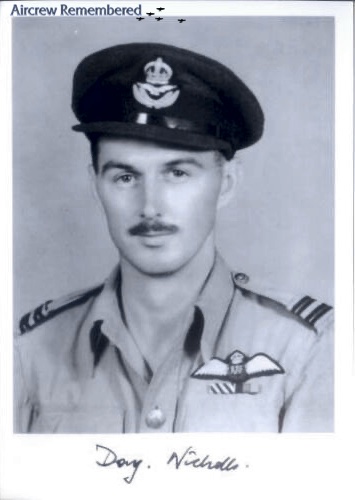 |
||
| 41 | Neil | Thomas Francis 'Ginger' | Plt Off (later W/C) | 47651 | RAFVR | British | 249Sqn 41Sqn (CO) | DFC & Bar AFC Air Efficiency Bronze Star (USA)  | Hurricane | 13 | 11 July 2018 Age 96 | Joined RAFVR on 17 October 1938 at age 18. Posted to No. 8 Flying Training School 1 December 1939. Posted 15 May 1940 to 249 Sqd RAF at RAF Church Fenton. Flew Hurricanes from RAF North Weald during the Battle of Britain alongside Tich Palliser. The enemy aircraft he destroyed with the squadron included six Messerschmitt Bf 109s, two Heinkel He 111s, a Messerschmitt Bf 110, a Junkers Ju 87, a Junkers Ju 88 and a Dornier Do 17. Flew 141 combat missions during the Battle of Britain. 7 November 1940 mid-air collision with another Hurricane and lost the rear section of his aircraft. Managed to bail out and survived with a minor leg injury. Asked in an interview how he survived so many missions virtually unscathed, he said that in addition to being very lucky and spending a lot of time ducking and weaving, it is important in aerial combat to have the sensitivity to know instinctively what is around you and he was lucky to have that ability. DFC on 8 October 1940 and a Bar 26 November 1940. He embarked with 249 Squadron on HMS Furious on 10 May 1941 and sailed for Gibraltar. On arrival the squadron transferred to Ark Royal. The squadron flew to Ta' Qali on 21 May to take part in the Battle of Malta and he shot down a Macchi C.200 fighter on 12 June 1941. On 26 December 1941 Neil left Malta and in 1942 he became tactics officer for No. 81 Group, then he served with No. 56 OTU and was officer commanding 41 Sqd. He then became liaison officer to the US 9th Army Air Force's 100th Fighter Wing. This posting led to the award of the Bronze Star Medal. He was awarded the AFC in the 1950s and retired from the RAF in 1964 at the rank of Wing Commander in 1964. Caterpillar Club badge, gold with ruby eyes, engraved to reverse 'P/O. T. F. Neil. DFC Pres. by Irving Co.', with original safety chain, extremely fine Thomas Francis 'Ginger' Neil was born on 14 July 1920 at Bootle, Merseyside, and educated at Eccles Grammar School. After taking his School Certificate in 1937 he took work at the District Bank in Gorton whilst training to be a pilot with the Royal Air Force Volunteer Reserve from 17 October 1938. Called up for full-time service at the outbreak of the Second World War, Neil was commissioned Pilot Officer and posted on 15 May 1940 to 249 Sqd based at Church Fenton and North Weald. Baling out over the Garden of England - Caterpillar Club Member Awarded the Distinguished Flying Cross on 8 October 1940, Neil faced a serious mishap on 7 November 1940 when he collided with the Hurricane flown by Wing Commander Francis Victor Beamish, DSO AFC losing the rear section of his aircraft. The exact circumstances were uniquely described by Neil in a television interview conducted in 2016: 'The aircraft became uncontrollable and this was at 18,000 feet… I think it was, and I didn't really get out of the aircraft until about 2,000 feet, so I spent a long time in the aeroplane trying to make sense of an aircraft that didn't have a tail and I eventually got out. I landed in the top of a tree at a place called Walberswick in Kent, and when I came round I was surrounded by four sets of feet, two belonging to ladies and two belonging to men, and they were discussing whether I was on their side or the other side. The two ladies thought I looked English and that kept me going so to speak. The two men thought I looked German and they wanted to hang me and, anyhow, two Army officers rushed up and prevented them from doing that… and that's the story how I continued to serve in the Air Force for twenty odd years.' (Interviewer) 'What happened to Beamish's aircraft? Did he land OK?' (Neil) 'Yes, yes, he was out and totally fearless.' (Interviewer) 'I hope he bought you a beer!' (Neil) 'Pardon?' (Interviewer) 'I hope he bought you a beer…' (Neil) 'No! He said he was sorry… He was a wonderful man, and they all thought I'd been killed and never seen again because I disappeared through cloud… until I turned up the same night.' Beamish made a forced landing near Leeds Castle and was awarded the D.F.C. the next day (London Gazette 8 November 1940, refers). Neil was awarded a Bar to his DFC on 26 November 1940 and later fought during the Battle of Malta, shooting down a Macchi C.200 fighter on 12 June 1941. Appointed Officer Commanding 41 Sqd, Neil later became liaison officer to 100 Fighter Wing, USAAF. and was awarded the Bronze Star Medal. Taking retirement from the RAF in 1964, Neil settled in Norfolk where he became a director in the shoe industry. In paying tribute to Neil, David Brocklehurst, MBE Chairman and Historian at the Battle of Britain Museum Trust said: 'We are greatly saddened by his death and our hearts go out to Tom's family - we have lost a true friend. He was the epitome of a Battle of Britain pilot. It was a great honour to have known him.' Tom recalls bailing out of his Hurricane. (original on YouTube) |  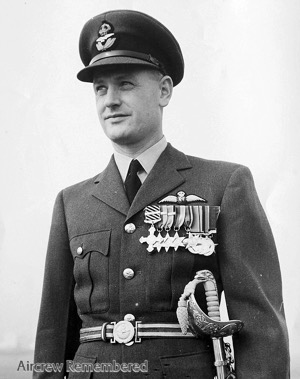 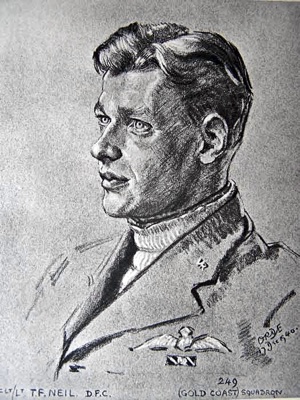  Caterpillar Club Pin |
||
| 42 | Naish | Kenneth Edward | Sgt | 45447 | British | 235Sqn 236Sqn  | DFC | Blenheim | Survived war | 18th November 2007. | Born 1913 Pontypridd Wales. Joined RAF in January 1936 as a direct-entry Airman u/t Pilot. Joined 235 Sqd in June 1940. On 24th August his Blenheim, Z5736, was attacked in error by Hurricanes of 1 Sqd (RCAF) Squadron over Thorney Island and badly damaged. He crashed on landing but he and his gunner, Sgt. H Owen, were unhurt. Here he paired-up with Sergeant Kenneth ‘Skipper’ Naish, a 1936 direct entrant himself and newly transferred from Thorney Island. The morning of the 24th August 1940 offered a gentle sunrise and relative calm over the aerodrome at Detling: ‘Despite the chaotic conditions and increasing threats, outside ground crew filled sandbags and played an impromptu game of cricket using the spade as a bat as someone tossed a cricket ball. Elsewhere on the station new panes of glass were being fitted. The smell of cut grass mingled with the stench of 100 percent high-octane fuel and oil, interspersed with the salty sea breeze’ (Coastal Dawn, Blenheims in Action, refers). At 15.40 p.m. Ventnor RDF reported a large enemy formation approaching the Isle of Wight and upon notification, controllers at 11 Group ordered Sqd Ldr Ernest McNab to scramble his fledgling Canadian pilots of 1 Sqd RCAF, some of whom had less than 20 hours of flying experience and only a limited period on aircraft recognition. At around the same time, three Blenheim fighters were scrambled from Detling to give protection over Portsmouth, Fighter Command being at full stretch. Chaos ensued. Rather than engage the enemy force of approximately fifty Ju. 88s of Lehrgeschwader 1, escorted by Bf 110s of a similar number, the British and Canadian pilots intercepted one another, the Canadians coming down from the 11 o’clock position and despatching Blenheim T1804 - piloted by David Woodger - into the Channel at Bracklesham Bay, near Chicester. This ‘friendly fire’ incident cast a long shadow over the two pairs of crew who managed to escape. Naish and Owen in Blenheim Z5736 managed to return to base, but both had been slightly injured and the aircraft damaged. In the late afternoon the body of an airman was found by a boat off West Wittering. It was Woodger’s gunner, Sergeant Daniel Wright: ‘The Gunner’s body was riddled with bullets. The limp body was wrapped in blankets and placed on a stretcher.’ The medical orderlies bowed their heads as the Adjutant, Flying Officer Charles Pinnock said: “I can’t give you a hand; You’re for the promised land, My comrade good and true.” Commissioned in February 1941, Naish was posted away from 235 in July. DFC 19th May 1944 as a Flight Lieutenant with 236 Sqd. April 1944 he had taken part in an attack on a convoy off the Dutch coast. His aircraft was hit by flak and one engine set alight but he pressed home his attack. Whilst putting out the flames, he was heavily engaged by ship and shore flak batteries. Naish got back to base and made a successful crash-landing. Released in 1945, as a Squadron Leader. He rejoined the RAF in 1946 and served for some years in the Fighter Control Branch.  |   |
|||
| 43 | Mowat | Robert Innes | Sgt | 974191 | British | 248Sqn 53Sqn  353Sqn  249Sqn | MBE | Blenheim | Survived war | 22nd October 2002 | Born Lybster, Caithness, Scotland 17 November 1915. Joined RAFVR on 8 December 1939 as an Airman u/t WOp/AG. Posted to 248 Sqd at Sumburgh on 9 October 1940. Joined 53 Sqd at Bircham Newton on 10 July 1941. 11 December 1941 to a Hudson ferrying unit for service in India. Joined 353 Sqd Dum Dum on 1 June 1942 and served in India and Burma until March 1944. Then to 294 Sqd, an Air Sea Rescue unit on Wellington and Walrus aircraft along the coast of North Africa, Egypt, Palestine and Cyprus. Back to the UK in February 1945, released from the RAF on 30 October 1945 as a Warrant Officer. MBE in 1998 for services to the Lhaidhay Croft Museum, Dunbeath. 39th Anniversary The Battle of Britain. Jeffrey Quill Test Pilot. Personally Signed by Robert I Mowat 248 Squadron Wireless Operator & Air Gunner Battle of Britain | ||||
| 44 | Millard | Jocelyn George Power 'Joce' | Plt Off | 83999 | British | 1Sqn 242Sqn 615Sqn | Air Efficiency Award | Hurricane | Survived war | 10th May 2010 | Born 23 February 1915. Educated St. Edmunds College near Ware, Hertfordshire from 1928 to 1931. Joined RAFVR in August 1937 as an Airman u/t Pilot whilst working for the de Havilland Aircraft Company. Week-end flying training at No. 1 E&RFTS Hatfield. Called up on 1st September 1939, he had completed his Service Flying Training course and had a total of 275 flying hours. October posted to 12 EFTS Prestwick for a flying instructors course. He instructed at 9 EFTS Ansty from April 1940, later moving to 12 FTS Grantham. 24 August he commissioned and posted to No. 1 School of Army Co-operation at Old Sarum. Volunteered for Fighter Command. 6 OTU Sutton Bridge on 4th September 1940, converted to Hurricanes joined 1 Sqd at Wittering on the 21 September. To 242 Sqd at Coltishall on 17 October and then to 615 Sqd at Northolt on 3 November. Probable Me109 on a sweep over France on 24 February 1941. March 1941 to CFS Upavon for an instructors course and in mid-April joined the staff at RAF College FTS Cranwell. He left for Canada in mid-July and began instructing at 35 SFTS there in September 1941. Canada until mid-May 1944, serving as Flying Instructor, Flight Commander, Examining Officer and Squadron Commander. Returned to the UK and went to Technical Training Command, for flying and administrative duties. Released from the RAF in 1947 as a Squadron Leader. Signed envelope |   |
|||
| 45 | McGlashan | Kenneth Butterworth | Plt Off | 42138 | British | 245Sqn 96Sqn 87Sqn 536Sqn  264Sqn  25Sqn (CO) | AFC | Hurricane | Survived war | 30th July 2005 Australia | Born in Bearsden, Dunbartonshire Scotland 28 August 1920. Educated at Glasgow Academy. Training at 11 E&RFTS Perth March 1939. To 9 FTS Hullavington on 2 June. Joined 245 Sqd at Leconfield on 6 November. Flew Drem to Hawkinge on 28 May 1940 for the Dunkirk evacuation. 31 May shot down by a Me109 near Dunkirk. He was slightly wounded and blinded by oil and glycol in his eyes. With his Hurricane in a dive he pulled out just in time, blacked out and recovered to find himself travelling very fast and low along a beach. Forced-landed and rescued by British soldiers. French colonial troops had thought he was German. Walked into Dunkirk and got on a Thames paddle steamer. Landed late at night at Margate and was taken by squadron transport back to Hawkinge. On 17 December 1940 posted to 96 Sqd at Cranage for night-fighting operations. 17 November 1941 to 60 OTU East Fortune as an instructor. On 20th July 1942 joined 87 Sqd at Charmy Down. He took part in ground-strafing operations during the Dieppe raid on 19 August. Posted to 536 Sqd at Predannack on 12 September 1942, a Turbinlite Havoc night fighter unit. 25 January 1943 joined 264 Sqd at Warmwell. 15 June 1944 to Cairo opening up of Middle East air routes. with BOAC. Returned to the UK in January 1946 and joined No. 1 Ferry Unit at Pershore. 54 OTU in June, remaining there until October 1948, when he was given command of 25 Sqd at West Malling. AFC 8 June 1950). Green Endorsement in his log book on 21 August 1950: took off in bad weather to lead another Mosquito into Manston, leading it down through cloud and enabling it to land safely. Retired from RAF on 29 August 1958 as a Squadron Leader. Emigrated with his family to Australia in 1964. |   |
|||
| 46 | Martel | Ludwik Alfred | Plt Off | 76812 | PAF | Polish | 54Sqn 603Sqn | Virtuti Militari Krzyz Walecznych (x3)  Srebrny Krzyż Zasługi  Medal Lotniczy (x3)  Wound Badge | Spitfire | 2 | Died | 2010-04-25 | Assigned to 54 Sqd RAF and then to 603 Sqd RAF. Served with 603 Sqd flying Spitfires from Hornchurch during the Battle. On October 25, 1940, six days before the end of the Battle of Britain, he was shot down in air combat. Despite the wounds, he managed to land his Spitfire. Half a year later, on March 19, 1941, he was transferred to 317 Sqd where he is the Commander of the Squadron. March 13, 1943 assigned with a group of Polish pilots to the Polish Fighting Team in North Africa, popularly known as Skalski's Circus which is part of RAF 145 Sqd. July 22, 1943 returns to 317 Sqd. The last assignment was 131 Polish Wing from October 14, 1946 until his release in January 1947. Archiwum Database  Commemorating the 80th Anniversary of the Polish Air Force in 1998. The cover artwork by Tony Theobald shows a Fokker EV in Polish markings in 1919 which scored the Polish Air Force's first victory which was against the hostile Russians, the PZL IIc of 2nd Lt W Gnys who scored the first and second victories over the Luftwaffe on 1 September 1939, a Hawker Hurricane of No 303 Squadron during the Battle of Britain and a Supermarine Spitfire IX in D-Day invasion markings and Polish markings. Underneath a Polish built MiG 29 is shown to mark the new independent Polish Air Force after years of Soviet rule. The cover bears Polish Air Force 1918 - 1998 logo and the insignia of the 121st squadron, No 303 Squadron, No 316 Squadron and 1st Fighter Regiment which corresponds to the aircraft on the artwork. The cover has been flown in Spitfire Mk IX MH434 which was painted in Polish markings at the time from Duxford and return. The cover bears 30p Guernsey stamp showing a Hurricane Wellington Spitfire Lysnader Blenheim and Sunderland aircraft cancelled with 80th Annniversary of the Polish Air Force 5 November 1998 postmark. This cover is hand signed by Flight Lieutenant Ludwik Martel |  |
|
| 47 | Maliński | Jan Leonard | Plt Off | P-1286 | PAF | Polish | 302Sqn Polish | Krzyz Walecznych (x4) Medal Lotniczy (x3) Wound Badge | Hurricane | 2 | Died | 2006-06-02 | After 1939 campaign, deported to a prisoner-of-war camp, he escaped on March 28, 1940 and managed to get to France and later to England. From 01.07. until October 31, 1940, he actively participated in the Battle of Britain in 302 Sqd, later until 1942. and then moved to 307 Sqd until 1943. Sent to operate radar on a British cruiser from September 1943 to August 1945. In 1945/46 he flew in 229 Group India TC. He shot down two planes. Died in Ostrzeszów Wlkp. Age 89 Archiwum Database  Signed envelope | 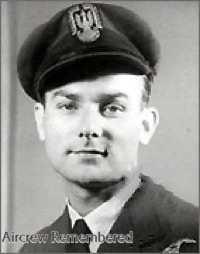 |
|
| 48 | Mackenzie | Kenneth William 'Super Mac' | Plt Off | 84017 | RAFVR | British | 43Sqn 501Sqn | DFC AFC | Hurricane | 8 | Survived war | 4 June 2009 | Baled out Hurricane I (V6806) safely on the 25 October 1940 after colliding with Hurricane I (P2903) of P/O V.Goth during combat with Bf 109s over Tentreden, Kent at 15:25hrs. Goth killed.
Born in Belfast Northern Ireland 8 June 1916. Educated at the Methodist College. In 1935 Mackenzie learned to fly at the Airwork School of Flying at Newtownards and was awarded Aero Certificate 12733 on 3rd May 1935. Early 1939 he joined the RAFVR as an Airman u/t Pilot and started training at 24 E&RFTS at Sydenham. Sent to 3 ITW Hastings on 28th December 1939. Moved to 5 EFTS Hanworth on 25th February 1940 and then to 3 FTS South Cerney on 25th May. Posted to 6 OTU Sutton Bridge on 31st August to convert to Hurricanes. Joined 43 Squadron at Usworth on 21 September 1940. After sixteen training flights and two operational patrols, posted to 501 Sqd at Kenley on the 29 September. Shared a Ju88 on 4th October, claimed a Me109 destroyed on the 5th and another destroyed and a second shared on the 7th. Although Mackenzie shot down a number of German planes during and after the Battle of Britain, he will always be remembered for one particular incident over the English Channel. He was flying a Hawker Hurricane, its ammunition spent. His quarry was a Messerschmitt 109 fighter which tried to evade him by diving almost to sea level, intent on heading for France and safety. Mackenzie knocked it into the sea by the extraordinarily dangerous move – very definitely not recommended in any training manual – of using his plane’s wing to shear its tail off, sending it spiralling out of control. When the German plane went into the waves, Mackenzie nursed his damaged craft back to England, made a forced-landing at Hope Farm, west of Capel-le-Ferne outside Folkestone, in Hurricane V6799, with slight facial injuries (report below). His highly unorthodox manoeuvre earned him a DFC for skill and gallantry', the awed admiration of colleagues, and the nickname of 'Super Mac'. The incident instantly established him as one of the aces of 501 Squadron, which he had joined less than two weeks earlier. On 25th October Mackenzie claimed a Me109 destroyed, another shared and another damaged. In a later patrol that day he was in collision with P/O V Goth of 501, as he manoeuvred his section to attack a formation of Me109s. Mackenzie, in Hurricane V6806, baled out unhurt but Goth, in P2903, was killed when he crashed in Bridgehurst Wood, Marden. On 27th, 29th and 30th October he claimed Me109s destroyed, on 8th November a Me109 destroyed, on the 12th a Ju88 shared and on the 15th a Me109 destroyed and another damaged. Posted to 247 Sqd at Predannack on 19th June 1941 as a Flight Commander. He destroyed a Ju88 at night on 6th/7th July and a He111 at night over a convoy on the 12th/13th. On 29th September Mackenzie led a strafing attack on Lannion airfield in Brittany. Hit by heavy flak from the ground defences he ditched in the sea. He took to his dinghy, paddled to the shore and was captured. On his way to a PoW camp, Mackenzie gave his guard the slip on a crowded Paris railway station but was soon recaptured. At Oflag VIB at Warburg, northern Germany, which was predominantly an army camp, escape attempts were a major industry and Mackenzie joined the tunnelling team. Working 24 hours a day, they reached the perimeter wire but flooding prevented further work until the spring. On resuming in April 1942, Mackenzie was fortunate not to be buried alive when a ton of clay fell from the roof, he just managed to scramble clear. With rumours that the PoW's were to be transferred to another camp, the prisoners decided to risk breaking open the tunnel early. As the first prisoner crawled from the tunnel exit, a guard spotted him. Mackenzie and a colleague decided to build a one-use tunnel from a ditch close to the perimeter fence. A diversion was set up and the two men reached the ditch unseen. Hiding under blankets, they waited for nightfall when they planned to dig a shallow tunnel under the wire. As night fell a guard was seen taking a close interest in the area so another diversion was created and the two men were recalled into the compound. A few weeks later, Mackenzie was transferred to Stalag Luft III at Sagan. Over a long period of time he feigned madness and developed a severe stammer for the purpose, which subsequently he never completely lost. Repatriated to the UK in October 1944, arriving at Liverpool on the 10th. He was posted to 53 OTU Kirton-in-Lindsey on 19th December as an instructor. He launched into a highly effective new phase of his career as a trainer. Regarded as an exceptional instructor, he trained pilots during the rest of the war and afterwards, successfully adapting to a new generation of fighters such as the Gloster Meteor jet. On 17th June 1945 Mackenzie went to 61 OTU Keevil, as a Flight Commander. In July 1951 he was promoted to command the Meteor fighter wing at Stradishall in Suffolk, where he was also the chief instructor. He was awarded the AFC 1st January 1953. Autobiography Hurricane Combat: the Nine Lives of a Fighter Pilot Signed by Ken Wilkinson (616 Sqd), Vivian Snell (501 Sqd), Ken Mackenzie (501 Sqd), Les Harvey (54 Sqd) |   |
|
| 49 | Lusty | Kenneth Roy 'Lucky' | Sgt | 66502 | RAF | British | 25Sqn | Blenheim | Survived war | 18th September 2009 | Air gunner in Blenheims during the Battle. Nicknamed 'Lucky' after being attacked by a Ju 88 and surviving with the only damage being a bullet through his sleeve. Born in Sale, Cheshire England 9 February 1920. Joined the RAF as an Airman u/t Air Gunner on 4th September 1939. Training at Padgate. To gunnery course at RAF Aldergrove on 30th December. On 24 February 1940 joined 235 Squadron. Posted away on 14th May to 25 Sqd at North Weald. Retrained as a Radio Observer, commissioned May 1941. On 16 July he joined 1453 Flight at Wittering on Turbinlite Havocs. On 1st August 1942 rested. Returned to operations on 2 April 1943 in 410 Sqd (RCAF) at Drem on Beaufighters. To 406 Sqd (RCAF) Squadron at Predannack on 25th August. Then went to 264 Sqd at Fairwood Common on 9th October 1943. Sent to Staff College on 5 July 1944. To 132 Sqd at Vavuyina, Ceylon on 28th November 1944 as Adjutant. To BHQ Colombo on 23rd June 1945 as Senior Admin Officer. Released from RAF on 21st January 1946 as a Squadron Leader. Signed envelope Signed by Peter Rich, Noel Corry, Kenneth Lusty |  |
|||
| 50 | Lewis | Albert Gerald 'Zulu' | Plt Off | South African | 616Sqn 504Sqn  85Sqn 249Sqn | AFC & Bar | Hurricane | 17 | WIA | 1990 | Radar operator in Blenheims with 25 Sqd in the Battle of Britain. Later rose to the rank of Group Captain. AFC and bar and Polar Medal and had the Lewis Chain of rocky features in Antarctica named in his honour. Born in May 1922, attended Warwick School. Joined the RAFVR as an Aircrafthand in February 1940. Just after the Battle of Britain he was promoted to Sergeant and flew his first Beaufighter sortie. He later served in North Africa and trained as a pilot in Canada. He was granted a permanent commission in 1947. From May 1955 Lewis led the RAF party with the Commonwealth Trans-Antarctic Expedition, under the leadership of Vivian Fuchs, who would receive a Knighthood. Lewis left for the Antarctic in November 1955 and returned to the UK in March 1956. He returned to the Antarctic in November 1956 and finally came home in August 1958. He was responsible for the purchase of aircraft and spares, organising and running air surveys and providing close support for the expedition party in the field. In January 1958 Lewis became the first person to make a Trans-Antarctic flight in a single-engined aircraft. He flew from South Ice to Scott Base on the Ross Sea. Flew with 616 Sqd at the outbreak of hostilities and then moved to 504 Sqd fighting in France. Then moved to 85 Sqd still in France where he claimed 9 kills. Stayed with 85 Sqd until August and shot down two more Germans. Then joined 249 Sqd. 27 September he claimed 6 kills, two probables and one damaged. Baled out of Hurricane I (V6617) badly burned on the 28 September 1940 over Faversham at 14:20hrs.  Dickie Lee and Albert Lewis, good friends on 85 Sqn until Lee went missing during the Battle of Britain. Albert Lewis went on to become a high scoring ace during the war. The drawing by Steve Teasdale has been signed in pencil by the artist and 23 veterans of the Battle of Britain. The signatures are: Roy McGowan, Bob Doe, Wilf Sizer, Len Davies, Bob Foster, Vivian Snell, Terry Clark, Ken Lusty, Ken Wilkinson, Tom Neil, Jack Toombs, Albert Gregory, John Ellacombe, Robert Haylock, Ken Lee, Nigel Rose, Basil Stapleton, Jocelyn Millard, Arthur Piper, CE Smith, Keith Aldridge, Ben Bent and Bill Green. (Courtesy battleofbritainbooks.co.uk |   Portrait by Eric Kennington |
|||
| 51 | Leigh | Arthur Charles 'Joe' | Sgt | 111975 | RAFVR | British | 64Sqn 72Sqn | DFC DFM | Spitfire | 3.5 | Survived war | 2004-07-03 | Born in London in 1920. Joined the RAFVR in June 1939 to train as a pilot. He was called up at the outbreak of war. Posted to 7 OTU Hawarden on 31 August 1940. Converting to Spitfires he joined 64 Sqd at Leconfield. First operational sortie on 29 September 1940. Moved to 72 Sqd at Biggin Hill on 11 October. Then to 611 Sqd at Digby on 8 November 1940. He shared a Do 17 on 21 December. Shared in probably destroying a Bf 109 on 28 May 1941, destroyed a Bf 109. Probably another on 18 June. Probable Bf 109 on the 22nd, probably destroyed another and damaged a second on 4 July 1941, probably destroyed another on the 23rd and destroyed two more on 19 August and 4 September 1941. DFM on 9 September after part 50 sweeps over the continent. Commissioned and became an instructor. Posted to Gibraltar in April 1943, from where he ferried Hurricanes to Cairo. In early August he returned to the UK and joined 56 Sqd at Manston. He was shot down on his first sweep, by flak, near Calais. Leigh baled out into the Channel and was picked up by an ASR launch. In late 1943 he was posted to 129 Sqd at Hornchurch. DFC. After second tour, had another spell as an instructor. Released from the RAF. He later started a successful architectural hardware business in Norwich. He died on 3 July 2004. |   |
|
| 52 | Leggett | Percival Graham | Plt Off | 86329 | RAFVR | British | 245Sqn 46Sqn 145Sqn 96Sqn 249Sqn 73Sqn 32Sqn (CO) | Air Efficiency Award | Hurricane | 1.5 | Survived war | 26th May 2013 | Born 14 February 1921. Joined the RAFVR June 1939 as an Airman u/t Pilot. Called up 1 September 1939. Basic training then 5 OTU Aston Down in September 1940 for conversion to Hurricanes. 18 September crashed at Oldbury-on-Severn, Gloucestershire, unhurt. Joined 245 Squadron at Aldergrove on 28 September, then 46 Sqd at Stapleford on 18 October. Probable Fiat BR20 and shared another on 11 November. Posted to 145 Sqd in late November 1940 (?) and then 96 Sqd at Cranage on 18 December 1940. Late June 1941 joined 249 Sqd in Malta. Mc200 destroyed on 17 July. Shot down 21 December 1941, baled out and was admitted to hospital with slight abrasions. Joined 73 Sqd in North Africa in October 1942 until August 1943. Back in the UK, appointed Adjudant at RAF Kirton-in-Lindsey after which he served in Ceylon. In 1949 he became CO of 32 Sqd on Havilland Vampires from Cyprus. Station Commander Dyce 1956/57. Retired from the RAF on 23rd May 1958 as a Squadron Leader. |  |
|
| 53 | Lee | Kenneth Norman Thomas 'Hawkeye' | Fg Off | 72998 | RAFVR | British | 501Sqn | DFC | Hurricane | WIA | Died | 2008-01-15 | Born in Birmingham 23 June 1915. Joined RAFVR on 25 January 1937. In January 1939 was released by his employer to spend six months with the regular RAF. Joined 111 Sqd at Northolt. Commissioned March 1939 and went to 43 Sqd at Tangmere. 4th September 1939 joined 501 Sqd at Filton. Flew to France 10 May 1940 and immediately destroyed Bf110. Do17 on 12th and on the 13th a Bf110. Squadron withdrawn from France on 18 June, re-assembled at Croydon on 21 June. Because of his keen eyesight he was usually the first to spot the enemy earning him the name 'Hawkeye'. Destroyed a He111 destroyed on 27 May and a Do17 on 6 June. 10 June attacking He111s, his Hurricane was probably hit by return fire and exploded. He baled out and landed at Le Mans. In the scramble to be evacuated, Lee's right hand was injured and he did not fly for several weeks. Damaged a Ju87 on 29 July, destroyed another on 12 August. Wounded 18 August 1940 and baled out of Hurricane I (P3059) at 13:30hrs. He was one of four Hurricanes from the Squadron shot down over Canterbury by Gerhard Schöpfel of III Gruppe of JG 26 flying a Bf 109. Baled out, with a bullet wound in the leg, and landed in a cornfield near Whitstable and was taken to the local golf club to wait for an ambulance. Heavily bloodstained, he stood at the bar, where he overheard a man complaining 'The machine-gunning made me miss my putt. And who's that chap at the bar? Bad show, all that blood - I don't believe he's even a member'. Rejoined the squadron in October. DFC 22 October 1940. On 29 November posted to the Special Duties Flight at Stormy Down and later went to 52 OTU Crosby-on-Eden as a Flight Commander. In late 1941 posted to Africa to ferry fighters from the Gold Coast (now Ghana) to Egypt. Then joined 260 Sqd as a flight commander flying Kittyhawks. Moved to 260 Sqd on 18 September 1942. Destroyed a Macchi 202 on 10 November. Commanded 123 Sqd at Abadan, Persia in March 1943. Then went to the Western Desert in May. On 27 July 1943 he was shot down and captured on a dawn raid on Crete. Taken to Germany to Stalag Luft III. Helped in prfeparations for The Great Escape. 28 January 1945 the prison camp was evacuated. In deep snow and freezing temperatures, the 'Long March' westwards was a great ordeal; many men died of exhaustion before reaching overcrowded camps in the west. He eventually arrived back in England in early May. Biography of Obituary |  |
|
| 54 | Lee | Richard Hugh Antony 'Dickie' | Flt Lt | 33208 | RAF | British | 85Sqn | DSO DFC | Hurricane | 9 | KIA | 1940-08-18 | Opened the score for 85 Sqd in World War II. He was Lord Trenchard's Godson. Born in London in 1917. Educated at Charterhouse School. Cranwell in September 1935 as a Flight Cadet and graduated in July 1937. On 1 June 1938 joined 85 Sqd at Debden. Went to France at the outbreak of war. He destroyed a He111 over Boulogne on 21 November 1939, 85s first victory. DFC 8 March 1940. On 10 May 1940 he claimed a Hs126 destroyed, shared a Ju86 and damaged a Ju88. On 11 May shot down two enemy then shot down by flak and captured. Escaped and made his way back to his squadron. Flying with 56 Sqd over Dunkirk on the 27 May shot down into the sea. Rescued. DSO 31 May 1940). Back with 85 Sqd in August 1940, last seen in pursuit of an enemy formation thirty miles off the east coast on the 18 August. Killed while on patrol on 18 August 1940. Lost in Hurricane I (2923) after chasing three Bf 109s off the east coast, at 17:50hrs. Runnymede Panel 6 Dickie Lee and Albert Lewis, good friends on 85 Sqn until Lee went missing during the Battle of Britain. Albert Lewis went on to become a high scoring ace during the war. The drawing by Steve Teasdale has been signed in pencil by the artist and 23 veterans of the Battle of Britain. The signatures are: Roy McGowan, Bob Doe, Wilf Sizer, Len Davies, Bob Foster, Vivian Snell, Terry Clark, Ken Lusty, Ken Wilkinson, Tom Neil, Jack Toombs, Albert Gregory, John Ellacombe, Robert Haylock, Ken Lee, Nigel Rose, Basil Stapleton, Jocelyn Millard, Arthur Piper, CE Smith, Keith Aldridge, Ben Bent and Bill Green. (Courtesy battleofbritainbooks.co.uk | 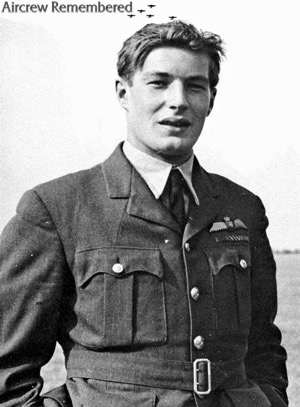 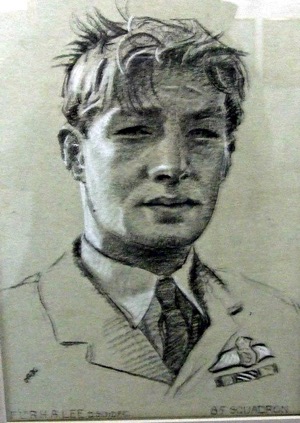  |
|
| 55 | Lane | Brian John Edward 'Sandy' | Flt Lt (later Sqd Ldr) | 37859 | RAF | British | 66Sqn 213Sqn 19Sqn (CO) 167Sqn  | DFC | Spitfire Vc AR612 VL-U | 6 | MIA | 1942-12-13 Age 25 | Author of Spitfire!, published in 1942 under the pseudonym B.J. Ellan. one of a few autobiographical accounts of the life of a Battle of Britain Spitfire pilot. Leader of 19 Sqd from 5 September 1940. He helped two Hurricanes shoot down a Bf 110 on the 7th of September 1940 which crashed East of Hornchurch. Son of Henry Fitzgerald William Lane (died 26th July 1958, age79) and of Bessie Elinor Lane (née Hall - died 22nd August 1963, age 86) and husband of Eileen Mary Lane (née Ellison - born 12th December 1910 - died at St Helier Hospital on the 29th July 1967 of cancer). Eileen Lane was a famous ladies British Grand Prix racing driver in the 1930s. Her main racing achievement came in 1932 when she won the Duchess of York's race for women drivers at Brooklands. The competitors included Elsie Wisdom (Invicta), Fay Taylour (Talbot 105) and Kay Petre (Daytona Wolseley Hornet Special). After a period of mourning, Ellison moved to South Africa around 1953 with wealthy landowner, Owen Fargus who lived in the same apartment complex as Eileen. (They never married) He owned property in the United Kingdom, in South Africa and Jersey and the couple led a jet-setting lifestyle. She remained with Fargus until her death then living at 'Boidec', La Marquanderie, St. Brelade St. Helier, Jersey. |   Above: His wife, Eileen Mary Lane (Grand Prix racing driver) |
|
| 56 | Kilmartin | John Ignatius 'Killy' | Fg Off | 39793 | Irish | 43Sqn | DFC | Hurricane | 13 | Survived war | 1998 | Despite the animosity many Republican Irishmen felt for the British, there were many who fought alongside them in the Second World War, and ten who fought in the Battle of Britain. John Kilmartin was born in 1913 in Dundalk, Ireland near the border with Northern Ireland. His father died when he was nine and he was shipped to Australia as part of a scheme to resettle poor and disadvantaged children. One can only imagine how he felt as he sailed to Australia where he worked on a cattle farm and later, in Shanghai, as a bank clerk and part-time jockey. He joined the RAF in 1937 and after training, was posted to 43 Sqd at RAF Tangmere in January 1938. With the war declared, he was posted to 1 Sqd and sent to France. During the Battle of France, flying Hawker Hurricanes, he quickly built up a score and was a double ace by the middle of May. The spent pilots of 1 Sqd were withdrawn to England at the end of May and 'Killy' was sent to train others for the coming Battle of Britain. He rejoined 43 Sqd at the beginning of September 1940, increasing his score during the Battle of Britain. He was awarded a DFC and gazetted on 8 October. In the spring of the following year, he was sent to command 602 Sqd, but that was short-lived. Instead, he went to West Africa, taking command of 128 Sqd in Sierra Leone to defend that country in the event that the Vichy French attacked from their bases in Dakar, Senegal to the north. He returned to Great Britain in August of 1942 to command 504 Sqd on Spitfires and then eventually the whole wing at RAF Hornchurch. In 1944, Kilmartin led the Typhoon wing of the Tactical Air Force. He was made an OBE in January 1945, went on to serve in Burma on P-47 Thunderbolts and then to Sumatra. The breadth of his war service spanned 6 years of the war and three continents. He remained in the RAF after the war, and held staff positions at NATO. He died in 1998. Joined RAF before the war. Went to France with 1 Sqd at the start of hostilities. Score in France was 11 of which 6 were Bf 110s, 4 Bf 109s and a Ju 88. Flew with 43 Sqd during the Battle, shooting down a Bf 110 and a Bf 109 in September 1940. |   |
||
| 57 | Kent | John Alexander 'Johnnie' | Sqd Ldr (later Grp Cpt) | RAF | Canadian | 303Sqn 92Sqn | Virtuti Militari DFC AFC | Hurricane | 13 | Died | 1985-10-07 | Born in Canada, Johnnie Kent spent most of his life in the United Kingdom. Became a pilot at 17 and held a commercial licence when he was 19. Joined the RAF in n1935 and flew Gauntlets with 19 Sqd. In September 1939 he joined 212 Sqd in France. His first victory was when a Bf 109 attacked him but could not pull out of its dive and went into the River Seine. There were no witnesses so he could not claim it. He became flight commander on Hurricanes with 303 Sqd Polish. So highly did the Poles regard Kent that they made him an honourary Pole and called him 'Kentowski'. He then commanded 92 Squadron on Spitfire I. In October 1940 he scored up his Squadron's 100th wartime victory.  |   |
||
| 58 | Keatings | John 'Bugs' | Sgt | 591611 | British | 219Sqn | Blenheim | Survived war | 18th February 2010. | Born Neston, Cheshire 8th July 1916. Service in Egypt and Palestine with Army. Early 1935 joined the RAF as an Aircrafthand. Posted to Northolt. His skill as a marksman meant he joined the RAF team at the shooting championships at Bisley. September 1935 joined 45 Sqd at Helwan, Egypt and started training as an Armourer/Air Gunner, making his first flight on 11th October. Posted to 6 Sqd at Ismailia. In December 1936 returned to the UK, posted to 21 Sqd at Lympne. He took part in the 1937 Hendon Air Display, flying in the mass formation of 250 aircraft. He went to No. 1 Air Armament School at Eastchurch in November 1937 to convert to Fitter-Armourer. Joined 269 Sqd at Abbotsinch in March 1939, a general reconnaissance unit with Ansons, on armament and flying duties. October 1939 posted to 219 Sqd, a night-fighter unit at Catterick. On 15th August 219 was scrambled to intercept 40+ He111's and Ju88's off Flamborough Head. Seven were shot down, with only one Blenheim damaged. It was a remarkable result. In December 1940 posted to CGS Warmwell as a gunnery instructor. He did not fly operationally again and he later became a Senior Armament Instructor at No. 1 AAS. Signed envelope |  |
||||
| 59 | Kane | Terence Michael | Fg Off | 41185 | RAF | British | 234Sqn | Spitfire | 1.5 | PoW | 5 August 2016, aged 95. | Born in September 1920 in London. Finished school at Varndean County Grammar School, Brighton. Joined the RAF on a short service commission and began training in July 1938. He joined 9 Air Observer School, Penrhos on 27 September 1939, as a staff pilot. Period at RAF Farnborough undertaking high-altitude tests. He became an instructor. Converted to Spitfires and joined 234 Sqd at St Eval on 18 September. He shared in the destruction of a Ju 88 on the 22nd. The next day Kane did not return from a patrol. His Spitfire was damaged in combat off the French coast, after he had shot down a Bf 109, and he baled out at 6,000 ft. He was rescued and taken prisoner by the Germans. He was in several PoW camps, including Stalag Luft 3 in Lower Silesia. Freed in May 1945 and stayed in the RAF until 1950, when he went on to the Reserve of Air Force Officers. Rejoined in April 1954, in the Fighter Control Branch and retired on 29 May 1974 as a Wing Commander. PoW 23 September 1940 after crashing Spitfire I (R6896) off the coast of France at 11:00hrs after shooting down a Bf 109.  Signed envelope. Painting of Bob Doe's Spitfire by Ross Wardle Obituary Plate from 'Men Of The Battle Of Britain' by Ken Wynne |  |
||
| 60 | Jones | Cyril Arthur Trevor | Plt Off | 43693 | British | 611Sqn 312Sqn Czechoslovakia  616Sqn 79Sqn (CO)  | DFC | Spitfire | 2 | Survived war | 2000s in Australia | Born in Burnley England 1914. Joined RAF in January 1936 as a direct-entry Airman u/t Pilot. With 66 Sqd at Duxford when commissioned on 1 April 1940. Joined 611 Sq at Digby on 17 April. 2nd June a probable Me109 over Dunkirk. On the 4 June detached to AFDU Northolt for an Air Fighting course. On 29 August 1940 posted to 312 Sqd as a Flight Commander. Moved to 616 Sqd at Kenley on 4th September again as a Flight Commander. Badly wounded in the right elbow by return fire from a He111 off Spurn Head on 5 November 1940. Returned safely to Kirton-in-Lindsey and was admitted to Scunthorpe Hospital. The enemy crashed into the Humber. From February 1942 until February 1944 Jones commanded 79 Sqd, mostly in India. On 15 December 1942 he destroyed a Japanese Army Type 99 bomber and damaged another. DFC 14th April 1944. Released from the RAF in 1946 as a Wing Commander.  Ft Lt Jones of 616 Sqd climbs out of his Spitfire (QJ-A) while a member of the ground staff refuels the aircraft, Fowlmere, September 1940. © IWM CH 1358 |   |
||
| 61 | Johnson | James Edgar 'Johnnie' | Plt Off | 83267 | British | 616Sqn | Order of the Bath CBE DSO & 2 Bars DFC | Spitfire | Survived war | Born in Melton Mowbray on the 9 March 1915, a police inspector's son. Joined 616 Sqd in Spitfires on the 2 September 1940. Went on to become the RAF's leading ace. |  |
||||
| 62 | Iveson | Thomas Clifford 'Tony' | Sgt | 128539 | British | 616Sqn | DFC | Spitfire | 5 November 2013. | Born in York. Archbishop Holgate’s School. Joined RAFVR in 1938. First operational posting was to 616 Sqd on Spitfires, on 2 September 1940. Two weeks later he flew one of the aircraft scrambled to intercept a Ju 88 off Cromer. Sergeant Iveson’s aircraft was damaged and lost fuel, forcing him to ditch. He was picked up by a motor torpedo boat and landed at Yarmouth. In October he moved to 92 Sqd. Instructed in Southern Rhodesia, commissioned and undertook a second tour in Bomber Command. Converted to Lancasters at No 5 Lancaster Finishing School, Syerston and in July 1944 joined 617 Sqd. His operations with the squadron included three attacks on the battleship Tirpitz, including the one on 12 November 1944 that led to the ship sinking. On 12 January 1945, Iveson took part in a raid on shipping and the submarine base at Bergen, in Norway. The Lancasters were attacked by German fighters, and Iveson’s aircraft was badly damaged, with his port inner engine set on fire and his tailplane and rudders riddled with bullets. His two air gunners and wireless operator had already baled out when the the fighters suddenly broke off the attack. Iveson managed to fly the aircraft to Sumburgh, Shetland. He was awarded an immediate DFC. Left the RAF in July 1949 as a Flight Lieutenant. He later served in the RAuxAF and commanded a Light Anti-Aircraft Squadron. Surviving aircrew born 1919. Crash landed Spitfire I (R6690) into the sea 16 September 1940 at 10:30hrs. Saved. after running out of fuel chasing a Ju 88 off Cromer.  |  |
||||
| 63 | Innes | Robert Alexander | Sgt | 63784 | RAFVR | British | 253Sqn 261Sqn  185Sqn  | Air Efficiency Award | Hurricane | 2 | Survived war | 6th April 2005 | Born 15 June 1918. Joined RAFVR August 1938 as an Airman u/t Pilot. Called up 1 September 1939. Trained at 10 FTS Tern Hill. March 1940 posted to 6 OTU Sutton Bridge to convert to Blenheims. However he arrived at 253 Sqd on Hurricanes at Kenley, on 6 May 1940. Me110 destroyed on 30 August and on 15th September he shot down a Do17 of 8/KG2. Crashed in Hurricane V6736 on 20 September following an attack by Me109s over Maidstone. Crashed again at StapleBorn 15 June 1918. Joined RAFVR August 1938. Called up 1 September 1939. Trained at 10 FTS Tern Hill. March 1940 posted to 6 OTU Sutton Bridge to convert to Blenheims. However he arrived at 253 Sqd on Hurricanes at Kenley, on 6 May 1940. Me110 destroyed on 30 August and on 15th September he shot down a Do17 of 8/KG2. Crashed in Hurricane V6736 on 20 September, attacked by Me109s over Maidstone. Patrol on 11 October crashed in Hurricane L1666 from an unknown cause. He probably destroyed a Me109 off the coast of Essex on 11 November. Commissioned in March 1941. In April 1941 sailed on HMS Argus for Gibraltar. Transferred to HMS Ark Royal and flew off Ark for Malta. Joined 261 Sqd for a short period, transferring to 185 Sqd when that unit was formed at Hal Far from elements of 261 Sqd and 1430 Flight. During May and July 1941 his aircraft hit twice, the second time seriously. Sent home on HMS Edinburgh. After six months in hospital spent the rest of the war as an instructor. 1945 to the Central Flying School and then to Hornchurch. Returned to Malta in 1952 to reform 185 Sqd as the new commanding officer. Retired from the RAF on 31 August 1961 as a Squadron Leader.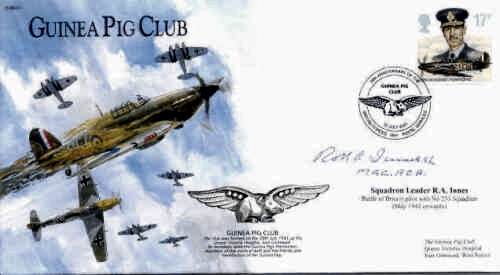 Battle of Britain cover depicting Tom Gleave in a burning Hawker Hurricane of 253 Sqd after being shot at by Bf 109s while his squadron was attempting to engage German bombers attacking Biggin Hill. Gleave was Commanding Officer of the squadron at the time of being shot down having taken command of the squadron earlier in the day when the previous CO has been shot down and killed. Signed by Robert Innes |  |
|
| 64 | Howard-Williams | Peter Ian | Plt Off | 33569 | British | 19Sqn 610Sqn  118Sqn  276Sqn | DFC | Spitfire | 4.5 | Survived war | March 1993. | Born in Cowes, Isle of Wight England 27 December 1919. Educated at Felsted School. RAF College Cranwell on 27 April 1939 as a Flight Cadet. After the outbreak of war Cranwell cadets who had not completed their course were enlisted in the regular RAF on 7 September 1939 as Airmen u/t Pilots. Graduated on 7 March 1940 with a permanent commission. Joined 19 Sqd at Duxford on 17 March. With 610 Sqd in early 1941. February joined 118 Sqd. Moved to Pembrey in March and became operational on the 28 March 1941 on convoy patrols. Moved to Ibsley on 18 April 1941. 6 August destroyed a Me109, on 12 October he destroyed a Me109 and probably another and on the 15 October shared a Me109. DFC 4 November 1941. Flight Commander in early 1942. On 2 February 1942 he got a Me109 destroyed and two others damaged. Posted to 276 Squadron at Fairwood Common on air-sea rescue duties in March 1942. May 1942 he joined 2 Delivery Flight at Colerne, staying with it until February 1943. Rejoined 610 Sqd at Westhampnett. 11 March he shot down a Fw190 over the Channel.
From April 1943 attached to 2 Squadron at Fowlmere on fighter-reconnaissance duties. He rejoined 610 Squadron in June 1943 at Perranporth. In November 1943 posted to 11 APC, moved to 11 FIS in March 1944, went to 57 OTU Eshott in April as an instructor, and then to 27 OTU Lichfield where he remained until March 1945, when he was posted to HQ 91 Group Abingdon. Retired from the RAF on 11 June 1958 as a Squadron Leader, retaining the rank of Wing Commander. Signed cover |  |
||
| 65 | Hooper-Smith | Lawrence Edward (Laurence ?) | Flt Lt | RAFVR | British | 234Sqn 559Sqn | Air Efficiency Award | Spitfire | Survived war | 9 February 2008 Jersey | Born 1918 as Smith, changing to Hooper-Smith at an unknown time. Joined RAFVR at Kidlington on 11 November 1938 as an Airman u/t Pilot. Full-time service in September 1939. Posted to 3 ITW Hastings in December, moved to 4 EFTS Brough on 3 March 1940. Finished training at 14 FTS Cranfield from 12 May to 28 September. Posted to 7 OTU Hawarden on the 29 September. Converting to Spitfires joined 234 Sqd at St. Eval on 15 October 1940. Posted to 53 OTU Llandow on 8 July 1941. Commissioned in October, attached to CFS Upavon for an instructors course from 17 November and then returned to Llandow. 10 March 1942 moved to 59 OTU at Crosby-on-Eden. 11 August posted to 559 Sqd at Brunton. He continued instructing at various units and specialised in refresher flying training. Stanford Tuck was his pupil after his return from PoW. Released from the RAF in late 1945 as a Flight Lieutenant. Rejoined RAFVR in May 1947 and was instructing at Nottingham University Air Squadron. Smith joined the Royal Auxiliary Air Force, serving with a fighter control unit until November 1963. |  |
|||
| 66 | Hone | Douglas Harold | Plt Off (later Flt Lt) | 80816 | RAF | British | 615Sqn 41Sqn 501Sqn | Hurricane | 0.5 | WIA | Survived war | October 2003 | Wounded crash landed at Rochford 26 August 1940 at 15:40hrs. Hurricane I (V6564) had been shot up by a Bf 109. Born Purley, England 30 September 1917. Joined RAFVR in September 1938 as an Airman u/t Pilot. Training at 19 E&RFTS Gatwick. Posted to No. 1 ITW Cambridge on 11 November 1939. On 30 December to 12 FTS Grantham. 6 OTU Sutton Bridge on 3 June 1940 for conversion to Hurricanes. Joined 615 Sqd at Kenley on 6 July. First operation on 19 July. Shared a He59 on 27 July, a Do17 destroyed on 29 July. Attacked by a Hurricane on 14 August but managed to land at Kenley. On 20 August shared a Do17. Fighting a formation of Do17s on 24 August his glycol tank was damaged by return fire he had to crash-land in a field at Meopham, uninjured but. 26 August wounded in the leg and thigh by cannon shell splinters when attacked by a Me109. To Southend Hospital. 20 September back with the squadron at Prestwick. 26 February 1941 was shot down by Me109s and crashed at Tenterden, suffering concussion and bleeding eyes. Posted to 56 OTU Sutton Bridge on 9 July as an instructor. Wheels-up landing on 14 August near River Nene after a bird-strike on a goose. 61 OTU Rednal in April/May 1942. Joined 41 Sqd at Merston. In the Dieppe operation on 19 August he damaged a Fw190. Posted to 501 Sqd at Hawkinge on 1 September 1943 followed by a posting as a Controller on 3rd January 1944. Released from the RAF in April 1946 as a Flight Lieutenant. After serving as a Controller in the RAFVR he rejoined the RAF in July 1950, serving in the Fighter Control Branch. He retired on 30th September 1975.  |  |
|
| 67 | Hilken | Clive Geoffrey | Sgt | 745482 | RAFVR | British | 74Sqn| Air Efficiency Award | Spitfire | WIA | PoW Survived war | 30th June 2005 bronchial pneumonia and heart failure | Wounded 20 October 1940. Baled out Spitfire II (P7426) after combat with Bf 109 over South London at 15:00hrs. PoW 27 June 1941 when he was shot down over St Omer. | Born 14 September 1919 Hull England. Joined RAFVR March 1939 as a pilot under training. Called up 1 September that year. Training at 5 FTS and 6 OTU. Posted to 74 Sqd on 21 August 1940 as a Spitfire pilot. Mid-October 1940 the squadron moved from Kirton-in-Lindsey to Biggin Hill. Shot down on 20 October over south London and he baled out, wounded, his aircraft P7426 coming down at Cowden, Kent. After parachuting into an orchard, the pilot was confronted by a farmer armed with a shotgun who thought he was a German. Orpington Hospital for treatment. Baled out from Spitfire P7614 shot down by Me109s on 21 April 1941 over Ashford. On 27 June 1941 he was shot down near St. Omer and taken prisoner. The squadron CO, JC Mungo-Park, was also lost on this sortie, being killed when his aircraft came down in Belgium. Badly wounded, he landed in a field and was just about to be rescued by French villagers when he was set upon by enemy soldiers. Hilken remembers: 'Having twice survived being shot down….I swore that no enemy would get on my tail again without my knowledge. This resolution held good until 27 June 1941 when I flew to France as top cover, escorting a bombing sortie to the Lille district. The chap who should have been behind me had not taken off because of engine trouble, leaving me as the back man of my section. At 2,500 feet over France our squadron became separated on a weaving turn from the other squadrons of the Wing. Our CO applied full throttle in an attempt to regain his place in the formation but in the process the rest of us found ourselves spread over the sky up to two miles behind the main formation. Now, to weave and watch your tail meant losing the formation. The only way to catch up was to do what our CO had done – go full bore. We did this – then cannon shells whipped into my Spitfire. No warning. Nothing seen. Wireless dead, glycol streaming out behind. Elevator stuck and a piece of metal in my ankle which was bleeding at full speed. I bailed out only to find my parachute pack waving about by my side. I pulled it in and undid the snap fasteners, letting the chute out a yard or two before the wind caught it and it opened to let me down, cursing my fate yet again, to France, hospital and a POW camp.' Released from the RAF 1945 as Warrant Officer. After the war Hilken turned to teaching. 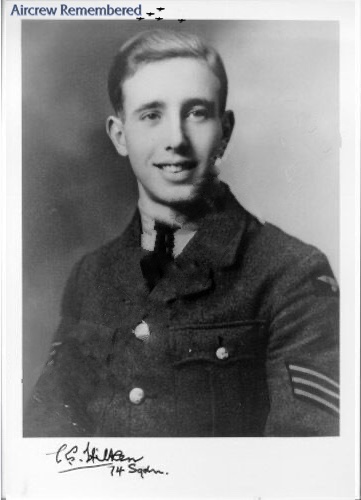 | ||
| 68 | Heimes | Leopold 'Pol' | Sgt | 1299983 | Belgium | 235Sqn | Blenheim | Survived war | 26 June 2009 | This man led an extraordinary life. Read the Obituary for details Leopold Heimes was born on 30 August 1916 at Merbes-le-Château, near Thuin. At the start of the war on 10 May 1940, F/S (gunner) Heimes is posted to 5th Squadron, III Group, 2nd Aero Regiment based at Nivelles which operates Hispano (engined ?) Fairey Foxes. The squadron moves to the emergency landing grounds at Vissenaken (just west of Tienen/Tirlemont) and then Aalter (between Brugge and Gent), flying from the latter a recce. mission with Adjt. Renard. On 15 May the squadron falls back to France, first to St Omer and then successively to Dreux, Tours and eventually Maugio, near Montpellier. On 21 June he joins a party of pilots and gunners who wish to convert to twin-engined aircraft at Bordeaux. But the instructors have scampered away! Meanwhile France has signed an armistice. The Belgians desperately wanting to continue the fight in England embark on the M.V. ‘Ettrick’ in St Jean-de-Luz, together with Poles and Czechoslovakias, they reach Plymouth on 27th June. A little later in early July, 124 airmen and candidates are grouped together in England. Only 29 among them are deemed combat-ready. 15 pilots are spread among Fighter Command squadrons flying Hurricanes. The others – pilots, observers and gunners – go to Coastal Command.Leopold Heimes is posted on 25 August to 235 Squadron as a gunner operating on Blenheims. He flies with Lejeune (pilot) and Michiels (observer). In the same unit, he mixes with Dejace, Dieu DFC, Demoulin, Gonay DFC, Javaux, Kirkpatrick, Lascot, Prévot DFC, Roman DSO DFC, Van Waeyenberghe and Venesoen DFC. He takes part in the Battle of Britain while engaged in numerous convoy escort missions and patrols over the Atlantic and the Channel. On 20 September, he is transferred to 272 Squadron at Aldergrove, Northern Ireland, from where he continues flying until April 1941, by which time he is part of a batch of trainee-pilots with Venesoen and Michiels. They receive their ‘wings’ in July 41.  Obituary by David Mole |  |
||||
| 69 | Hayter | James Chilton Francis 'Spud' | Fg Off | 36207 | RAF | New Zealander | 605Sqn 615Sqn | DFC & Bar MiD
| Hurricane | 9 | Safe | Died on the 03rd October 2006, age 88 and cremated at Wakapuaka Cemetery, Nelson, New Zealand | Born in Timaru, New Zealand 18 October 1917. Nelson College from 1928 to 1934. Working on farms and sheep stations, flying lessons with the Marlborough Aero Club as money and time allowed. 1938 he joined RNZAF, training at Wigram. To UK in July 1938 to join 98 Sqd a light bomber unit with Fairey Battles. November 1939 posted to 103 Sqd in France, flying Battles on reconnaissance. 12 May 1940 flew one of three Battles sent to attack river bridges and roads near Sedan. After shaking off some attacking Bf 110s, the three aircraft flew along the River Meuse in line astern to attack a German pontoon bridge with their gunners firing at enemy troops along the banks. The successful bombing of the bridge held up the advance of German tanks for some hours. Shot down 16 June 1940 by a Bf 109 as he was about to land and later on the same day the unit was withdrawn to England. In early September Hayter volunteered for Fighter Command and joined 615 Sqd moving two weeks later to 605 Sqd. October 1940 damaged a Ju 88 and two Bf 109s. 26 October 1940 he was attacked at 25000 feet and Hurricane I set on fire. Slightly wounded, Hayter baled out of his Hurricane I (P2916) after combat with a Bf 109 at 15:45hrs. Landed in the grounds of a house where a cocktail party was taking place. Invited to join it and was later picked up by his fiancée, who lived not far away. DFC October 1941, Bar to the DFC in January 1945. Returning to New Zealand in September 1945 to resume farming. “Spud” Hayter was born in the port town of Timaru, South Island, New Zealand—in 1917. He took private flying lessons at Marlborough, and joined the Royal New Zealand Air Force (RNZAF) in 1938 on a short service commission. While flying as an “observer” in a Vickers Vildebeest, he crashed on two occasions, but avoided major injury. With war looming, he sailed for England in July 1939, and was posted to 98 Sqd at RAF Hucknall, flying the Fairey Battle. In November, he crashed again after some low flying, but escaped injury for the third time. He was posted to 103 Sqd in France. During the Battle of France he was shot down on 16 June, attempting to land. Shortly thereafter, the squadron and the hapless Battles were withdrawn to England. He volunteered for Fighter Command, joining 605 County of Warwick Sqd (after a brief assignment to 615 Sqd) in September. By the end of the month, he had been shot down again—this time, descending from 25,000 feet by parachute, he landed on the grounds of an estate where a cocktail party was in progress—and was invited forthwith. After 605, he was rested as a flying instructor starting 1 May 1941. However, he was on board during two separate crash landings (by the same student pilot) and he was made operational again (finding no rest in instructing!) He joined 611 Sqd, continuing to increase his score, but crash-landing his damaged Spitfire yet again (his eighth crash). He was awarded his first DFC and was given command of 247 Sqd in North Africa. Following this he instructed Turkish pilots on the Hurricane then joined 74 Sqd in Iran and Egypt, then back to France, leading the “Tigers” against the Germans until the end of 1944. When Cuthbert Orde sketched his portrait in 1941, he said this of Hayter: “... tough, steady and a damn good type. He is one of the chaps who make me grin when I meet them.” He survived the war and eight crashes and died in 2006 in the small farming town of Takaka, New Zealand near the southern shores of Golden Bay.. |   |
|
| 70 | Haylock | Robert Arthur | Sgt | RAFVR | British | 236Sqn | Air Efficiency | Blenheim | Survived war | Brighton 17th March 2006 | Born Bury St Edmunds England 20 July 1921. Educated at East Anglian School and Culford School. Joined the RAFVR June 1939 as an Airman u/t Pilot. Called up 1 September 1939. Joined 236 Sqd at St. Eval September 1940 escorting Fleet Air Arm torpedo aircraft attacking enemy shipping in the Channel, and reconnaissances of German submarine bases and the Channel ports, plus searching for the long range Focke Wulf Condors harassing convoys. Plus convoy-escorts out into the Atlantic. Early 1941 converted to Beaufighters at RAF Chivenor and joined 272 Sqd. In May the squadron flew to the Middle East via Gibraltar and Malta. Initially based at Abu Sueir, 272 later moved to Mersa Matruh. Its main duty was to strafe enemy airfields but it also covered Tobruk convoys and made occasional operational visits to Malta. On 29th September 1941, flying from Malta, Haylock damaged two E-boats and two Cant Z501 flying boats. Late 1941 returned to the UK and was posted as a test pilot to Boscombe Down. Commissioned in early 1942. Test duties at Boscombe Down until his release from the RAF in December 1945 as a Flight Lieutenant. |  |
|||
| 71 | Haw | Charlton | Sgt (Later Sqd Ldr) | RAFVR | British | 504Sqn 81Sqn  611Sqn (CO) 129Sqn (CO)  65Sqn (CO) | DFC DFM Order of Lenin DFM 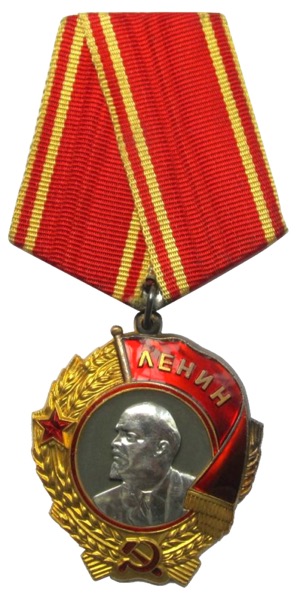 | Hurricane | 3 | Died | 1993 UK | Born 8 May 1920 in York. Aged 10 joy-ride with Sir Alan Cobham's Flying Circus which set him on the road to flying. Joined RAFVR in February 1939 as an Airman u/t Pilot and began his training at 4 E&RFTS Brough. Called up on 1 September 1939, posted to 4 ITW Bexhill in October and in Decembe 1939r he went to 5 FTS Sealand. On No. 45 Course 11 December 1939 to 10 June 1940. Posted to 6 OTU Sutton Bridge but went directly to 504 Sqd. at Wick. On 27 September 1940 He destroyed a Bf110 but was shot down in Hurricane P3415 over Bristol, landing at Gammons Farm, Kilmington near Axminster, unhurt. In late July 1941 'A' Flight of 504 was renumbered as 81 Sqd and posted to Leconfield. Flown to Abbotsinch in Harrows and embarked on the aircraft carrier HMS Argus for Russia, with a cargo of crated Hurricanes. On 1 September 1941 flew off in sixes for Vaenga airfield, near Murmansk. A convoy carrying crated Hurricanes sailed on to Archangel, 400 miles to the east, as did the Llanstephan Castle, a liner bearing some 500 wing personnel. Fifteen aircraft were assembled at Archangel and then flown to Vaenga. At first the Rolls-Royce Merlins performed poorly, owing to the lower-octane Russian fuel. The British company Broquet Fuel corrected the problem by adding a catalyst. On 12 and 17 September 1941 destroyed two Bf109s and a third later in the month. Operations continued until mid-November, when pilots of the squadron began converting Russian pilots to Hurricanes. 81 Sqd left Russia on 29 November 1941, leaving all equipment behind and returned in HMS Kenya, landing at Rosyth on 7 December. Awarded DFM 23 January 1942 and the Order of Lenin on 31 March 1942), one of four given to RAF pilots by the Russians. 81 Squadron went to Turnhouse, where it received Spitfire Vbs. Commissioned in March 1942 and posted to 122 Sqd at Hornchurch. On 17 February 1943 given command of 611 Sqd at Biggin Hill. On 21 April 1943 sent on a tour of factories, speaking to workers. In July he was posted to the Fighter Leaders School at Milfield. In November 1943 he returned to operations when he took command of 129 Squadron at Hornchurch. In April 1944 129 converted to Mustangs. After covering the D-Day landings, Haw led the squadron in July and August in an offensive against flying bombs. Finally, as leader of a wing of long-range Mustang fighters, he escorted Allied bombers on daylight raids. In July 1944 he returned to the Fighter Leaders School. DFC gazetted 17th October 1944. Posted to Wittering in October 1944, to a unit which became the Central Fighter Establishment and moved to Tangmere in December 1944. Commanded 65 Sqd from 1946 to 1948. Permanent commission in 1948, he later lost his flying category because of an eyesight problem and retired from the RAF on 19th September 1951 as a Flight Lieutenant, retaining the rank of Squadron Leader.  Signed envelope |  |
||
| 72 | Harvey | Leslie Walter | Sgt | British | 54Sqn 245Sqn 601Sqn 94Sqn  567Sqn 695Sqn 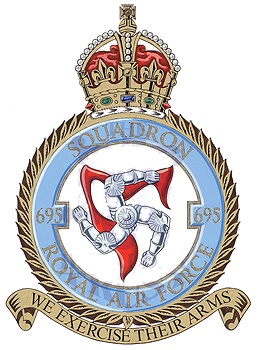 595Sqn  290Sqn (CO) | Spitfire | Survived war | November 2002 | Born in 1920. Joined RAFVR October 1938 as an Airman u/t Pilot. Called up on 1 September 1939. Training at 8 EFTS and 10 FTS before going to 5 OTU Aston Down in early August 1940. He crashed in Master N7781 on the 6 August, unhurt. Joined 54 Sqd at Hornchurch on 22 August. To 245 Sqd at Aldergrove on 22 September. Broke leg in a motorcycle accident and did not return to flying till July 1941 Posted as an instructor to 56 OTU. August 1941 posted to 601 Sqd on Airacobras at Duxford. In November posted to 94 Sqd on Hurricanes in North Africa on sweeps and top cover escort to bombers. As top cover on a sweep by 260 Sqd on 14th January 1942 bounced by Me109s over Agedabia and set alight by cannon fire. Baled out with burns at 1,000 feet and was picked up by Army unit 11th Hussars. May 1942 posted to a Aircraft Delivery Unit. Commissioned from Warrant Officer in April 1944 and posted back to UK the following month. Posted to 567 Sqd an AA Co-Op unit. During July and October he received a number of postings to 695 and 595 Squadrons. In January 1945 he was posted to 290 Sqd and took command in October 1945. Released from the RAF in 1946 as a Flight Lieutenant. Signed by Ken Wilkinson (616 Sqd), Vivian Snell (501 Sqd), Ken Mackenzie (501 Sqd), Les Harvey (54 Sqd) |  |
|||||
| 73 | Hancock | Norman Edward | Plt Off | 83266 | RAFVR | British | 65Sqn 152Sqn 128Sqn  198Sqn  56Sqn 276Sqn (CO) | DFC | Spitfire | Survived war | 17th December 2008 | Born 12 May 1920 in Burgess Hill England. Joined RAFVR July 1939 as an Airman u/t Pilot. Called up 1 September 1939. To No. 1 ITW at Cambridge on 5 September. To 12 EFTS Prestwick on 26 March 1940 and then to 5 FTS Sealand on 26 May. To 7 OTU Hawarden on 11th August for Spitfire conversion. Joined 65 Sqd at Turnhouse on 2 September. To 152 Sqd at Warmwell on 11th October. Probable Me110 off the Isle of Wight on 28 November. To 56 OTU Sutton Bridge on 22 October 1941 as an instructor and went to 55 OTU Usworth on 2nd February 1942. To Northern Ireland on 11 July 1941 to instruct the 52nd Pursuit Group USAAF on Spifires. Returned to operations on 18 October 1942 in 128 Sqd at Hastings, Sierra Leone, as a Flight Commander. Back in the UK, to 198 Sqd at Matlask on 27 April 1943. 15 July to 56 Sqd at Martlesham Heath as a Flight Commander. 31st May 1944 to 85 Group. DFC 23rd June 1944. In May 1945 he took command of 276 Sqd Air Sea Rescue at Knocke. Then Squadron Leader Admin at RAF Cranfield. Released from the RAF in March 1946. |  |
||
| 74 | Hairs | Peter Raymond | Plt Off | 76316 | RAFVR | British | 501Sqn 276Sqn | MBE Air Efficiency MiD | Hurricane | 1.5 | Survived war | 24th August 2014 Age 99 | Born 10 July 1915 in Thornton Heath, Surrey England. Joined RAFVR January 1938 as an Airman u/t Pilot. Training at 19 E&RFTS Gatwick. To 6 FTS Little Rissington October 1939. Commissioned. On 28 December 1939 posted to 11 Group Pool St. Athan. Converted to Hurricanes. Joined 501 Sqd at Tangmere on 25 January 1940. Flew to France on 10 May. 14 May damaged a Do17 and shared in destroying another on the 15 May. Me109 destroyed on 5 September. Acquired the final polish at RAF Hawkinge by August 1940. With a shared victory scored in France, he was a case in point when no sooner pilots had taxied in than they slumped forward in their cockpits, as dead to the world as men under morphia. 'After eight scrambles in a day, you came up to write up your log book, and you just couldn't remember, beyond putting down the number of times you'd been up ... you couldn't remember at all.' He was posted to 15 EFTS Kidlington on 13 October 1940 as a flying instructor. To 2 CFS Cranwell for an instructors course on 23 February 1941 after which he moved to 11 FTS Shawbury on 14 April to instruct. 10 EFTS Weston-Super-Mare in May. Posted to Canada on 13 June as an instructor and assistant CFI. Mid-December 1943 returned to the UK and joined 276 Sqd Air Seaa Rescue at Harrowbeer. 5 May 1944 to 19 OTU Kinloss as OC Bomber Defence Training Flight. To India on 18 July 1945 on administrative duties. Released from the RAF on 30 October 1945 as a Flight Lieutenant. Mention in Despatches 14 June 1945. MBE 1 January 1946. Signed envelope |  |
|
| 75 | Haine | Richard Cummins | Plt Off | 43147 | RAF | British | 25Sqn 600Sqn 488Sqn RNZAF (CO)  | OBE DFC | Blenheim | 2 | Survived war | 30 Sep 2008 | Born in Gloucester on 1 October 1916. Crypt Grammar School. Joined the RAF in 1936 and qualified as a fighter pilot. 25 Sqd flying the Hawker Fury. Flew in the first night patrol of the RAF in the war, in a Blenheim from RAF Northolt on 4 September 1939. These night flights rarely intercepted any aircraft, primarily due to the absence of onboard radar. On 28 November 1939, Haine flew one of six Blenheims of 25 Sqd to attack a seaplane base at Borkum, the first fighter attack of the war on German territory. He may have destroyed a Heinkel He 59 on the water. On 10 May 1940, Haine led six Blenheims of 600 Sqd against a key airfield at Waalhaven against an incipient landing by German Junkers Ju 52 transport aircraft and parachute troops. The raid was a disaster; five of the six aircraft were shot down upon arrival. Only one Blenheim returned safely to base. Haine and his gunner destroyed a Messerschmitt Bf 109 in the air and two Ju 52s on the ground before being shot down. They evaded capture and returned to England aboard HMS Hereward, the same Royal Navy destroyer that was evacuating the government of Norway and Queen Wilhelmina. DFC for the action. He served as the commanding officer of 488 Squadron RNZAF, flying the de Havilland Mosquito, until the end of November 1944. Haine and his squadron flew beachhead patrols on D-Day. Over Normandy on the night of 4 August he destroyed a Junkers Ju 88. On a patrol of Caen, during the night of 1 September, the squadron intercepted and shot down another. However, his claim for having made two kills while flying the Mosquito was reduced when the second Ju 88 was not credited to him. Signed envelope |  |
|
| 76 | Gregory | Albert Edward | Sgt (later Sqd Ldr) | 133005 | RAFVR | British | 141Sqn 219Sqn 23Sqn  605Sqn 275Sqn  278Sqn  52Sqn  | DFC Air Efficiency | Blenheim | Survived war | 12th November 2010 | Born in Derby England 9 May 1917. Joined the RAFVR April 1939 as an Airman u/t WOp/AG. Called up 1 September. To Aldergrove in October for an air gunnery course. December joined 141 Sqd at Grangemouth to fly in Blenheims. When 141 began to convert to Defiants in April 1940 he was too tall for the turret so joined 219 Sqd still using Blenheims. As radar-equipped Beaufighters began service from September 1940, retrained as a Radio Observer. Assisted in the destruction of a He111 in March 1941. In May to No. 2 Radio School at Yatesbury for a wireless operators course. Joined 23 Sqd at Ford in December 1941. He flew from Tangmere in Boston IIIs on intruder patrols over France, Belgium and Holland, bombing and strafing airfields, marshalling yards and other targets. On 2nd April 1942 he damaged two Do17s. July 1942 to a Gunnery Leaders course at CGS Sutton Bridge, completed in August then commissioned. To 605 Sqd at Ford on intruder duties. Posted to 275 Sqd (Air Sea Rescue) at Valley in Wales in March 1943. DFC 13th July 1943. Served with 278 Sqd (Air Sea Rescue) and was released from the RAF in November 1945 as a Flight Lieutenant. He rejoined in July 1947, did a radio refresher course and in February 1948 he was posted to 52 Sqd at Changi, Singapore engaged in anti-terrorist operations, supporting the Army in Malaya. Late 1950 returned to the UK and became a signals instructor. Retired from the RAF in May 1955. Plate from 'Men Of The Battle Of Britain' by Ken Wynne |   |
||
| 77 | Greenwood | John Peter Bowtell | Plt Off | 41920 | British | 253Sqn | Hurricane | 3 | Survived war | 31st December 2014. | Born 3 April 1921 in Stratford, East London England. Educated at Tiffins School, Kingston-on-Thames. Short service commission in the RAF in February 1939. Training at 11 E&RFTS Perth. In April to 2 FTS Brize Norton. Joined 253 Sqd at Manston on 30 October 1939. 253 Squadron was formed at Manston in Kent in November 1939 from part of the course of 2FTS Brize-norton, nearly all the pilots have been trained on Airspeed Oxfords, and had no fighter training at all as they were supposed to be equipped with Bristol Blenheims as bomber pilots. They eventually received Hurricane 1 aircraft in January 1940, and began to learn how to use them as fighters. They were very old planes as each existing Hurricane squadron gave them two of their aircraft, so of course they were the worst they had. 253 Sqd moved to Northolt, then Kenley and when the Germans invaded France, 253 were split into two flights, one went to Vitry and the other to Lille. Greenwood was in 'B' flight and went to Lille, the CO and Adjutant remained in England. 'B' flight was the only flight without armour plating and mirrors, also had the inferior single blade wooden airscrew.
They were in France for four days in which they lost half their pilots including the flight commander. Only 3 aircraft flew back to the UK, the rest were broken up with axes. In four days John shot down a Bf109 and a Dornier 215, and a week later another Bf109 on escort duties over Merville.
With their CO posted as missing 253 Squadron was without any leaders since the other flight at Vitry had lost its Flight Commander and half the pilots.
253 Squadron reformed in the north of the UK moving several times and changing COs, until eventually they entered the Battle of Britain, flying their first sortie from Kenley on 30 August 1940. 30 August destroyed a He111 attacking Farnborough. Posted to 5 FTS Sealand in December 1940 as an instructor. In February 1941 to Turnhouse, where 59 OTU was being formed. Volunteered for the Merchant Ship Fighter Unit, joined the unit at Speke on 20 May 1941. Onboard Empire Flame on 18 June. One Atlantic and one Russian convoy without launching his Hurricane. Following November he was posted to 55 OTU Usworth. To 615 Sqd at Fairwood Common in February 1942. To India in March. Flew its first operation on 5 December 1942. In January 1943 posted to 17 Sqd at Alipore as a Flight Commander. He went to 151 OTU Risalpur in April. Caught malaria and dengue fever in October. Posted to 223 Group at Peshawar. Joined 9 Sqd (Indian Air Force) February 1944 and in July went to a job in the War Room at 221 Group.  Signed envelope  MSFU Hurricane on ship Greenwood Bio |   |
|||
| 78 | Gray | Trevor | Plt Off | 85236 | RAFVR | British | 64Sqn | Spitfire | 0.5 | Survived war | 21st January 2012. | Born 10 July 1916. Joined the RAFVR July 1938 as an Airman u/t Pilot. Called up 1 September 1939. Commissioned at the end of his course in August 1940. Converting to Spitfires at 7 OTU Hawarden, joined 64 Sqd at Leconfield on 16 September. On 21 December 1940 Gray shared a Do17 over the English Channel. Posted to 58 OTU at Grangemouth on 3rd April 1941 as an instructor. No further service details until his release from the RAF in 1946 as a Flight Lieutenant. Signed envelope |  |
||
| 79 | Gnyś | Wladysław | Plt Off | P-1298 | PAF | Polish | 302Sqn Polish 316Sqn Polish  317Sqn Polish  | Virtuti Militari DFC Krzyz Walecznych (x3) Medal Lotniczy (x2) Croix de Guerre (France) Wound Badge | Hurricane | 3 | Died | 2002-02-28 | First Allied victor in Polish campaign 1939-09-01. After training on British equipment, he was sent on July 28 1940 to 302 Sqd. During July 28. - 31.10.1940 took active part in the Battle of Great Britain. On January 30, 1942, he was released from combat operations. From December 22, 1942, he again began to conduct combat flights in 302 Sqd. In February 1943 he became commander of 316 Sqd and from August 28, 1943 in 309 Sqd. In August 1944 he became the commander of 317 Sqd. On 27.08.1944 in the first combat flight which he performed as a squadron commander, he was shot down by the German Army. in the Rouen region of France. Wounded he gets captured. Sent to a prisoner-of-war assembly point in Amiens - he escaped and reached England with the help of the French resistance. After convalescence he served in RAF Fighter Command. After demobilization he went to Canada. In 1999, he was awarded the Commander's Cross with the Star of the Order of Rebirth. Polish (PR II *) - he died in St. Catherines ON Canada - buried at the Mount Osborne Cemetery in Beamsville Canada Age 90 Cover artwork by Tony Theobald shows a Fokker EV in Polish markings in 1919 which scored the Polish Air Force's first victory which was against the hostile Russians, the PZL IIc of 2nd Lt W Gnys who scored the first and second victories over the Luftwaffe on 1 September 1939, a Hawker Hurricane of No 303 Squadron during the Battle of Britain and a Supermarine Spitfire IX in D-Day invasion markings and Polish markings. Underneath a Polish built MiG 29 is shown to mark the new independent Polish Air Force after years of Soviet rule. The cover bears Polish Air Force 1918 - 1998 logo and the insignia of the 121st squadron, No 303 Squadron, No 316 Squadron and 1st Fighter Regiment which corresponds to the aircraft on the artwork. Archiwum Database Allied Losses Database Review of Biography |   |
|
| 80 | Gleave | Thomas Percy | Sqd Ldr | 29137 | RAFVR | British | 253Sqn | CBE Bronze Star (USA) Legion d-Honneur (France)  Croix de Guerre (France) MiD (x2) | Hurricane | 6 | Survived war | June 1993 | Born 6 September 1908. Educated at Westminster High School and Liverpool Collegiate School. In 1930 he was commissioned into the RAF where he excelled; by 1933 he was a member of the RAF aerobatic team. After a period as a flying instructor he joined RAF Bomber Command on 1 January 1939. He requested a return to RAF Fighter Command, which was granted. By June 1940 he was in command of 253 Sqd, flying Hurricanes. 1940-08-30 shot down four Bf 109s in a few seconds, one of whom was E.Arnold of III Gruppe JG 27. Command was handed to Squadron Leader H Starr in August 1940, but Gleave resumed command when Starr was shot down on 31 August. Gleave's tally by the time he was shot down was five Messerschmitt 109s (in a single day) and one Junkers 88. Gleave was shot down on his first sortie after restoration of his command, on 31 August 1940, and badly burned. Initially treated at Orpington Hospital, he regained consciousness underneath a bed during an air raid. His wife was called to his bedside and asked the heavily bandaged Gleave "what on earth have you been doing with yourself?" "I had a row with a German" was his characteristically laconic reply, and this became the title of the book he wrote under the pseudonym 'RAF Casualty', published in 1941. He was transferred to East Grinstead where McIndoe reconstructed his nose. He recovered sufficiently to be returned to non-flying duties and briefly commanded RAF Northolt before taking over RAF Manston, from where he dispatched the six Fairey Swordfish of 825 Squadron in their attempt to sink the Scharnhorst, Gneisenau and Prinz Eugen. He was then seconded to the planning group for what became Operation Overlord and promoted to Group Captain. He was made Group Captain Air Plans for the Allied Expeditionary' Air Force under Leigh-Mallory in November 1943. With Colonel Phillips Melville of the USAAF as co-operator he wrote the Overall Overlord Air Plan. For his outstanding work Gleave was made a CBE and awarded the US Legion of Merit, later changed to the Bronze Star because of protocol difficulties. He served as Eisenhower's Head of Air Plans at SHAEF from 1 October 1944 to 15 July 1945 and was then Senior Air Staff Officer, RAF Delegation to France, from 1945 to 1947. Battle of Britain cover depicting Tom Gleave in a burning Hawker Hurricane of 253 Sqd after being shot at by Bf 109s while his squadron was attempting to engage German bombers attacking Biggin Hill. Gleave was Commanding Officer of the squadron at the time of being shot down having taken command of the squadron earlier in the day when the previous CO has been shot down and killed. The cover shows the famous Guinea Pig Club logo, which Tom Gleave was the vice-president and a founder member and referred to at the 'Chief Guinea Pig' the president of the Guinea Pig Club was Sir Archie McIndoe until his death, and then HRH Prince Philip accepted the position. The club was formed on 20th July 1941 at the Queen Victoria Hospital East Grinstead, it's members were the Guinea Pigs themselves, members of the medical staff and the friends and benefactors of the Guinea Pigs. Guinea Pig members were those who were referred to Queen Victoria Hospital for plastic surgery after being badly burnt in flying action. Plastic was a new type of procedure hence the term Guinea Pig and the procedure allowed many airmen to return to a more normal life and many returned to operations. The Guinea pig logo consists of a Guinea Pig with RAF wings. The Cover bears a 22p Lord Tedder / Typhoon stamp and is cancelled with BFPS 2641 postmark on 20 July 2001 which bears the Guinea Pig Logo and marks the 60th Anniversary of the formation of the Guinea Pig Club. Cover is signed by Flight Lieutenant J P B Greenwood who was a Battle of Britain Pilot with 253 Hurricane Squadron from October 1939 through until December 1940. Signed envelope: Christopher Foxley-Norris, Tom Gleave, Ginger Lacey, Geoffrey Page, Sandy Johnston, Mieczysław Sawicki  3D Promotional card for collectors |  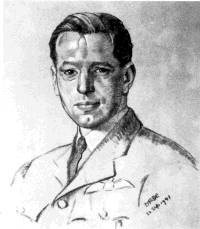 |
|
| 81 | Gear | Alan Walter | Sgt | 144002 | RAFVR | British | 32Sqn | DFC | Hurricane | 3 | Survived war | 22nd May 2003 | Born on 2nd February 1916. Joined RAFVR in April 1939. Called up 20th September 1939, he was posted to 8 FTS Woodley on 23rd October. Whilst there he had a motor cycle acciden. 16th May 1940 to 9 EFTS Ansty for a refresher course. Posted to 12 FTS Grantham. To 5 OTU Aston Down on 17th September. Joined 32 Sqd at Acklington on 3rd October 1940. He stayed with the squadron until 18th October 1941 when he was posted to CFS Upavon for an instructors course. Gear instructed at 9 FTS Hullavington on Masters from 15th December 1941 until 15th July 1942. He then went to 58 OTU Balado Bridge for a few weeks, finally settling at 9(P)AFU Errol where he instructed FAA pupils on the Swordfish, Albacore and Walrus. 18th October 1942 Gear posted to 72 Sqd at Ouston and went with it to North Africa in November. On 10th December Gear damaged a Ju88, this was probably the one reported lost by KG60 on that day. He claimed a Ju87 destroyed on 5th January 1943, damaged a Me109 on 11th April and claimed one destroyed on 22nd April. Commissioned from Warrant Officer on 11th January 1943, awarded the DFC (gazetted 27th July 1943) and posted away from 72 on 14th October 1943 to become a test pilot at 59 RSU Foggia. Early January 1944 he crashed after his engine failed and suffered severe injuries, including a broken back.  Signed envelope |   |
|
| 82 | Freeborn | John Connell | Fg Off | 70854 | British | 74Sqn| DFC & Bar | Spitfire | 8.5 | Died | 2010-08-28 | Official Ace. born in Middleton near the city of Leeds in December of 1919. He joined the RAF in 1938 at the age of 18. Following his training, he joined 74 Sqd (Tigers) at RAF Hornchurch in October of 1938. Within days of the declaration of war, flying Spitfires, Freeborn and other members of his squadron engaged what they thought was an enemy force. Sadly, it was a Hurricane Squadron and Freeborn and another pilot of 74 Sqd shot down the first two British airplanes of the Second World War (the so-called Battle of Barking Creek). The ensuing court martial absolved Freeborn and his mate, but caused deep wounds within the squadron when their Flight Leader, 'Sailor' Malan testified against them. Despite the outcome, Freeborn continued with 74 Sqd as did Malan, and when Malan became the squadron commander he often let Freeborn lead, such was his respect for his fighting skill. Freeborn became an ace in the Battle of Britain, and was awarded a DFC in August at the height of the Battle. Throughout the rest of 1940 and into 1941, he increased his score and led the squadron on occasion. In February of 1941, he was awarded a second DFC and then went on to an instructor’s course. This was followed by an appointment as an RAF liaison officer with the RAF’s training program in the United States—specifically in Alabama and Florida. It was here that he test flew the P-51 Mustang and P-47 Thunderbolt. In December of 1942, he returned to England to take command at RAF Harrowbeer and then Bolt Head. In February 1943, he was added to the already full strength of 602 City of Glasgow Sqd, leading the squadron escorting bombers. Later that year, he took command of 118 Sqd at RAF Coltishall and led them for six months. He returned to an Operational Training role, and then took command of 286 Wing in Italy. After the war, he remained connected to the RAF until 1954, and then went into the business world. He died in 2010. | Joined 74 Sqd 1938-10-29 from No 8 FTS. He was an 'A' Class Reservist and the first to join the Tigers. Made a forced landing 1940-07-10 after battle damage to Spitfire (K9863) whilst attacking some 26 Dorniers escorted by fighters over a convoy near Dover. DFC 1940-07-31. He shot down Bf 110 on 11 September 1940 from II Gruppe of ZG 76 which crashed off Dungeness with its crew were picked up by the German rescue outfit, Seenotdienst. 1 December 1919 – 28 August 2010 Wikipedia Bio 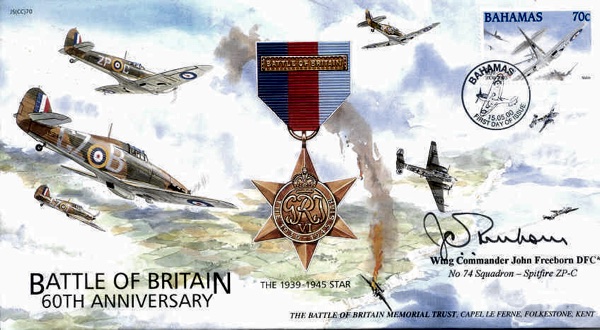 Hurricanes of No 32 Squadron and Spitfires of No 74 Squadron engaging Messerschmidt Bf 110s over the Kent coast. Freeborn's aircraft ZP-C is shown on the cover artwork. 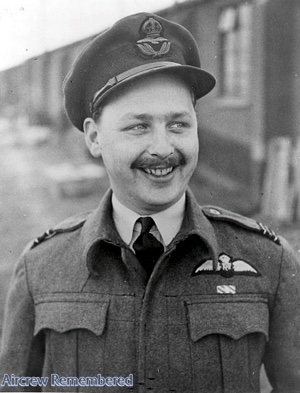 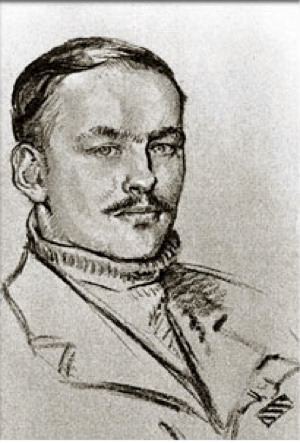 | |||
| 83 | Franklin | Walter Derrick Kerr | Fg Off | 40217 | RAF | JAM | 74Sqn| Spitfire | 1 | Died | October 2000 | Born 14 September 1916 in Jamaica. Joined RAF 23 August 1937. 12 E&RFTS Prestwick.
1 RAF Depot Uxbridge for a short induction course, then 9 FTS Hullavington. Joined 142 Sqd at Andover on 20th August 1938. On 2nd September 1939 the squadron flew its Battles out to France. It suffered heavy losses in May 1940 and was withdrawn to Waddington on 15th June. Volunteered for Fighter Command. Joined 74 Sqd 21 August at Kirton-in-Lindsey. Shared damed Do17 September. Ju87 destroyed on 14th November. On 30th December 1940 to CFS Upavon for an instructors course. He was instructing until 1945, when he went for a course at the Empire Test Pilots School at Cranfleld, after which he was posted to Farnborough. Franklin returned to Jamaica 1947 to run the family-owned hotel. Later sold it and returned to England. Died in October 2000 in Southampton. |  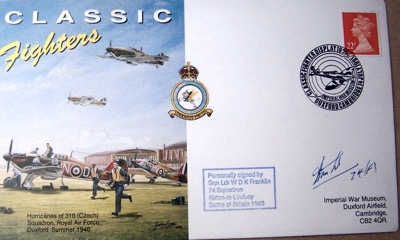 | |||
| 84 | Foxley-Norris | Christopher Neil | Fg Off | 70225 | British | 3Sqn 615Sqn 143Sqn  252Sqn  603Sqn (CO) 143Sqn (CO) | GCB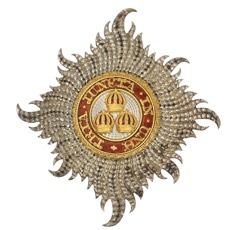 DSO OBE | Hurricane | Survived war | 28th September 2003. | Born 16 March 1917 Birkenhead England. Joined the Oxford University Air Squadron in 1936. Awarded a Harmsworth scholarship (worth £200) to read for the Bar. However, the outbreak of war prevented him from taking his final exams. The Bar Council requested the money back, but Foxley-Norris made an arrangement with them that he would leave it to them in his will. Commissioned in RAFVR. Active service in 1939. Initial flying training at No. 9 Flying Training School at RAF Hullavington and completed the training at No 1 School of Army Co-operation. Posted to 13 Sqd RAF flying Lysanders in the Battle of France. Following the fall of France and the start of the Battle of Britain, the need for Army Co-operation pilots was greatly reduced whilst that for fighter pilots was increased. He joined 111 Sqd at Drem on 29th September but this was an error and he went instead to 3 Sqd at Turnhouse on 30th September 1940 and moved to 615 Sqd at Northolt on 19th November. On 26th February 1941 jumped by Me109s and shot down in flames from 25000 feet in Hurricane IIa Z2754. He baled out, landing near Elmsted, east of Ashford, where he met with a hostile reception from the local population who were convinced that he was German. His Hurricane came down at Little Holt Farm. In early 1943 went to Ferry Command, to fly Hudsons across the Atlantic. He was with 143 Sqd at North Coates in mid 1943, flying Beaufighters on anti-shipping duties as a Flight Commander. Posted to 252 Sqd in the Middle East. CO of 603 Sqd on convoy patrol and sweeps over the enemy-held Greek islands. The squadron was disbanded at Gambut on 26th December 1944. The personnel sailed from Port Said in the Capetown Castle and arrived at Liverpool on 6th January 1945, then went on to Coltishall. Foxley-Norris was given command of 143 Sqd, then part of the Banff Mosquito Strike Wing. Having exchanged its Beaufighters for the faster, more powerful Mosquitos, the squadron ranged the Skaggerak, Kattegat and Germany's north-western seaboard for naval and other maritime targets. DSO Citation: 'This officer has a long and distinguished record of operational flying. He has completed numerous sorties on his third tour of duty during which period he has operated against a wide range of enemy targets. For several months this officer has commanded the squadron. During the period numerous attacks have been made against enemy targets. By his brilliant leadership, exceptional skill and determination, Wing Commander Foxley-Norris has contributed in good measure to the successes obtained.' Retired 1974 with the with the rank of AVM. Signed envelope: Christopher Foxley-Norris, Tom Gleave, Ginger Lacey, Geoffrey Page, Sandy Johnston, Mieczysław Sawicki |   |
|||
| 85 | Fox | Peter Hutton | Sgt | 754399 | RAFVR | British | 56Sqn | Hurricane | WIA | PoW Survived war | 10th June 2005 | Born in Bridlington England on 23 January 1921. Educated at Warwick Public School. Joined RAFVR in June 1939, training at 26 E&RFTS, Kidlington. Called up 1 September, posted to 13 EFTS Fairoaks on 28 March 1940, to 10 EFTS, Yatesbury on 28 May 1940. Advanced training at 8 FTS Montrose. To 5 OTU Aston Down converting to Hurricanes. Joined 56 Sqd at Boscombe Down on 17 September 1940. Shot down in combat with Do17s and Me110s over the Portland area on 30 September. Baled out Hurricane I (N2434) after combat over Portland 1940-09-30 1940 at 17:00hrs which crashed at Okeford Fitzpaine. 16 November Fox and P/O MR Ingle-Finch were flying to Kidlington in a Magister when they crashed near Tidworth. Both were injured and admitted to Tidworth Hospital. 28 June 1941 Fox joined 234 Sqd at Warmwell. Shot down over France on 20 October 1941 in Spitfire Vb AD203 and captured. Freed on 16th April 1945, Fox left the RAF in 1946 as a Warrant Officer. |  |
||
| 86 | Foster | Robert William | Plt Off | 80815 | British | 605Sqn | DFC Air Efficiency Award | Hurricane | 7 | Survived war | July 13 2014 Kent, England Age 94 | Born: 14 May, 1920 in South London. Local school in Battersea, London. Six months before war broke out in 1939 Foster joined the RAFVR to train as a pilot. He was called up in August to complete his training before joining 605 Sqd. Stationed for much of the early years of the war at Drem, just outside Edinburgh, from where they patrolled the North Sea. It was sent south in May 1940 to cover the evacuation from Dunkirk and then returned to Drem. Pilot Officer with No 605 (County of Warwick) Squadron in the Battle of Britain, flying Hurricanes into action from Croydon during September and October 1940. On one occasion, while airborne, he watched bombs exploding close to his parents’ home at Clapham, south west London. He later learned that the house had been only slightly damaged. On September 27 1940, a day which Winston Churchill described as “great and victorious”, Pilot Officer Foster’s aircraft was damaged as he attacked a Messerschmitt Bf 110. He forced-landed unhurt at RAF Gatwick. During the Battle he was credited with one enemy aircraft destroyed, one probably destroyed, one shared and two damaged. Later in the war Bob Foster served in Australia with No 54 Squadron equipped with Spitfires. He shot down five Japanese aircraft, probably shot down two more and damaged two. He was awarded the Distinguished Flying Cross and took command of the Royal Australian Air Force base at Night Cliff in the Northern Territory. Back in the UK Bob served at Fighter Command HQ, Bentley Priory, before holding ground appointments at RAF Bentwaters. He was released from the RAF in 1947 and resumed his pre-war career with Shell and BP. He also served in the Royal Auxiliary Air Force. From 2009 he was Chairman of the Battle of Britain Fighter Association. |    |
||
| 87 | Ford | Roy Clement 'Henry' | Sgt | 88214 | RAFVR | British | 41Sqn | Spitfire | Survived war | 13th December 2002. | Born 15 March 1915 in Hastings, Sussex England. Joined RAFVR in June 1938 as an Airman u/t Pilot.Training at 20 E&RFTS Gravesend. Called up 1 September 1939, to 6 FTS Little Rissington on 6 October for an assessment of his flying capabilities. Joined 41 Sqd at Catterick on 15 December 1939. Probable Me109 on 5 September 1940. 7 September he made a forced-landing between Confield Tye and Tinsleys Farm at West Hanningfield. Unhurt. Commissioned in November 1940, posted to 4 Delivery Flight Grangemouth on 5 April 1941.Volunteered for the Merchant Ship Fighter Unit, at Speke. Joined the unit on 23 May and served in the SS Empire Sun, Empire Shackleton, Empire Heath and Dalton Hall on North Atlantic and Gibraltar convoys. To Hawkers at Langley on 23 June 1942 as a production test pilot. Flew 447 aircraft on their first flight. 17 June 1943 posted for a course to No. 1 Empire Test Pilots School at Boscombe Down, after which he joined 20 MU Aston Down as a test pilot. rleased from the RAF on 23 October 1945 . Commissioned in RAFVR from September 1947 until 11th May 1952, during which time he instructed at 18 Reserve Flying School at Fair Oaks and from April 1948 at 15 RFS Redhill. |  |
|||
| 88 | Fitzgerald | Thomas Bernard | Fg Off | New Zealander | 141Sqn | DFC | Defiant Wikipedia discussion of Defiant tactics | Died | 2006-08-12 | Born in Temuka, New Zealand 1919-07-11. Educated at Timaru Boys' High School. April 1937 commission in RNZAF. Trained at Wigram, left for UK in April 1938, transfer to RAF. Made war’s first single-engined operational flight when dropping leaflets over Frankfurt and testing its night defences 1939-09-19. In early August 1940 posted to Fighter Command, one of 20 pilots from Bomber Command who volunteered in response to a request for trained pilots. Joined 141 Sqd in Scotland 1940-08-10 on night fighter Defiants. Took 'B' Flight south to Biggin Hill 1940-09-12 for night defence of London. Personal Assistant to Gen Hoyt D. Vandenberg, USAAF, Feb 1945; relinquished commission as Flt Lt Temp. Sqn Ldr on appointment to RNZAF, Feb 1946. Retired Dec 1947. Died Christchurch, New Zealand - 12 August 2006 | 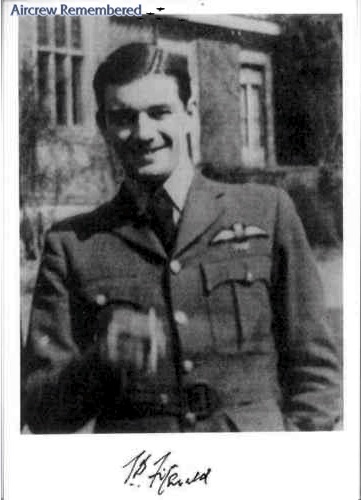 |
||||
| 89 | Fenton | Harold Arthur 'Jim' | Sqd Ldr | 27127 | British | 238Sqn (CO) | CBE DSO DFC | Hurricane | Survived war | 1995 | Injured when ditched his Hurricane I (P2947) into the Channel off the Isle of Wight 1940-08-08 at 13:40hrs near a German observation plane. He was looking for two of his pilots who had been reported missing in the Channel. He was rescued by the HMS Basset. Retired 1957 Born in Argentina in 1909. Grew up in Ireland. Trinity College, Dublin. Joined RAF 1928. 1929 with 4 Sqd at RAF Farnborough. In 1930 to India No. 5 Army Cooperation Squadron on the frontier. Back in England as a target-towing staff pilot at a Bombing and Gunnery School. but left the RAF and took a job as a chief flying instructor at Air Service Training. February of 1940, recalled by the RAF and sent to instruct at RAF Montrose. As the Battle of Britain began, it was clear that pilots with his experience would be sorely needed and he was given command of 238 Sqd, which he led throughout the Battle. Once forced to ditch in the Channel after chasing a German seaplane at wave top level and being hit by return fire. Following a brief respite, he returned to his squadron, which at this time only had five serviceable Hurricanes. Back in charge, Fenton quickly rectified the situation and 8 factory-fresh Hurricanes soon appeared. One of the hallmarks of Fenton’s leadership was his ability to make things happen. In May 1941, Fenton 238 boys were sent to the Middle East, loaded onto HMS Victorious at Scapa Flow. Then Victorious was ordered into the hunt for Bismarck. They then continued on their journey to Egypt via Gibraltar. Flew off Victorious near the Mediterranean island of Majorca, refuelled at Malta and finally arrived in Egypt. Highly successful in the Western Desert. Soon promoted to lead 243 Wing. In July of 1942, Fenton was a Group Captain in charge of 212 Group and its 12 Hurricane squadrons. In 1943, returned to England and was made commander of the Kenley fighter sector. Retired from the RAF as an Air Commodore and became an executive.  |  |
|||
| 90 | Falkowski | Jan Pawel | Fg Off (later W/C) | P-0493 | PAF | Polish | 32Sqn | Virtuti Militari DFC Krzyz Walecznych (x4) Medal Lotniczy (x3) Wound Badge (x2) | Hurricane | 9 | Survived war | 2001-01-27 | After the surrender of France on June 23, he arrived in Great Britain. Assigned to 32 Sqd RAF. Then he went to 315 Sqd as the commander of the "A" squadron from July 1941 to June 1942. Military College in Scotland. After graduation, appointed on 03.07.1943 as commander of 303 Sqd. In 1944 he was a joint officer on staff 1 Div. Panc. Gen. St. Maczka, and later from 31.01.1945 the commander of the 3rd Polish Wing. Shot down over the Netherlands, escaped from captivity and reached the Allied forces. After demobilization he went to Canada. - died in Peterborough ON Canada Archiwum Database |   |
|
| 91 | Ellacombe | John Lawrence Wemyss | Plt Off (later Air Commodore) | 43031 | RAF | British | 151Sqn | Order of the Bath DFC & Bar | Hurricane | 2 | WIA | Survived war | Posted 151 Sqd 1940-07-13 never having flown a Hurricane. P/O F.B.Sutton of 56 Sqd (non-operational owing to being wounded in France) was assigned to convert him along with another pilot, P/O J.T.Johnston. August 1940-08-24 he shot down a He 111. 1940-08-31 at 13:30hrs badly burned when shot down near Southend by return fire from Ju 88s and gravity fuel tank exploded in Hurricane (P3312) as he was baling out. He did not return to operations until December 1940. DFC 1942-04-07. 1942-07-28 probably destroyed a Do 217 at night in co-operation with a Turbinlite Havoc. Bar to DFC 1944-12-29. Surviving aircrew; Retired at the rank of Air Cdre Born 1920 Signed by Pete Brothers, John Ellacombe, Anthony Russell, Derek Yapp |  |
|
| 92 | Elkington | John Francis Durham 'Tim' | Plt Off | 44184 | British | 1Sqn | Ushakov Medal (Russia)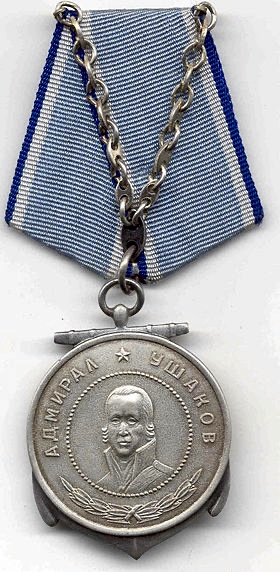 | Hurricane | 2 | WIA | Survived war | Born 1920 in Warwickshire. RAF College, Cranwell in September 1939, as a Flight Cadet. 14 July 1940 Elkington received a permanent commission, and the next day he joined 1 Sqd at Northolt. Training with the Northolt Sector Training Flight during the second half of the month and on 27 July made his first operational flight. Got a Bf 109 on 15 August. His combat report for that event read: “I was Green 2 of Squadron 1. When patrolling due east from Martlesham at 10,000 feet, an Me 109 approached me from head-on and to the left 1,000 feet below. The e/a started to climb and turn to the left but I turned sharp left and came in behind him and gave him one short burst with no known effect. I again fired at the e/a from astern as it straightened out and went into a steep climb. I gave it a 2 second burst from astern and above. The engine of the e/a belched fumes and it turned over on its back, staying there for about 2 seconds. I then circled round and saw no one get out.” The next day he was in Flight Sergeant Berry’s section when the squadron was ordered to patrol Portsmouth. A large force of enemy aircraft was encountered and his Hurricane was hit by a cannon shell in the starboard fuel tank and burst into flames. Baled out near the Nab light, east of the Isle of Wight. Berry followed him and with his slipstream he blew Elkington over land at West Wittering. Elkington was taken to hospital at Chichester; his aircraft crashed and burned out at Manor Farm, Chidham. Flight Sergeant Berry, DFM was killed in action on 1 September. He rejoined 1 Sqd on 1 October. He probably destroyed a Ju 88 on the 9th and shared a Do 215 on the 27th. Instructor in April 1941 but joined 601 Sqd in late May, moving in July to 134 Sqd, re-forming for service in Russia. Embarked on HMS Argus and on 7 September flew to the airfield at Vaenga, near Murmansk. During September and early October, 134 took part in bomber escorts and airfield defence. In mid-October it began training Russian pilots on Hurricanes, which were handed over at the end of the month. While in Russia Elkington shared in the destruction of a Ju 88. In mid-November 1941, the squadron pilots began the journey home, making their way in three minesweepers to Archangel and sailing from there in HMS Berwick. Elkington returned in the MV Empire Baffin, carrying minerals as part of Convoy QP 3. He was escorting an injured pilot. Further operational postings, including in India. Returned to the UK in October 1946 and retired from the RAF in December 1975 as a Wing Commander. In 2014 Elkington received the Ushakov Medal from the Russian Ambassador in London. Injured 1940-08-16 at 13:05hrs when Hurricane I (P3173) shot down over Thorny Island. Surviving aircrew Born 1920 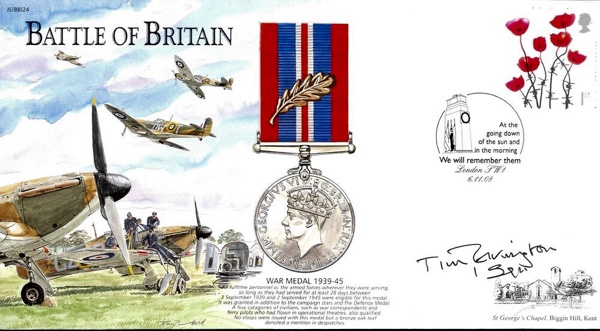 Signed envelope | 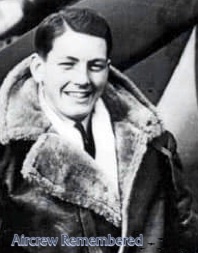 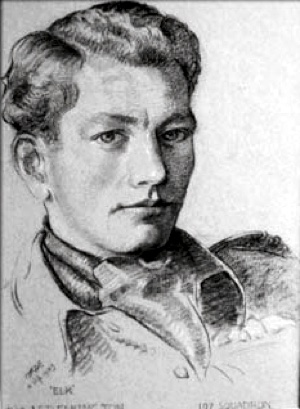 |
||
| 93 | Drake | Billy | Plt Off | 39095 | British | 213Sqn 421 Recon/Flt | DSO DFC & Bar | Hurricane | Died | 2011 | Born in 1917. Joined the RAF on a short service commission in 1936. Serving with 1 Sqd (Hurricanes) when war broke out. Went with the squadron to France. A number of victories, but on 13 May 1940 baled out wounded, to a French hospital and was then treated in hospital in England. Posted to 6 OTU Sutton Bridge on 20 June 1940 as an instructor. He flew a patrol with 1 Sqd on 15 August. To 213 Sqd on 2 October. Commanded ‘A’ Flight on the 7th. His last flight with the squadron was on the 21st and it was probably on the 23rd that he joined 421 Flight. DFC at the beginning of 1941. Further period as an instructor, commanded 128 Sqd in West Africa. Commanded 112 Sqd in the Middle East. He continued to destroy enemy aircraft, both in the air and on the ground. During 1942 Drake awarded a bar to the DFC and then a DSO. Commanded a Spitfire Wing in Malta. Later appointments included the leadership of a Typhoon Wing and Deputy Station Commander at Biggin Hill. In September 1945 he took part in the first Battle of Britain flypast over London. Retired from the RAF in 1963 as a Wing Commander, retaining the rank of Group Captain.  |   |
|||
| 94 | Dibnah | Ronald Harold 'Rolly' | Plt Off | RAF | Canadian | 1Sqn 242Sqn 91Sqn  | Hurricane | Survived war | February 1990 Canada | Posted to 1 Sqd RAF in France on 27 April 1940, P/O Roland H "Rolly" Dibnah was wounded in the thigh in a combat over Ochamps on 29 May and made a forced-landing at Nancy. On 31 August, he damaged an Me 110 and on 6 September shared another destroyed. The Canadian was posted to 242 Sqd RAF at RAF Coltishall on 21 September, remaining with them until 30 December 1940. His subsequent service is currently unknown until January 1944 when Dibnah joined 91 Squadron at Tangmere. He transferred to the RCAF on 18th January 1945 and was released on 21st October 1947 as a Flight Lieutenant. He flew Vampires with the RCAF |    Dibnah next to Spitfire |
||||
| 95 | Deere | Alan Christopher | Flt Lt (later Air Commodore) | NZ/40370 | RNZAF | New Zealander | 54Sqn | DSO OBE DFC & Bar Croix de Guerre (France) DFC (USA  ) | Spitfire | 22 | Died 21 September 1995 | Born in Auckland 1917-12-12. Joined RAF October 1937. 54 Sqd in September 1938. 1940-05-23 A.C took part in a daring rescue operation. He and Pilot Officer Allen escorted their flight commander, James Leathart, to France to pick up the CO of 74 Sqd who had made a forced landing on the airfield at Calais-Marck. The pick-up was made, with Allen watching from 8000 feet and Deere circling at low level. An approaching formation of Bf 109s was spotted by Allen as the Master taxied out for take-off. A strafing Bf 109 pulled out of its dive, Deere fired a short burst and the aircraft stalled and crashed into the sea. Deere, climbing to help Allen, crossed the path of two Bf 109s, one of which turned towards him. Deere also turned, firing at the second one, which rolled over and dived away. Pursuing the first one, he caught up at treetop height and pursued him, firing off his remaining ammunition before the German headed for home. Diving towards the coast Deere called up Allen and was relieved to hear him answer. In the meantime the Master had taken off and headed for Hornchurch. In the action three Bf 109s had been shot down and three others severely damaged. During four days - 23 to 29 May - Deere shot down three Bf 109s and three Bf 110s and in June was decorated with the DFC by the King at a special ceremony at Hornchurch. J.A.Leathart and Allen were decorated at the same time. During the Battle of Britain Deere destroyed seven more enemy fighters and one bomber and was awarded a Bar to the DFC. on the Ist of December 1940 he was sent for a rest, and in January 1941 became an Operations Room Controller. He returned to operations on 7 May 1941, joining 602 Sqd in Scotland as a Flight Commander. On the 10th he was scrambled to investigate a Bf 110 flying westwards. He did not sight the enemy aircraft but after landing was told it had crashed near Glasgow. The pilot was later revealed to be Rudolf Hess. Deere took command of 602 Sqd on August the 1st 1941 and on that day destroyed a Bf 109, his first victory for eleven months. When his second operational tour ended in January 1942 Deere went to the USA to lecture on fighter tactics but was restless for a return to operations. He achieved this in May 1942, when he took command of No 403 Squadron, leading it until August before being posted to staff duties. During a temporary attachment to No 611 Squadron in February 1943 Deere destroyed an FW 190. Some days later he was appointed Wing Leader at Biggin Hill. He flew 121 sorties during his six months' leadership and increased his personal score to twenty-two confirmed victories, ten probables and eighteen damaged.
Deere wrote of his experiences and his many escapes from death in his classic book, 'Nine Lives', published in 1959. Wikipedia  Signed by Al Deere, Adolf Galland, Erich Rudorffer | 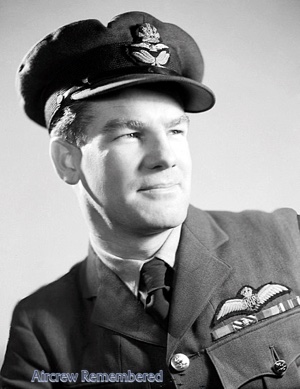  |
||
| 96 | Deacon-Elliot | Robert | PO | RAFVR (later RAF) | British | 72Sqn | CB OBE DFC MiD (x2) | Spitfire | 4 | Survived war | 5th June 1997 | Born Church Brampton, Northampton, England. RAFVR in 1938 and trained as pilot in his spare time. Outbreak of war called up, commissioned and posted to 72 Sqd. He later rose through the ranks from Flight Lieutenant to Squadron Leader upwards to Wing Commander and eventually to Air Vice-Marshal. During the Battle of Britain he was shot down by a Messerschmitt 109, baled out and returned to action the same day, evening the score by downing a 109. During the four most critical days of the Battle of Britain he shot down at least one enemy aircraft a day. On 15th August 1940 he and 10 colleagues intercepted a raid crossing the coast between Acklington and Blyth of around 100 enemy aircraft. Seven attacked the He 111 bombers whilst the other four attacked the escorting Me 110 fighters. Flying at 20,000ft his oxygen supply failed, he passed out and his Spitfire, now housed in the Science Museum, went into a nose-dive. He came around at 1000ft, too low to bale out but managed to the pull the Spitfire out of the dive and land it back at RAF Acklington where his squadron was based. The Spitfire was written off but the Deac was still going. On 4th September 1940 he claimed a Me110 destroyed, on the 6th a Me109, on the 9th a Me110 and on the 11th a He111. He was shot down on 6th September in a head-on attack on a Me109 over Maidstone and baled out, unhurt. His Spitfire, N3070, crashed at Wanshurst Green. At the end of August 1940 he went with 72 Sqd to reinforce 11 Group after the battering it had taken from Goering’s Eagle Offensive. In 1941, when Fighter Command took the offensive, Deacon-Elliott took part in fighter sweeps across the Channel and into France after which he was rested for a while at Fighter Command HQ. In October 1942 he joined 84 Group as part of 2nd Tactical Air Force (2TAF) to help prepare the group to support the Allied invasion of Normandy and the Allied advance through north-west Europe. Post-war flew fighters in Cyprus, stationed as Officer Commanding at RAF Nicosia, and during the 1950s he climbed the ranks with a spell at Army Staff College as directing member of staff, followed by station commands at Leconfield and Driffield. Posted as an exchange to Air University of the USAF at Maxwell Air Force Base he returned home as 1st Commandant of the Officers and Aircrew Selection Centre at Biggin Hill. He was Air Officer Commanding RAF Gibraltar and RAF Malta as well as Deputy Commander-in-Chief (Air) Allied Forces Mediterranean after which he became Acting Air Vice-Marshal on 21st November 1966.  Signed envelope Baled out safely over Kent 1940-09-04 at 13:20hrs. Spitfire I shot down by a Bf 110 over Hartfield, Sussex. Wounded 1940-09-06 at 09:20hrs. after combat over the Thames Estuary. |  |
||
| 97 | David | William Dennis | Fg Off (later Grp Cpt) | 40805 | RAF | British | 87Sqn 213Sqn | CBE DFC & Bar AFC MiD | Hurricane | 20 (probably 27+) | Survived war | 25th August 2000 | Born in Surbiton, Surrey England on 25 July 1918 and spent his early childhood at Tongwynlais, a village near Cardiff. Official Ace. Flew Hurricanes 87 Sqd in Battle for France until October 1940 and then joined 213 Sqd. He shot down 8 enemy and 5 unconfirmed in France and 7 confirmed in the Battle of Britain. Group Captain. One of the highest-scoring RAF pilots of the first half of the Second World War, Dennis David notched up the astonishing total of 11 combat victories in May 1940, before the Battle of Britain had even begun. His Hurricane squadron, No 87, had been posted to France in the early days of the war, as part of the Air Component of the British Expeditionary Force. There, throughout the 'Phoney War' months, September 1939 to April 1940, it saw little of the enemy apart from the odd reconnaissance machine. All this was to change with dramatic suddenness on the 10th of May 1940, when the full fury of the German Blitzkrieg burst on the frontiers of Holland, Belgium and France. David was in action from the opening hours of the German invasion, performing with incredible coolness against Luftwaffe pilots, many of whom had honed their combat techniques in the Spanish Civil War. Joined RAF in 1938. Joined 87 Sqd at Debden, near Saffron Walden flying Hurricanes. Posted to France together with 85 Sqd in September 1939 as part of No 60 Wing in the Air Component of the British Expeditionary Force. Stationed at Lille, near the Belgian Border, and saw little action until the German Army began its blitzkrieg through the Netherlands, Belgium and North Eastern France. During May 1940 the RAF in France was greatly outnumbered, often 10 to 1 or worse. During this period Dennis David shot down 14 aircraft before suffering from exhaustion due to the intense fighting and was repatriated to England by air ambulance. Upon returning he rejoined 87 Sqd at Exeter, reforming in preparation for the Battle of Britain. In action from July to October 1940 and during this time his score climbed to 20, with many others unconfirmed, as he was always attacked by other enemy fighters before firm claims could be made. David continued to fly during the Battle of Britain, for which 87 Squadron was moved to Exeter, where it saw heavy fighting and took a severe toll of the enemy. David continued his remarkable run of combat victories. He shot down two aircraft on the 11th of August, a Ju88 and a Messerschmitt 109. He was credited with two more, a Ju87 "Stuka" and a Messerschmitt 110 twin-engined fighter, besides having a half share in another Me110 on the 15th of August; this was the day of Germany's heaviest losses in the air, and was ever after referred to in Luftwaffe circles as 'der schwarze Donnerstag' (Black Thursday). 87 played its part in repelling the 1,786 sorties that were launched at Britain that day. David's third "two-kill" day was the 25th of August, when he shot down another Ju88 and a Messerschmitt 109. In October, he was posted as a flight commander to 213 Squadron, another Hurricane squadron, also based at Exeter. David's final kill was on the 19th of October when he shot down a Ju88 to bring his score to 20.In October 1940, Dennis David posted to be a Flight Commander in 213 Sqd, Tangmere where he damaged a Ju88 so badly, that it crash landed in Northern France, taking his tally to over 20 victories. In November 1940 he was posted to command a Flight of 152 Sqd, Warmwell flying Spitfires. From 1941 to 1943 rose to the rank of Wing Commander and was then posted to the Middle East to command 89 Sqd flying night-fighting Beaufighters, at Tobruk and Tripoli. In November 1943 moved to the Far East where he was promoted to Group Captain and took part in the liberation of Burma as SASO 224 Group. Continued to serve in the RAF until his retirement in 1967. During which time he was appointed Honorary Aide to the Viscount Trenchard, the ‘Father of the Royal Air Force’, from 1954 until the Viscount’s death. He was also Her Majesty’s Air Attache in Budapest at the time of the Hungarian Uprising and became responsible in assisting 400 people to escape from Hungarian and Russian Secret Police, for this he was knighted by the exiled ruler of Hungary, Grand Duke Arpad of Hapsburg. 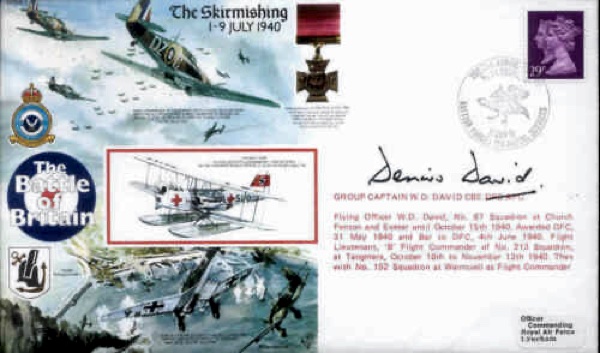 | 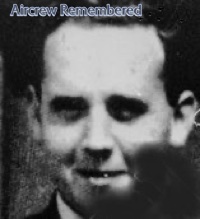 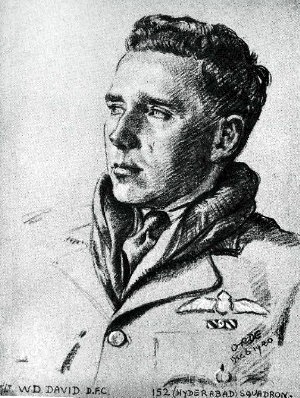 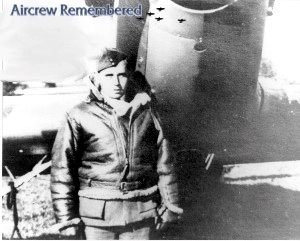 |
|
| 98 | Darley | Horace Stanley 'George' | Sqd Ldr | 32191 | RAF | British | 609Sqn | DSO | Spitfire | 3 | Survived war | 1999 Age 86 | Official Ace. Born in November of 1913, was CO of 609 Sqd in 1940 during the early stages of the Battle of Britain. He joined the RAF in 1932 and began his flying career in relatively little known and ungainly biplanes known as Fairey Gordons, Vickers Vincents and Fairey IIIBs. He flew these aircraft in Yemen and British Somaliland. He fought in the Battle of France and then with 609 Sqd at RAF Northolt in the Battle of Britain. In the three months that he commanded 609, the pilots scored 85 victories with the loss of just 7 of their own aircraft. Darley was awarded the DSO during this period, the first to be awarded for leadership in the Battle of Britain. During his 27-year career with the RAF, he commanded 11 RAF Stations and flew 65 different types. 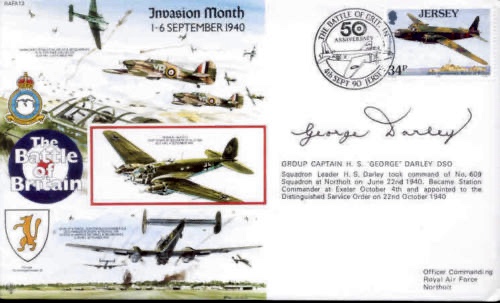 Cover produced for the 50th Anniversary of the Battle of Britain. Cover depicts Hurricanes of 1, 17, 46 249 257 and 310 Squadrons in action over Colchester, a Heinkel III shot down by Blenheim of 25 Squadron on 4th September 1940 and BF110s of 6 Staffel attacking the factories of Vicker and Hawker at Brooklands. Signed by George Darley. Born on November 3 1913 at Wandsworth, Darley joined the RAF in August 1932. He carried out his training at 2FTS, Digby and afterwards joined 207 Squadron at Bircham Newton on August 20 1933. He was posted overseas on February 9 1935, going to 8 Squadron at Khormaksar, Aden and later Somaliland. Darley was granted a Permanent Commission in 1936. He returned to the UK and on January 2 1937 went to CFS, Upavon for an instructor's course, after which he was posted to 7FTS, Peterborough, as a Flight Commander. On June 61938 Darley was appointedadjutant and flying insructor at 602 Squadron, AuxAF at Abbotsinch, moving on December 21938 to 611 Squadron, AuxAF at Speke. Soon after the outbreak of war Darley was made Controller at Debden and on May 9 1940 he was posted to Merville as Controller. After returning to England in late May he went as supernumerary Squadron Leader to 65 Squadron at Hornchurch and on June 22 he took command of 609 Squadron at Northolt. On August 8 Darley claimed a Bf 110 destroyed, on the 15th a probable Ju 88, on the 25th a Bf 109 and a Bf 110 and on September 25 a Dq 17. He was posted away on October 41940 to become Station Commander at Exeter. He was awarded the DSO (22.10.40). Darley was posted to Air HO Singapore on May 17 1941, on Fighter Defence. He went to RAF Kuala Lumpur on December 11 as Station Commander, returned to 224 Group, Singapore on January 8 1942 as Ops 1, moved to 226 Group, Sumatra on February 3 and after the inevitable collapse caused by the Japanese advance he arrived at RAF Depot, Karachi on March 16. Appointed Station Commander at RAF Risalpur on October 7 1942, Darley remained there until February 7 1943, when he was posted to 221 Group, Calcutta. On June 11 he returned to Risalpur to command 151 OTU there, as a Group Captain. Darley returned to the UK in July 1944 and was given command of 62 OTU, Ouston. He was made Station Commander at RAF Cranfield on June 15 1945 and went to RAF Staff College, Bracknell in August for a course. Group Captain Darley then held a series of appointments and commands before he retired from the Royal Air Force on June 15th 1959. During a long and distinguished flying career he flew sixty six different types of aircraft. |  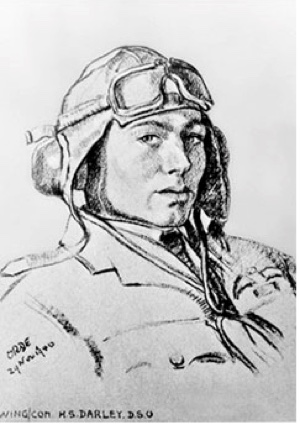 |
|
| 99 | Currant | Christopher Frederick 'Bunny' | Flt Lt (later W/C) | 43367 | RAF | British | 605Sqn | DSO DFC & Bar Croix de Guerre (Belgian) MiD Royal Norwegian Order of St Olav  | Hurricane | 9 | Survived war | 2006-03-12 | Official Ace. Commissioned in March 1940, posted from 151 Sqd to 605 Sqd's Hurricane. Shot down 9 during September and October 1940 . DFC. Later became a Squadron Commander then Wing Commander Ibsley Wing 1942. Commanded 122 Wing 2TAF 1944 Born in Luton England on 14th December 1911. Educated at Rydal School. Joined the RAF in 1936 as a direct-entry Airman u/t Pilot. He began training on 6th January. He was serving with 46 Squadron at Kenley in 1937 and with 151 Squadron at North Weald in 1939, both operating Gauntlets.Commissioned on 1st April 1940, Currant joined 605 Squadron the same day. On 1st April 1940, Currant joined 605 Squadron. On 22nd May he shot down a He111 on a patrol south of Arras. His Hurricane P3575 was hit by return fire and he made a crash-landing, breaking his nose. After burning his aircraft, he made his way to Calais on foot and returned to England by sea. Currant rejoined his squadron at Hawkinge. On 15th August 1940 Currant claimed two He111's destroyed and probably another, on 8th September a Me109 and a Do17 damaged, on the 9th he shared in the destruction of a Me109 and a Me110, on the 11th he claimed a He111 destroyed and four others damaged. He was appointed 'A' Flight Commander on 5th September and promoted to Acting Flight Lieutenant on the 13th. On 12th September Currant shared a Do17, on the 15th he claimed a Me109 and two Do17's destroyed and a He111 and three Do17's damaged, on the 27th a Me110 destroyed and a Me109 damaged and on the 28th another Me109 destroyed. On 4th October and 8th October he shared Ju88's and on 15th October he damaged two Me109's. Currant was awarded the DFC 8th October 1940 and Bar 15th November 1940. When Squadron Leader McKellar was killed on 1st November Currant took temporary command of 605. He destroyed a Me109 on 15th November. Currant relinquished his temporary command of the squadron on 29th November when the new CO came. He destroyed a Me109 on 1st December. In early 1941 Currant was posted to 52 OTU Debden and in July he was CFI. A return to operations came on 14th August 1941 when he took command of 501 Squadron at Ibsley. He appeared briefly as himself in the film 'The First of the Few', filmed at Ibsley (with David Niven). Currant damaged a Me109 on 8th November 1941 and destroyed another on 17th April 1942. On Circus 113 to Marzingarbe on 9th March he engaged three German fighters and his Spitfire Vb W3846 was shot up. The instrument panel was destroyed and a bullet struck the back of his head but Currant managed to escape at low level. In great pain he landed at Lympne but his aircraft turned over on to its back due to the undercarriage tyres having been shot through. He was trapped in the petrol-soaked cockpit but was soon rescued from the wreckage. After a month in hospital he returned to flying with fragments of shrapnel still in his head. He was promoted to Acting Wing Commander in June and appointed to lead the Ibsley Wing. He was awarded the DSO (gazetted 7th July 1942). From 15th February 1943 until 24th July 1944 Currant commanded 122 Wing 2TAF. | 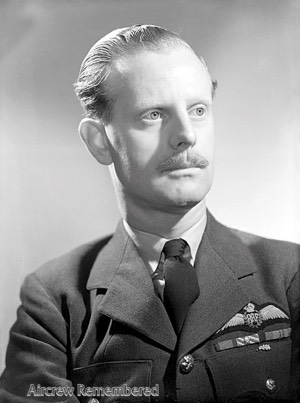 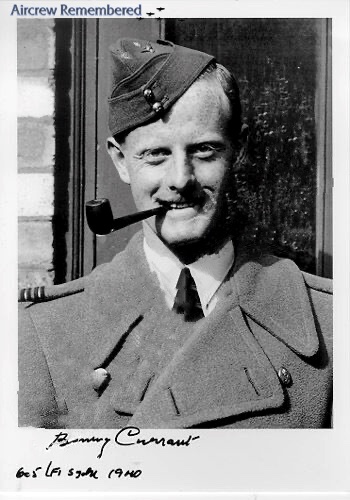 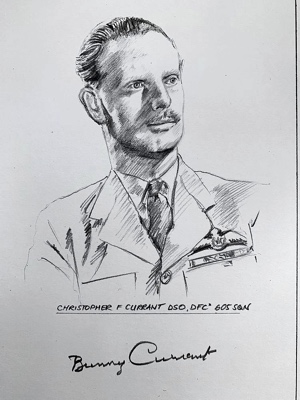 Courtesy battleofbritainbooks.co.uk |
|
| 100 | Crowley-Milling | Denis W 'Crow' | Plt Off (later Air Marshal) | RAF | British | 242Sqn | KCB CBEDSODFC & Bar CBEDSODFC & BarAir Efficiency | Hurricane | 4 | Died | 1996-12-01 | Official Ace, Born 1919-03-22. Educated at Malvern College. Apprentice at Rolls Royce and learned to fly in RAFVR. Called up 1939-08-23 posted to 615 Sqd Gladiators. Re-equipped with Hurricanes. Flew in France with 607 Sqd and on return posted to 242 Sqd with C/O Douglas Bader. Shot down a He 111 on 1940-08-30 his first kill. 1940-09-06 he made a forced landing after being hit in combat. He shot down 2 more enemy aircraft during the September 1940 a Bf 110 and a Bf 109. Later awarded the DFC and the DSO. Attained rank of Air Marshal and he also recieved a Knighthood. Retired in 1975 as AM Sir Denis Crowley-Milling. Appointed Controller of the RAF Benevolent Fund and became president of the Not Forgotten Association. 'I flew the following aircraft in combat during the 1939-45 war: Gladiator, Hurricane Mk I & 11, Spitfire V(b), and Typhoon. After the war I flew the Tempest III on active service in Egypt, Palestine, Iraq, Sudan and Somaliland. It is hardly surprising to say that the Spitfire was my favourite. It felt part of you, it responded delightfully under all conditions, and most of all, it gave you ample warning of the high speed stall in a turn in combat; and you knew that a Me 109 could not (or would not) turn inside you.'
 Signed Envelope |  |
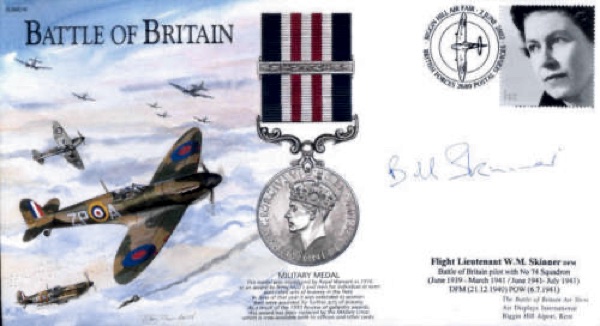
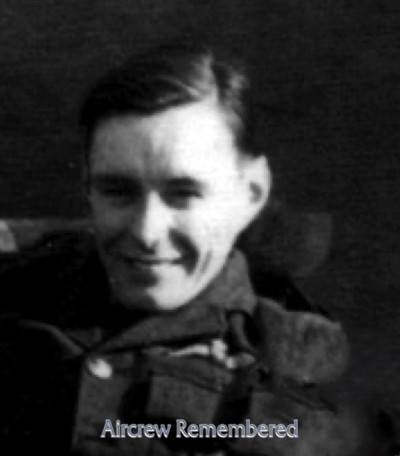
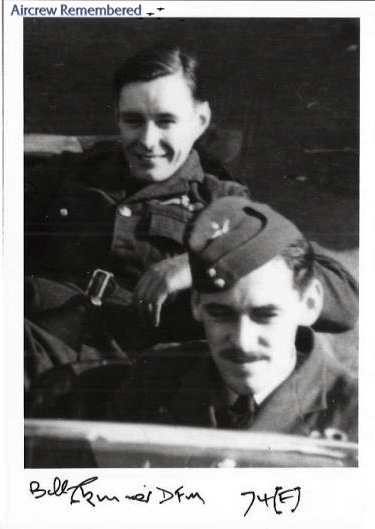
Results 1 to 100 of 124.


